

Table of Contents
- What Causes Chafing During Training
- How to Prevent Chafing: Step-by-Step
- Moisture-Wicking Workout Clothes Benefits for Chafing
- Best Anti-Chafe Balms for Athletes
- How to Treat Chafing Skin When Prevention Fails
- Gender-Specific and Environmental Adjustments to Prevent Chafing
- Frequently Asked Questions
Last Updated: September 12, 2026
What Causes Chafing During Training
Chafing is skin damage from repeated friction, worsened by moisture and salt, raw, inflamed skin that can derail a training block.
Skin-to-skin or fabric-to-skin rubbing creates micro-tears in the outer layer. Sweat softens the barrier until it breaks down, and dried salt crystals act like sandpaper on compromised tissue, a process called skin maceration. That's why two miles in dry conditions feels fine while the same distance in humid heat leaves your inner thighs on fire.
Four factors drive most cases:
- Friction points: inner thighs, nipples, underarms, groin, and the waistband line
- Moisture: sweat accumulation that softens and weakens skin
- Fabric: heavy cotton holds moisture against the body instead of moving it away
- Seams and tags: raised stitching creates a concentrated rub point
Cyclists and distance runners deal with this constantly because long sessions let all four factors compound, but beginners hit it too, usually on day one of a new plan.
GearrUp built its training line around this problem; below is what actually works, in order.
How to Prevent Chafing: Step-by-Step
Prevention follows three steps: eliminate friction at the fabric level, add a lubricating barrier before you move, and manage moisture throughout the session. Skip one and you're gambling on the other two.
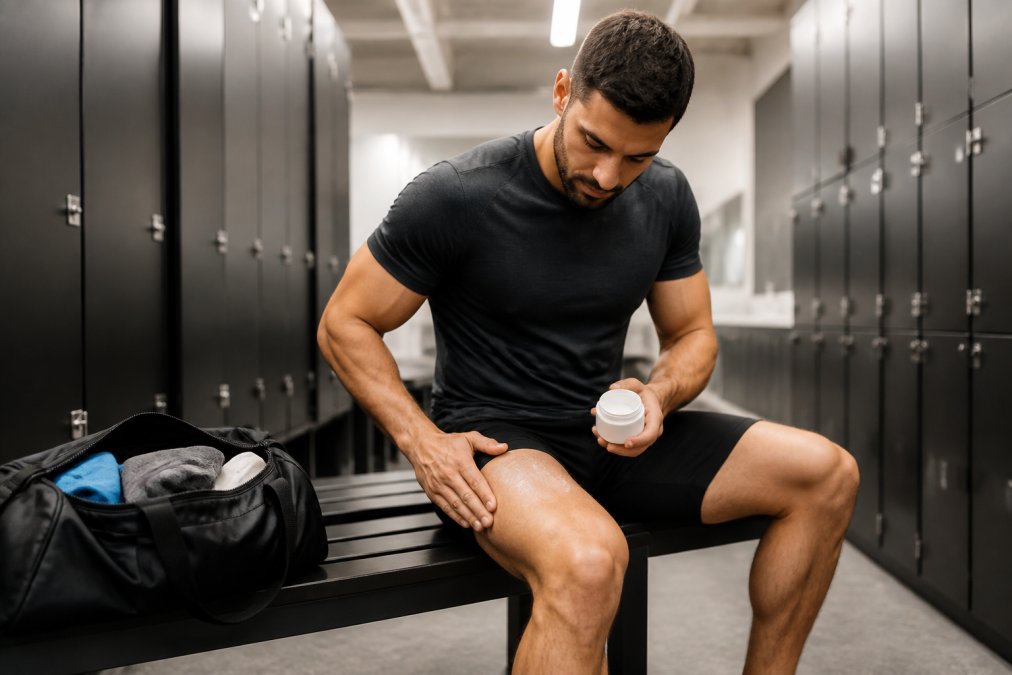
Step 1: Choose Seamless, Synthetic Workout Clothing
Choose flatlock or bonded seams, or no seams in high-friction zones. Polyester and spandex blends move moisture off the skin; cotton holds it there. Construction matters too, a polyester shirt with a thick shoulder seam will still shred your underarms. Look for:
- Flatlock stitching that lies flat against the skin
- No tags at the neckline (printed labels only)
- Compression fit that stays in place instead of bunching
- Longer inseams on shorts to stop inner-thigh contact
The American Academy of Dermatology's guidance on preventing skin irritation recommends loose, moisture-wicking fabrics for anyone prone to friction-related skin problems. Compression gear works too, as long as it fits properly. Loose fabric that shifts with every stride is worse than either option.
Step 2: Apply Anti-Chafe Balm Before You Move
Apply a dedicated anti-chafe balm to every friction point before you start, not after you feel burning. Once skin is raw, topical application stings and heals slower.
Cover inner thighs, groin crease, nipples, underarms, and any spot where a strap or waistband sits. Reapply every two to three hours on long sessions; petrolatum- or dimethicone-based products outlast water-based options that sweat off in under an hour.
Step 3: Manage Sweat and Hydration During Training
Hydration affects how much salt your sweat leaves behind. Drink consistently before and during training, and consider an electrolyte drink for sessions over an hour, plain water alone can dilute sodium levels, and salt-heavy sweat is more abrasive once dry. Hydration won't stop chafing by itself, but it removes one of the four compounding factors.
Moisture-Wicking Workout Clothes Benefits for Chafing
Moisture-wicking fabric moves sweat to the garment surface to evaporate instead of pooling against your skin, the difference between a comfortable ten-miler and raw skin at mile four. Here's how the fabric types compare:
| Fabric Type | Moisture Behavior | Chafe Risk | Best For |
|---|---|---|---|
| Cotton | Absorbs and holds sweat | High | Short, low-sweat sessions |
| Polyester blend | Wicks and dries fast | Low | Running, cycling, HIIT |
| Spandex/compression | Wicks, stays in place | Low | Lifting, grappling, long rides |
| Merino wool | Wicks, resists odor | Low | Cool-weather training |
Fabric weight matters too: heavier knits dry slower, extending the window where skin stays soft and vulnerable. Lightweight, breathable materials dry fastest, what you want in humid conditions.
Seamless construction removes the concentrated rub points behind the worst irritation. Given two shirts, take the one with flat seams every time.
REI's guide to moisture-wicking fabrics breaks down how different fiber blends perform, and the general principle holds: the faster moisture leaves the fabric, the less time it spends damaging your skin.
Best Anti-Chafe Balms for Athletes
The best anti-chafe balm stays put for your full session, resists sweat, and doesn't leave pore-clogging residue, petrolatum sticks, dimethicone creams, or silicone roll-ons. Formats suit different jobs:
- Sticks: best for inner thighs and feet, easy to apply, no hands needed
- Creams: best for nipples and underarms, thinner coverage, absorbs quickly
- Roll-ons: best for groin and hard-to-reach areas, hygienic, precise
- Powders: best for hot, dry conditions where creams feel heavy
A common mistake is buying scented product: fragrance and menthol irritate sensitive skin, and menthol's cooling masks the early warning signs of a hot spot. Go unscented.
For cyclists, chamois cream is a separate, thicker category built for saddle contact, don't substitute a general-purpose balm on rides over an hour.
How to Treat Chafing Skin When Prevention Fails
Prevention is the goal, but it fails. When it does, recovery matters as much as prevention, here's the staged approach that gets skin closed and back under load.
The most important variable is time-to-intervention: chafed skin cleaned and protected within the first hour heals noticeably faster than skin left in sweat-soaked fabric. Runners and cyclists often finish, drive home, eat, and shower two hours later, by then, macerated skin has broken down further.
Stage 1: Stop the Friction (0-30 minutes)
End the activity as soon as you feel a hot spot, a stinging, warm patch that precedes visible redness by roughly 10 to 20 minutes of continued friction. Stopping there usually means a one-day nuisance instead of a week off.
Once you stop:
- Get out of wet clothing immediately. Sweat-soaked fabric keeps skin macerated and continues the mechanical rub even when you're standing still.
- Rinse with cool water. Cool water reduces inflammation and removes salt residue. Hot water strips the skin further and stings on raw tissue.
- Skip soap on the raw area. Mild soap on intact skin is fine, but soap on broken or weeping skin disrupts the barrier and slows repair. Rinse the chafed zone with water only.
- Pat dry, never rub. Use a clean, soft towel and press rather than drag. Let the area air dry completely before anything touches it.
Stage 2: Protect and Heal (First 24-72 hours)
This is where most home treatment goes wrong: the goal is to keep damaged skin moist, covered, and free of friction, not to dry it out.
- Petrolatum or a zinc-oxide barrier ointment. A thin layer of plain petrolatum keeps the wound bed moist, prevents fabric from sticking, and costs very little. Zinc-oxide creams are thicker and better under a waistband or strap.
- Non-stick dressing for open or weeping skin. A non-adherent pad (sold as "non-stick" or "petrolatum gauze") prevents the dressing from tearing off new tissue. Avoid standard gauze directly on raw skin, it sticks.
- Do not apply anti-chafe balm to broken skin. Balm is for intact skin; on an open wound it traps bacteria, stings, and delays healing. This is the most common mistake people make.
- Do not pop blisters. A blister is a sterile cushion over healing tissue; popping it adds infection risk and removes that cushion.
- Loose clothing over the area. Tight fabric re-creates the friction. Sleep in loose cotton or nothing over the area if you can.
Mild chafing, redness, tenderness, no broken skin, resolves in two to four days with this routine (mayoclinic.org). Broken or weeping skin takes four to seven days to close, and stays fragile another week.
Stage 3: Return to Training Without Re-Chafing
Healed skin isn't resilient skin: new tissue stays thinner and more vulnerable for one to two weeks after it looks normal.
When you return:
- Reapply balm before every session, even short ones, for at least two weeks.
- Change the gear that caused it. If the same shorts chafed you once, they will chafe you again. Switch to seamless, moisture-wicking construction or a longer inseam.
- Shorten the first few sessions. Cut duration by roughly a third for the first two or three sessions back, then build.
- Check the area immediately after. If redness returns, you went too long or the gear is still wrong.
Once healed, the fix is almost always gear or fit, not toughness. Repeat chafers are usually in the wrong fabric, seam construction, or size, change the equipment rather than pushing through again.
Gender-Specific and Environmental Adjustments to Prevent Chafing
Generic prevention advice assumes a neutral body in neutral weather, neither exists. Anatomy determines where you chafe; environment determines how fast. Here are the specifics most guides skip.
Anatomy-Specific Friction Points
For women:
- Sports bra band and underwire. The band edge and underwire ends are the top friction points for runners. A bra with bonded or seamless edges and a wide, flat band reduces underarm and ribcage irritation. Underwire is a common culprit, a wire-free or encapsulated-cup design eliminates the wire-end rub entirely.
- Inner thigh and groin crease. Wider hips mean more skin-to-skin contact at the upper inner thigh. Compression shorts with a longer inseam (5 to 7 inches) remove the contact; shorts that ride up defeat the purpose, so look for silicone gripper hems.
- Bra strap and shoulder seam intersection. Where the strap crosses the shoulder seam is a concentrated rub point. A racerback bra under a racerback top aligns the straps and removes the crossing.
For men:
- Nipples. The single most common chafing complaint in distance running. A compression top holds the fabric still against the chest; medical tape or a dedicated nipple cover works for shorter sessions. Cotton shirts are the worst offender because they hold sweat and the fabric moves.
- Inner thigh and groin. Same mechanism as above. Compression shorts or a 2-in-1 short with a built-in liner solves it.
- Waistband line and belt line. A pack or belt that shifts with every stride creates a horizontal rub. A fitted belt with a wide, flat contact patch reduces it.
Environmental Adjustments
Environment changes the plan more than most people realize, the same route and gear can be fine in one condition and brutal in another.
Hot and humid (roughly 70%+ relative humidity):
- Switch to the lightest moisture-wicking fabric you own. Heavy knits stay wet and keep skin macerated.
- Reapply balm every 60 to 90 minutes instead of every two to three hours, humidity and heavy sweat break down the barrier faster.
- Consider a powder in addition to balm for areas that stay wet, but avoid powder on already-damp skin, it cakes and becomes abrasive.
- Change socks mid-session on long efforts. Wet socks plus a seam equals blisters.
Hot and dry:
- Balm lasts longer here because sweat evaporates instead of pooling. Standard reapplication intervals hold.
- Powders work well in dry heat where creams feel heavy.
- Watch for salt crystallization on skin and fabric, rinse gear thoroughly after sessions.
Cold and dry:
- Skin cracks more easily when it's dry, and cracked skin chafes faster. Moisturize daily, not just on training days.
- Use a heavier, petrolatum-based balm. Lighter water-based products absorb too fast in dry air.
- Layer with a compression base layer under windproof shells to stop fabric from flapping against skin.
Wet weather:
- Waterlogged fabric against skin is the worst-case scenario, it combines moisture, weight, and movement. Quick-drying synthetics are non-negotiable.
- A water-repellent outer layer keeps the base layer from soaking through, which is what actually causes the chafe.
- Reapply balm before the session even if it's short. Rain accelerates the breakdown of any barrier.
DIY and Natural Alternatives
Not everyone wants to buy a dedicated product, and some people react to commercial ingredients. These work, with trade-offs:
- Plain petroleum jelly. The original anti-chafe barrier. Cheap, widely available, effective for short to moderate sessions. It's greasy, can stain fabric, and breaks down faster than silicone-based products on long efforts.
- Cornstarch powder. Good for moisture management in dry conditions, but it clumps when wet and provides no friction barrier on its own.
- Coconut oil. A decent natural barrier for short sessions, but it absorbs into skin rather than sitting on top, so it doesn't last as long as petrolatum.
- Shea butter. Thicker and longer-lasting than coconut oil, but it can feel heavy in heat and may clog pores in the groin area.
- Medical tape or bandages. For nipples specifically, tape is a legitimate low-cost solution. Use paper or medical tape, not duct tape.
None match a purpose-built silicone or petrolatum balm on a long session, but all beat doing nothing, the trade-off is duration and residue, not basic effectiveness.
Post-Workout Recovery Protocol
This is the step most guides skip, and where repeat chafing gets prevented, in-session prevention is only half the job.
- Shower within 30 minutes of finishing. The longer sweat and salt sit on skin, the more the barrier breaks down.
- Change out of wet clothes immediately. Don't run errands in damp gear.
- Rinse the chafe-prone areas with cool water and pat dry.
- Moisturize once skin is dry. A fragrance-free moisturizer keeps skin resilient for the next session.
- Inspect the friction zones. Catch a hot spot early and you prevent the next day's problem.
- Wash training gear after every session. Residual salt and bacteria in fabric make the next session worse.
GearrUp's Pro-Duo 2-in-1 Running & Training Shorts pair a lightweight shell with built-in compression shorts, removing inner-thigh skin-to-skin contact entirely. For upper-body friction, the Viper Series compression rash guard uses a high-tensile polyester-spandex blend that stays tight instead of shifting. Both are built for the repeated contact that causes chafing.


Frequently Asked Questions
Will chafing go away by itself?
Mild chafing often heals within a few days if you stop the friction and keep the area clean and dry. Wash with gentle soap, pat dry, and apply a soothing ointment. Avoid tight clothing and intense activity until redness fades. If you notice swelling, pus, or increasing pain, see a doctor. Continuing to train through raw skin can worsen irritation and lead to infection.
How can I prevent my inner thighs from chafing when I run?
Wear seamless, moisture-wicking shorts with a compression liner. Apply an anti-chafe balm to your inner thighs before every run. Keep the area dry by choosing synthetic fabrics over cotton. If you still chafe, try 2-in-1 shorts with a built-in liner to reduce skin-to-skin contact. Staying hydrated also helps maintain your skin barrier.
Does wearing compression gear help prevent chafing?
Yes. Compression gear reduces skin movement and wicks moisture away, which cuts friction. Look for flatlock seams and synthetic blends. GearrUp's compression tops and anti-chafe shorts are designed to stay in place during intense training, minimizing rubbing. Just ensure the fit is snug but not restrictive.
What are the best fabrics to avoid chafing during exercise?
Synthetic fabrics like polyester, nylon, and spandex move sweat away from your skin and dry quickly. Avoid cotton, which holds moisture and increases friction. Seamless construction and flatlock seams further reduce irritation. Moisture-wicking workout clothes benefits include less sweat accumulation and a lower risk of chafing.
Chafing is a gear problem more often than a toughness problem, and it's solvable before it starts. GearrUp builds training apparel with flat seams, moisture-moving synthetics, and compression fits that stay where you put them, all at prices that don't punish you for training hard. Shop with free shipping, secure payment, and easy returns, and get gear that holds up session after session. SHOP EQUIPMENT

