

Table of Contents
- Why Fabric Choice Determines Your Ride Temperature
- Quick Comparison: Top Breathable Cycling Gear for Hot Weather
- Men's Bird's-Eye Mesh Training Tank: Maximum Airflow
- Reflective Cycling Sports Vest: Safety Meets Ventilation
- Ice-Frost Mesh Training Shorts: Cooling Where It Counts
- The Role of Moisture-Wicking Cycling Base Layers
- How to Prevent Heat Exhaustion While Cycling
- Which Breathable Kit Matches Your Riding Style?
- Frequently Asked Questions
Last Updated: September 8, 2026
Why Fabric Choice Determines Your Ride Temperature
Heat stress is the fastest way to end a ride early, and the fabric against your skin dictates how much of that heat your body can shed. Breathable cycling gear for hot weather does more than feel airy; it actively manages sweat evaporation and airflow so your core temperature stays manageable during sustained effort. At GearrUp, we design apparel specifically for athletes who ride in demanding conditions.
The science is straightforward: your body cools itself through evaporative cooling, which only works when sweat can move away from your skin and reach the air. Synthetic fibers like polyester excel at this moisture transport because they are hydrophobic, meaning they repel water rather than absorbing it like cotton. A cotton shirt soaks up sweat, clings to your skin, and blocks airflow, while a technical fabric pulls moisture outward where it can evaporate and cool you down (peer-reviewed research). This is why the most effective summer kit prioritizes moisture-wicking properties and ventilation over everything else.
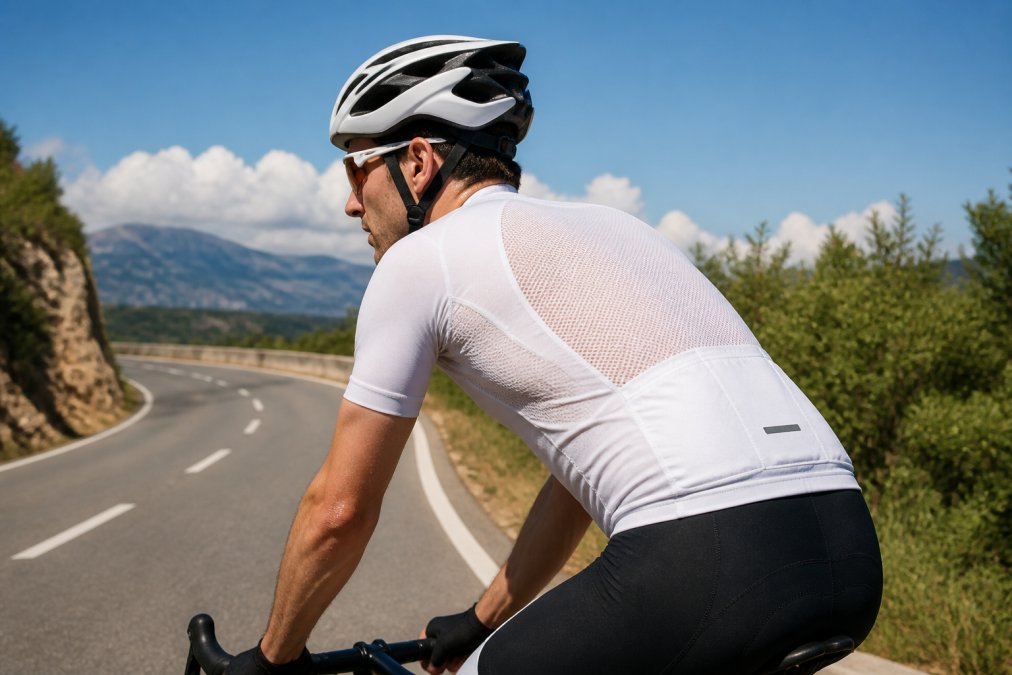
Below, we break down the specific pieces of breathable cycling gear that handle high-effort riding in extreme heat, and explain how to build a kit that keeps you safe and comfortable. We also cover the role of moisture-wicking cycling base layers and how to prevent heat exhaustion while cycling, because gear alone cannot protect you from poor hydration and bad timing.
Quick Comparison: Top Breathable Cycling Gear for Hot Weather
The best breathable cycling gear combines airflow, sweat management, and visibility without adding bulk. These four pieces represent strong options for cyclists who refuse to overheat:
| Product | Price | Key Feature | Best For |
|---|---|---|---|
| Men's Bird's-Eye Mesh Training Tank | $15.99 | 360-degree micro-hole ventilation | High-intensity and humid rides |
| Reflective Cycling Sports Vest | $25.99 | Lightweight breathable shell with reflective strips | Low-light commutes and safety |
| Ice-Frost Mesh Training Shorts | $19.99 | Ice Silk fabric that lowers skin temperature | Hot-weather training and leisure |
| Men's Moisture-Wicking Summer Fitness Vest | $17.99 | Racerback cut with active moisture transport | Long rides needing full mobility |
Each piece serves a different role in your summer rotation. The tank handles the hottest, most humid efforts where maximum airflow matters. The vest layers over any jersey for evening rides when visibility becomes a safety issue. The shorts address the lower body, where heat buildup can cause discomfort on the saddle. The fitness vest suits riders who want a balance of coverage and breathability for varied conditions.

Men's Bird's-Eye Mesh Training Tank: Maximum Airflow
The Men's Bird's-Eye Mesh Training Tank is the strongest option in our lineup for riders who push hard in oppressive heat. Its advanced bird's-eye polyester construction creates a unique micro-hole texture that promotes 360-degree ventilation, which means air moves through the fabric from every direction rather than just through the armholes. This design directly supports evaporative cooling by giving sweat more surface area to escape through.

What makes this tank particularly effective for cycling is the combination of lightweight fabric and ergonomic fit. The tank allows a full range of motion through the shoulders and torso, which matters when you are stretched over the bars or climbing out of the saddle. The durable stitching holds up to repeated washings, and the fabric wicks moisture away from your skin to keep you dry and focused on the road ahead. At $15.99, it delivers performance for riders who want premium activewear without the premium markup.
Reflective Cycling Sports Vest: Safety Meets Ventilation
The Reflective Cycling Sports Vest helps you stay visible without cooking yourself in a heavy outer layer. Priced at $25.99, this vest is crafted from lightweight, breathable fabric that keeps you cool during intense rides, while reflective detailing significantly boosts your visibility in low-light conditions. It is the piece you reach for when your ride starts in daylight but ends after sunset.

The vest is built for cyclists who demand both performance and protection. Its durable construction ensures long-lasting wear. Reflective gear is a critical safety component, and the vest's strips catch headlights from multiple angles, making you visible to drivers who might otherwise miss you. According to guidance from the National Highway Traffic Safety Administration on pedestrian and cyclist visibility, being visible to motorists is one of the most effective ways to reduce crash risk during evening hours.
For city commuters and trail riders alike, this vest layers easily over a mesh tank or short-sleeve jersey without restricting airflow. The lightweight design allows for effortless movement, so you maintain your riding position and power output without feeling constrained. It is the practical choice for anyone who splits their riding between bright afternoons and dusky evenings.
Ice-Frost Mesh Training Shorts: Cooling Where It Counts
Heat does not stop at your torso, and the Ice-Frost Mesh Training Shorts address the lower half of your body where saddle time creates its own heat problems. These shorts use advanced Ice Silk fabric that delivers superior breathability and helps lower skin temperature during physical activity. The lightweight construction enhances airflow and keeps you cool whether you are training outdoors or recovering between intervals.
The design includes an adjustable waistband for a customized fit and reinforced stitching for durability. Zippered pockets provide secure storage for keys, energy gels, or a phone, which is a practical touch for cyclists who do not want to carry a bag. At $19.99, they offer accessible performance for athletes who need effective cooling during intense workouts without overspending.
The Role of Moisture-Wicking Cycling Base Layers
Moisture-wicking cycling base layers serve a specific function: they create a dedicated channel for sweat to move away from your skin before it reaches your outer layer. While a mesh tank worn alone works well in extreme heat, a base layer becomes valuable when you need sun protection or want to manage sweat during longer, steadier rides where you might be wearing a jersey with pockets.
The Men's Moisture-Wicking Summer Fitness Vest is an example of this category. Made from high-quality, lightweight fabrics, it features moisture-wicking technology that effectively pulls sweat away from the skin, helping you stay dry even during sustained aerobic effort. The racerback design enhances shoulder mobility and reduces fabric restriction, which is essential for maintaining an aggressive riding position without chafing.
The key distinction is that a base layer should sit snugly against your skin, not loose. A loose fit allows sweat to pool between the fabric and your body, defeating the purpose of moisture transport. A proper base layer should feel like a second skin, moving moisture outward where it can evaporate. For riders who prefer a sleeveless option, the Men's Breathable Sleeveless Muscle Tank in 100% polyester offers the same sweat management with a looser cut and ten color options, making it a versatile addition to any summer kit.
How to Prevent Heat Exhaustion While Cycling
Heat exhaustion is a real risk for cyclists who train through the hottest months, and prevention requires more than choosing the right fabric. The Centers for Disease Control and Prevention guidance on heat-related illness emphasizes that heat exhaustion occurs when the body loses too much water and salt through sweating, and the warning signs include heavy sweating, weakness, cool and clammy skin, and a fast but weak pulse. Recognizing these symptoms early is critical because untreated heat exhaustion can progress to heat stroke, which is a medical emergency.
Prevention starts with timing and hydration. Ride in the early morning or late evening when temperatures are lower, and drink water consistently before, during, and after your ride rather than waiting until you feel thirsty. Your breathable cycling gear supports your body's cooling system, but it cannot replace the fluids and electrolytes you lose through sweat. On rides lasting longer than an hour, consider carrying an electrolyte drink to replace the salt your body excretes.
Pacing matters just as much as hydration. High-effort riding generates more internal heat, so on the hottest days, dial back your intensity and accept a slower pace. Your body's thermoregulation system works harder in extreme heat, and pushing through the discomfort can lead to dangerous outcomes. Pay attention to how you feel, and if you experience dizziness, nausea, or confusion, stop riding, find shade, and cool your body down immediately.
Which Breathable Kit Matches Your Riding Style?
Different cycling disciplines demand different gear, and the right breathable cycling gear for hot weather depends on how and where you ride. Road cyclists who spend hours in an aerodynamic position need kit that minimizes drag while maximizing airflow, which makes the Bird's-Eye Mesh Training Tank a strong choice for its 360-degree ventilation and ergonomic fit. Commuters who split their time between traffic and bike lanes should prioritize the Reflective Cycling Sports Vest for its visibility features, especially if their commute extends into evening hours.
For mountain bikers and trail riders, durability and freedom of movement take priority over aerodynamics. The Men's Breathable Short-Sleeve Workout T-Shirt offers a slim cut in a polyester-led blend that moves moisture outward and dries quickly, making it suitable for the stop-and-start nature of technical terrain. Casual riders who want versatility for both cycling and gym sessions will find the Men's Breathable Ice Silk Shorts useful, with their knee-length cut and cool-feeling knit that sits away from the skin.
The common thread across all disciplines is the same: choose synthetic, moisture-wicking fabrics over cotton, prioritize ventilation where your body generates the most heat, and match your layering to the time of day you ride. A kit that works for a dawn training ride may be too warm for a midday session, so build your rotation with flexibility in mind.
| Riding Style | Recommended Top | Recommended Bottom | Key Priority |
|---|---|---|---|
| Road / Endurance | Bird's-Eye Mesh Training Tank | Ice-Frost Mesh Shorts | Maximum airflow and aerodynamics |
| Commuter / Urban | Reflective Cycling Sports Vest | Stealth-Lite Running Shorts | Visibility and quick-dry comfort |
| Trail / Mountain | Short-Sleeve Workout T-Shirt | Breathable Ice Silk Shorts | Durability and freedom of movement |
| Casual / Mixed | Moisture-Wicking Fitness Vest | Ice-Frost Mesh Shorts | Versatility across activities |
The budget-conscious rider does not have to sacrifice performance. Our lineup is priced between $15.99 and $25.99, which means you can build a complete summer cycling kit for under $80. The performance difference comes down to fabric technology and construction.
Choosing breathable cycling gear for hot weather is about understanding how your body cools itself and selecting fabrics that support that process. Mesh construction, moisture-wicking synthetics, and strategic ventilation keep you comfortable, while reflective details and smart layering keep you safe. GearrUp builds every piece in this guide to handle high-effort riding, and we price it fairly so you can invest in a full kit rather than a single premium item. Get started with GearrUp and build a summer rotation that keeps you riding strong through the hottest months.
Frequently Asked Questions
What features make cycling gear truly breathable?
Look for mesh panels, micro-hole textures, and open-knit fabrics that allow continuous airflow. Truly breathable cycling gear uses synthetic fibers like polyester that move moisture away from the skin instead of absorbing it. Seam placement and ventilation zones in high-sweat areas like the back and underarms also matter. A garment that feels cool to the touch and sits away from the skin, rather than clinging, will perform better in high heat.
Should I wear light or dark colors for hot weather cycling?
Light colors reflect sunlight and feel cooler in direct sun, but the fabric's moisture-wicking properties matter more than the shade. A dark, breathable mesh top can outperform a light cotton shirt because it pulls sweat away and dries quickly. For long rides in intense sun, choose light colors with UPF protection. In humid conditions, prioritize ventilation and sweat management over color choice.
How do moisture-wicking cycling base layers help regulate temperature?
A moisture-wicking base layer sits against your skin and pulls sweat outward through capillary action. The sweat spreads across the fabric's surface where it evaporates, creating an evaporative cooling effect. This process helps maintain thermal comfort during high-effort riding. Without a base layer, sweat pools on your skin and heats up, raising your core temperature. A good base layer keeps you drier and supports natural thermoregulation.
How can I prevent heat exhaustion while cycling in summer?
Start with breathable cycling gear that promotes airflow and sweat evaporation. Drink water before you feel thirsty, aiming for a bottle every 30-45 minutes. Reduce ride intensity during the hottest part of the day and watch for warning signs like dizziness, headache, or chills. If you feel overheated, find shade, pour water on your neck and wrists, and stop riding. Wear light colors and a ventilated helmet to help heat escape from your head.
Is it better to wear loose or tight clothing for hot weather cycling?
For cycling, a close but not restrictive fit works best. Tight clothing moves sweat away from the skin efficiently and reduces drag, but it needs to be made from breathable synthetic fabric. Loose clothing allows more air to circulate but can flap in the wind and trap heat against your skin when you sweat heavily. Look for an ergonomic fit with mesh panels in high-heat zones for the best balance of airflow and sweat management.

