

Table of Contents
- What Makes Gym Supply Returns Different From Standard Retail
- Gym Equipment Return Policy Comparison: What to Check Before You Buy
- Restocking Fees for Fitness Equipment: When They Apply and How to Avoid Them
- How to Return Heavy Gym Gear: A Step-by-Step Process
- Troubleshooting vs. Returning: When to Fix Instead of Ship Back
- How GearrUp Makes Returns Easier
- Frequently Asked Questions
Last Updated: September 29, 2026
What Makes Gym Supply Returns Different From Standard Retail
Easy returns for gym supply orders are not the same as sending back a shirt that did not fit, and easy returns for gym supply depend on terms that treat a return as a freight event. Gym gear is heavy, often oversized, and frequently sold under terms that treat a return as a freight event rather than a mailroom errand. This guide from GearrUp walks through what actually applies, what to check before you buy, and how to avoid a return in the first place.
Gym supply returns are the process of sending fitness equipment, apparel, or accessories back to a retailer for a refund, exchange, or store credit under that seller's stated policy. The process differs from standard retail because weight, freight handling, and restocking terms all change what a return costs and how long it takes.
Three things separate gym supply returns from ordinary retail:
- Weight and size. A set of adjustable dumbbells or a rack does not travel by standard parcel post. It moves by freight, which means scheduling, curbside delivery, and sometimes a liftgate requirement.
- Policy asymmetry. Apparel is usually returnable within a generous window. Hardware often is not, or carries a non-refundable deposit and a restocking fee.
- Assembly state. Once you have assembled a machine, many sellers treat it as used goods. That single fact kills more returns than any fee.
A common mistake is assuming the return window you saw on the product page is the window for the whole order. It usually is not.
Gym Equipment Return Policy Comparison: What to Check Before You Buy
The single most useful thing you can do before ordering is read the return section, not the product section. Most buyer frustration traces back to a term that was disclosed and simply not read.
Here is how the main policy categories typically differ across gym supply purchases:
| Purchase Type | Typical Return Window | Restocking Fee | Who Pays Return Freight |
|---|---|---|---|
| Apparel and accessories | 30-60 days | None | Usually seller |
| Small hardware under 50 lb | 14-30 days | Sometimes | Buyer |
| Large machines and racks | 14-30 days, unassembled only | Often | Buyer |
| Custom or made-to-order items | Non-returnable in most cases | N/A | N/A |
Four clauses decide whether a return is realistic:
- The return window, counted from delivery, not order date.
- The restocking fee, which is a percentage of the item price, not a flat charge.
- The condition requirement, usually "unused, in original packaging, unassembled."
- The freight responsibility, which is where the real cost sits.
Restocking Fees for Fitness Equipment: When They Apply and How to Avoid Them
Restocking fees for fitness equipment apply most often to large hardware, special-order items, and anything that has been opened and cannot be resold as new. A common approach is a percentage of the purchase price, though the exact figure varies by seller and category.
Fees are most likely to apply when:
- The item is a large machine, rack, or bench
- The packaging has been opened or discarded
- The return is for "changed my mind" rather than a defect
- The item was a special order or a discontinued model
Fees are usually waived when the seller shipped the wrong item, the product arrived damaged, or the unit is defective under warranty.
How to avoid the fee before it exists:
Lightweight Tote Gym Bag - Wet & Dry →
- Confirm the restocking fee in writing before you order
- Keep the original packaging and pallet until you are certain you are keeping the item
- Photograph the packaging and contents on arrival
- Do not assemble until you have inspected every hardware component
- Report any shipping damage within the stated window, in writing
How to Return Heavy Gym Gear: A Step-by-Step Process
What a fair return window looks like. Because policies vary so widely, it helps to know the industry norm. Most practitioners find that a 30-day window from delivery is the common baseline for unassembled hardware, with apparel and accessories running 30-60 days. Anything shorter than 14 days on a large machine is unusually tight, and any policy that starts the clock at the order date rather than the delivery date is worth flagging before you buy. Use those benchmarks as a sanity check, not as a guarantee, the seller's written terms always control.
Troubleshooting vs. Returning: When to Fix Instead of Ship Back
Troubleshooting beats returning more often than most buyers expect, particularly with assembled equipment where the return path is expensive and slow. The reason is simple arithmetic: a freight return on a large machine can take two to four weeks door to door and may carry a restocking fee, while a loose bolt takes ten minutes to tighten. Before you commit to freight logistics, work through the causes in order from cheapest to most expensive.
The fix-it-first checklist, in order:
- Re-torque every frame bolt. A wobble or creak is frequently a loose stabilizer brace or a bolt that worked loose in transit, not a defective frame. Go around the entire frame with the correct wrench and check each fastener against the assembly manual's torque note.
- Re-check assembly order. Offset transitions, uneven benches, and alignment issues on racks usually trace back to a step done out of order, a crossmember flipped, a bracket on the wrong side, a cable routed over instead of under a pulley. Walk the manual step by step against what you built.
- Verify compatibility. A plate, attachment, or accessory that does not fit is often a product compatibility issue rather than a defect. Check the sleeve diameter, hole spacing, and weight rating against the accessory's spec before assuming the machine is wrong.
- Reset and recalibrate electronics. Resistance, tension, and console units frequently need a reset or a configuration step buried in the manual. Unplug, wait, and follow the calibration procedure before you call it dead.
- Check the power and environment. A treadmill that trips a breaker or a console that will not power on is sometimes a circuit, outlet, or cord issue rather than an internal fault.
When fixing stops being worth it. Return instead when:
- The item is structurally damaged, cracked welds, bent frames, shattered consoles
- A replacement part is unavailable or backordered past your return window
- The seller confirms a defect in writing
- The product simply does not fit your space and no adjustment will fix it
- You have spent more time on diagnostics than the return freight would cost you
How GearrUp Makes Returns Easier
GearrUp builds its return process around the parts that normally cause friction: clear terms, no surprise fees on eligible items, and support that helps you troubleshoot before you ship.
What that looks like in practice:
- Easy returns on eligible items, with the process stated up front rather than buried in fine print
- Free shipping, so the cost of getting gear to you is not a factor in your decision
- Secure payment, so your order and refund details are handled properly end to end
- Comfort and durability built into the product, which is the real answer to most return questions
Frequently Asked Questions
What should I look for in a gym equipment return policy?
Check the return window, who pays return shipping, and whether a restocking fee applies. Look for a clear return authorization process and whether the policy covers freight-shipped items differently than small accessories. A strong policy states the return window in days, explains how to get a return authorization, and lists any non-refundable deposit or restocking fee upfront. If the policy does not mention heavy equipment, ask before you buy.
Are gym supply returns usually free?
Small items often ship back free or with a prepaid label. Heavy equipment returns rarely are. Freight shipping costs can run into hundreds of dollars, so many companies deduct return freight from your refund or charge a flat pickup fee. Some brands offer free returns only for defective items and charge for buyer's remorse returns. Always confirm who covers return shipping before you order, especially for heavy-duty equipment.
How do I handle returns for heavy or oversized fitness gear?
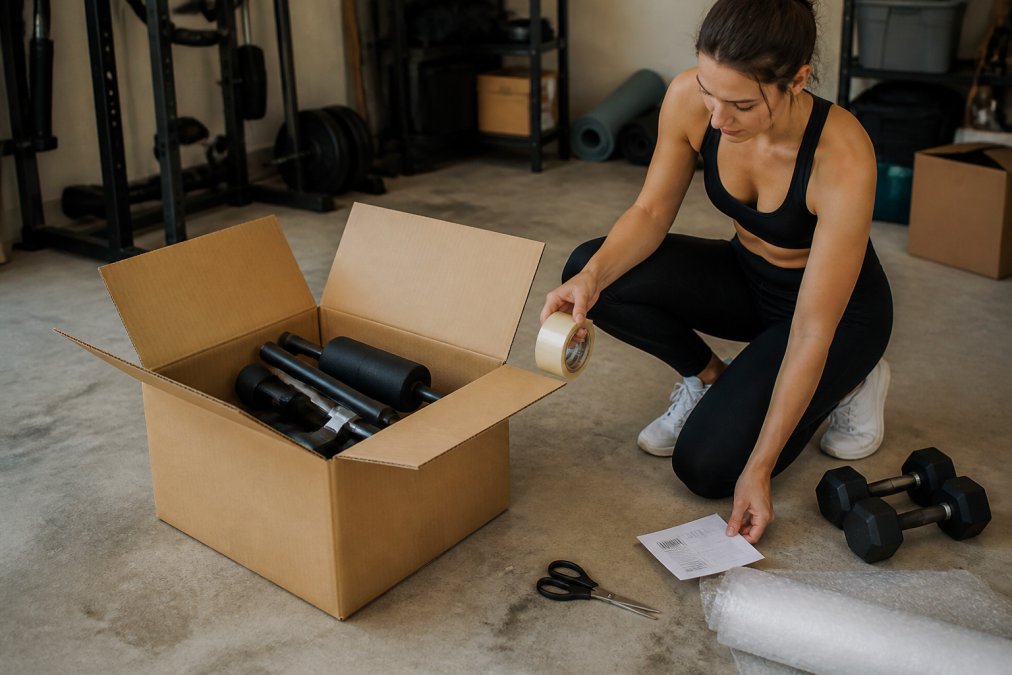
Start by requesting a return authorization from the seller. They will arrange a freight pickup or give you a carrier to contact. Keep the original packaging and pallet if possible. Photograph the equipment before it leaves so you have proof of condition. Label the shipment clearly with the return authorization number. Freight returns can take 5-10 business days to process after pickup, so plan for that timeline.
What is the typical return window for home gym equipment?
Most companies offer 30 days from delivery, though some extend to 60 or 90 days for unused items. The window usually starts on the delivery date, not the order date, which matters for freight-shipped equipment that takes weeks to arrive. Some brands require you to inspect and report shipping damage within 48-72 hours of delivery, separate from the return window. Check both deadlines before you sign for a delivery.
Returns are a logistics problem before they are a customer service problem, and the sellers who handle them well are the ones who state their terms plainly and help you fix a problem before you ship it back. GearrUp approaches it that way: easy returns on eligible items, free shipping, secure payment, and gear built with the comfort and durability that keeps it out of the return pile in the first place. Get started with GearrUp and shop equipment with terms you can actually read before you buy.

