

Table of Contents
- Why Your Gym Shoes Choice Directly Affects Performance
- Assess Your Foot Type Before You Shop
- Lifting vs Cardio Shoes: Key Differences Explained
- Best Cross-Training Shoes 2026: What to Look For
- Sizing, Fit, and Budget: Getting the Practical Details Right
- How to Tell If Gym Shoes Are Worn Out
- Post-Workout Recovery Footwear and Sustainability
- Conclusion
Last Updated: August 24, 2026
Why Your Gym Shoes Choice Directly Affects Performance
The wrong gym shoes actively work against you. Footwear directly influences force transfer, joint alignment, and injury risk across every movement pattern you train. Footwear choices can lead to common training issues, such as instability during squats or sluggishness during lateral cuts.
Gym shoes are not a universal category. The right choice depends entirely on what you're doing, how your foot moves, and what your training demands from the ground up. According to the American Podiatric Medical Association's footwear guidance, footwear that doesn't match your foot mechanics contributes to many musculoskeletal complaints, from knee pain to plantar fasciitis.
Assess Your Foot Type Before You Shop
Most people skip this step entirely. No amount of cushioning technology compensates for a shoe that fights your natural foot mechanics.
Pronation, Supination, and Arch Support
Pronation is the inward rolling of the foot during ground contact. Overpronation occurs when the arch collapses excessively inward; supination happens when the foot rolls outward and fails to absorb impact efficiently.
A quick assessment: wet your foot and step onto cardboard. A full footprint with little curve on the inner edge suggests flat feet and overpronation. A narrow band or gap in the middle indicates a high arch, correlating with supination. Overpronators benefit from stability shoes with medial arch support and firmer midsole construction. Supinators need cushioning that compensates for reduced natural shock absorption.
Heel-to-Toe Drop and Ankle Mobility
Heel-to-toe drop is the height difference between the heel and forefoot, measured in millimeters. A zero-drop shoe places both at the same level; a high-drop shoe (10mm or more) elevates the heel significantly.
This matters for ankle mobility. Tight calves and limited ankle dorsiflexion are common in adults who sit for extended periods. A higher heel-to-toe drop compensates for restricted mobility, making squats feel more accessible. A zero-drop shoe demands full ankle mobility to maintain proper form.
Before buying, test your ankle mobility: stand barefoot and attempt a squat. If your heels rise or your torso pitches forward excessively, a modest heel elevation (4-8mm) will serve you better than a flat sole.
Lifting vs Cardio Shoes: Key Differences Explained
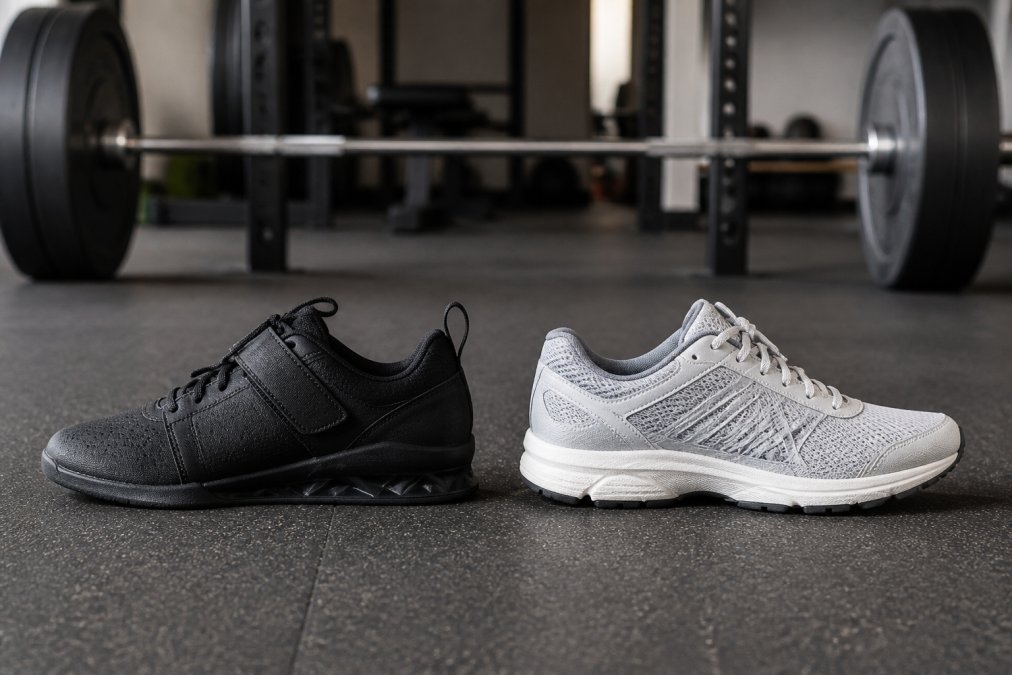
The single biggest footwear mistake in the gym is wearing the same pair for everything. Lifting and cardio place opposite demands on a shoe's construction.
Flat Base and Stability for Weightlifting
Weightlifting shoes need a flat, incompressible base. When you're moving heavy load, any compression in the midsole is energy lost and creates instability in the ankle and knee. Deadlifting in running shoes with thick cushioned midsoles causes the foam to compress under load, shifting your weight distribution and raising your center of gravity.
Dedicated weightlifting shoes often feature a raised heel (typically around 0.75 inches) to assist squat depth for athletes with limited ankle mobility, plus a wide, flat outsole for maximum ground contact. For powerlifting-style deadlifts, completely flat shoes or deadlift slippers keep the bar path as short as possible.
Cushioning and Energy Return for HIIT and Cardio
HIIT and cardio training require shock absorption and energy return. Repeated forefoot strikes, lateral cuts, and plyometric landings generate significant impact force. A shoe with too little cushioning transmits that load directly to the ankle, knee, and hip.
For HIIT, look for a midsole that balances cushioning with responsiveness. Modern foam compounds are engineered to compress and rebound, returning energy to the next stride. Cardio shoes also need sufficient lateral support to handle direction changes without the foot rolling over the outsole edge.
| Training Type | Key Shoe Feature | Heel-to-Toe Drop | Midsole Priority |
|---|---|---|---|
| Powerlifting / Deadlifts | Flat, firm base | 0-4mm | Firmness over cushioning |
| Olympic Weightlifting | Raised heel, rigid sole | 15-20mm | Stability and ground contact |
| HIIT / Circuit Training | Lateral support | 4-8mm | Cushioning + energy return |
| Steady-State Cardio | Forefoot flexibility | 6-10mm | Shock absorption |
| Cross-Training (hybrid) | Versatile outsole | 4-8mm | Balanced cushioning |
Best Cross-Training Shoes 2026: What to Look For
Cross-training shoes handle most training modalities without failing at any of it. The best cross-training shoes in 2026 strike a balance between the flat stability needed for lifting and the cushioning required for conditioning work.
Lateral Support and Outsole Traction
Lateral support is the structural integrity of the shoe's sidewall under sideways load. During lateral shuffles and cutting movements, the foot pushes against the inner edge of the shoe. Without sufficient lateral support, the foot rolls over the outsole edge, a setup for ankle sprains.
Look for a wider outsole platform and reinforced sidewalls in the midfoot region. A multi-directional lug pattern grips gym flooring during pivots. Flexibility in the forefoot is also worth checking: the shoe should flex at the ball of the foot, not at the arch.
Breathability, Durability, and Material Longevity
Breathability matters beyond comfort. A shoe that traps heat causes excessive sweating, which softens the midsole foam and accelerates wear. Upper materials that allow airflow maintain a more consistent internal environment that extends shoe lifespan.
Durability is where many budget gym shoes fail. The outsole rubber compounds used in lower-cost shoes wear through quickly on abrasive gym surfaces. Reinforced rubber in high-wear zones indicates construction quality. According to the Environmental Protection Agency's overview of textile and footwear waste, footwear represents a meaningful share of consumer goods ending up in landfills. Investing in well-constructed gym shoes is both a performance and environmental decision.
Sizing, Fit, and Budget: Getting the Practical Details Right
Gym shoes should fit differently from casual footwear: a thumb's width of space at the toe (to accommodate foot swelling during training), a snug midfoot with no lateral movement, and a heel that doesn't slip under load.
Many athletes size up half a size for training shoes because foot volume increases during sustained physical activity. If you're between sizes, go up rather than down. Width matters as much as length; a narrow shoe on a wide foot creates pressure points that cause blisters and restrict natural forefoot splay.
For budget-conscious shoppers, prioritize midsole quality and outsole construction, these are where cheap shoes fail fastest. A well-constructed shoe at a mid-range price point will outlast and outperform a premium-branded shoe with inferior foam compounds.
GearrUp's approach to gym footwear focuses on precision construction at fair prices. Check the current range at GearrUp for training footwear options that match your specific workout demands.
How to Tell If Gym Shoes Are Worn Out
Most people replace gym shoes too late. The visual cues that signal replacement are often internal, in the midsole foam, before the outsole shows obvious wear.
The clearest signs your gym shoes have reached end of life:
- Compressed midsole: Press your thumb firmly into the midsole. Fresh foam rebounds quickly; worn foam stays compressed or rebounds slowly.
- Uneven outsole wear: Significant wear on the lateral heel or forefoot indicates altered gait mechanics.
- Heel counter collapse: The rigid cup at the back of the shoe should not flex inward under hand pressure.
- Upper separation: Any separation between the upper and midsole means the adhesive bond has failed.
- Persistent soreness in new locations: Knee, shin, or plantar pain that develops without a change in training volume often points to degraded footwear.
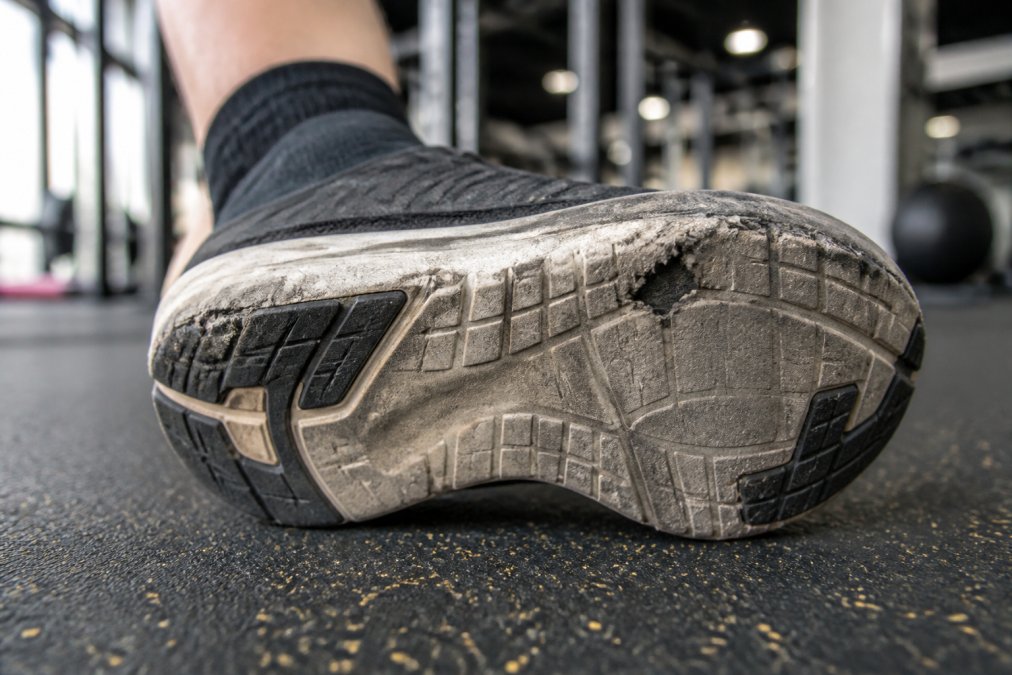
Gym shoes used for regular training four or more days per week typically need replacement within 12-18 months, regardless of appearance. The American Academy of Orthopaedic Surgeons' footwear guidance recommends replacing athletic footwear based on midsole integrity rather than cosmetic condition alone.
Post-Workout Recovery Footwear and Sustainability
After an intense session, the foot is fatigued, slightly swollen, and in need of decompression. Recovery slides and sandals with contoured footbeds provide arch support and cushioning without the compression of a laced training shoe. Many athletes who deal with chronic plantar issues find that structured recovery footwear worn immediately post-training significantly reduces morning stiffness.
Gym shoes are a high-consumption category; dedicated athletes cycle through multiple pairs per year. Practical steps toward more sustainable gym footwear decisions:
- Buy fewer, better-quality shoes that last longer rather than cycling through cheap pairs.
- Rotate between two pairs if training volume is high; alternating allows midsole foam to decompress fully between sessions.
- Look for brands that use recycled or responsibly sourced materials in upper construction.
- Resole or repair when possible before replacing.
The Sustainable Apparel Coalition's Higg Index framework for footwear provides a useful reference for evaluating the environmental impact of footwear materials.
Choosing the right gym shoes in 2026 is ultimately a biomechanical and practical decision, not a branding one. Match the shoe to the training, fit it correctly, replace it before the midsole fails, and think beyond the initial purchase to the full lifecycle of what you're buying.
Finding the right training gear is harder than it should be when most brands prioritize marketing over construction quality. GearrUp is built around a different premise: precision-crafted fitness gear at fair prices, designed to perform through real training demands. Whether you're after performance apparel, training equipment, or workout essentials, GearrUp backs every purchase with free shipping, easy returns, and secure payment. Get started with GearrUp and gear up with equipment that's built to move with you.
Frequently Asked Questions
Q: How do I choose the right gym shoes for my specific workout style?
A: Match the shoe to what you do most. If you lift heavy, prioritize a flat base, minimal heel-to-toe drop, and firm midsole for stability. For HIIT or cardio-heavy sessions, look for cushioning, lateral support, and flexible outsoles that handle multidirectional movement. If your training mixes both, a cross-training shoe built for hybrid workouts is your most practical option. Getting this match right reduces injury risk and improves ground contact during key movements.
Q: What is the difference between running shoes and cross-training shoes?
A: Running shoes are engineered for forward motion, they have elevated heel-to-toe drop, thick cushioning for shock absorption, and flexible forefoot zones. Cross-training shoes are built for lateral movement, squats, jumps, and varied gym exercises. They sit flatter, offer more lateral support, and use firmer midsoles that don't compress under load. Using running shoes for lifting or HIIT reduces stability and can increase injury risk because the cushioning works against ground contact and power transfer.
Q: How often should I replace my gym shoes?
A: Most gym shoes hold up for 6 to 12 months of regular training before the midsole firmness and outsole traction degrade enough to affect performance. Key warning signs: visible midsole compression, uneven wear and tear on the outsole, reduced cushioning feel underfoot, or upper materials separating from the sole. If you train five or more days per week, check your shoes every three months. Worn-out gym shoes increase joint stress and reduce the stability your training depends on.
Q: Which shoe features are most important for HIIT training?
A: HIIT demands shoes that handle rapid direction changes, jumping, and ground contact from multiple angles. Prioritize lateral support to protect your ankles, a flexible outsole with reliable traction, and enough cushioning to absorb repeated impact without being so soft that it compromises stability during strength intervals. Breathability matters too, HIIT sessions run hot. A shoe with a mesh upper and a moderately cushioned midsole that balances shock absorption with responsiveness handles the full range of HIIT demands.
Q: Can I use one pair of gym shoes for both lifting and cardio?
A: Yes, if you choose a cross-training shoe designed for hybrid training. These sit lower to the ground than running shoes, giving you the flat base and stability needed for squats and deadlifts, while still offering enough cushioning and outsole flexibility for cardio intervals and HIIT. They are a practical compromise for most gym-goers. However, if you compete in powerlifting or log heavy cardio mileage, dedicated shoes for each activity will serve you better.
Q: What are the gym shoe trends for 2026?
A: The strongest trend in 2026 is training specificity, shoes engineered for defined workout types rather than generic 'athletic' use. Buyers are prioritizing midsole firmness data, heel-to-toe drop specs, and outsole durability over brand recognition. Sustainability is growing in importance, with more shoppers asking about material longevity and production practices. There is also increased interest in post-workout recovery footwear as part of a complete training kit, not just an afterthought.
This article was written using GrandRanker

