

Table of Contents
- Why Athletic Wear Needs Different Care Than Regular Clothes
- Step-by-Step: How to Wash Athletic Wear Properly
- Best Laundry Detergent for Gym Clothes
- How to Remove Sweat Smell from Polyester and Other Synthetics
- Can You Put Athletic Wear in the Dryer?
- Fabric-Specific Care: Merino, Spandex, and Polyester
- Microplastic Shedding and Washing Machine Maintenance
- Wash Athletic Wear Right to Make It Last
Last Updated: August 23, 2026
Why Athletic Wear Needs Different Care Than Regular Clothes
Athletic wear is engineered fabric. The moisture-wicking polyester, spandex blends, and breathable synthetics that make your leggings squat-proof and your running shirt sweat-resistant require different care than cotton.
Synthetic fibers trap body oils, sweat residue, and bacterial buildup inside the weave. Heat bakes those residues in. Fabric softener destroys moisture-wicking performance. Standard laundry routines were designed for cotton, not activewear.
Step-by-Step: How to Wash Athletic Wear Properly
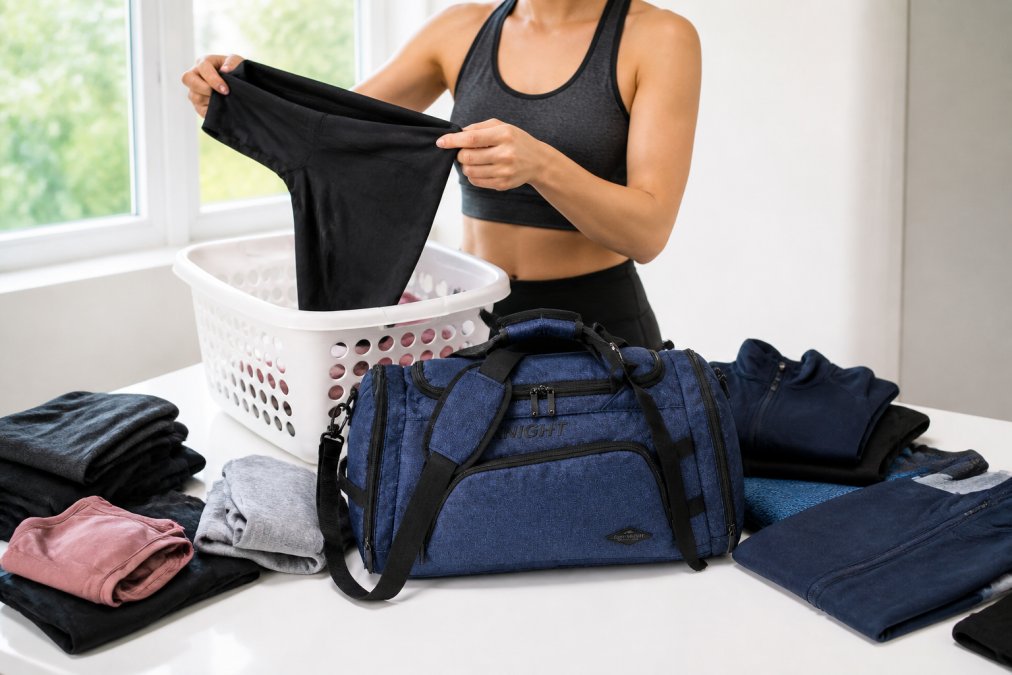
Step 1: Handle Gear Right After Your Workout
Pull your gym gear out immediately after training. Moisture trapped in synthetic fibers creates the perfect environment for bacterial buildup and mildew, causing deep-set odor that survives multiple wash cycles.
If you can't wash right away, hang it somewhere with airflow rather than leaving it balled up in your gym bag. A waterproof gym bag with a separate wet compartment, like the GearrUp Waterproof Gym Bag with Shoe Compartment, helps because it keeps damp clothes isolated without sealing in moisture.

Don't let sweaty activewear sit more than 24 hours before washing. That's when bacterial colonies establish themselves and odor becomes much harder to remove.
Step 2: Sort by Fabric Type Before Washing
Sort gym gear by fabric type first. Merino wool needs gentler handling than polyester. Spandex-heavy garments can't handle the same wash cycle as a basic polyester shirt.
A practical sorting system:
- Heavy synthetics (polyester, nylon): standard cold water, gentle cycle
- Spandex blends (leggings, compression gear): cold water, delicate cycle
- Merino wool: cold water, wool or delicate cycle, never with synthetics
- Cotton-blend gym wear: cold water, normal cycle
Keep athletic wear separate from regular laundry. Jeans, towels, and rough fabrics create friction that pills and damages synthetic fibers. Zippers and velcro are particularly destructive.
Step 3: Turn Garments Inside Out and Pre-Soak
Turn every piece inside out before washing. The inside is where sweat, body oils, and bacterial residue accumulate and need direct contact with water and detergent.
Pre-soak heavily used gear in cold water with white vinegar or specialized activewear detergent for 15 to 30 minutes. White vinegar breaks down sweat residue without damaging synthetic fibers. Baking soda works similarly and can be added to the soak or wash cycle for extra deodorizing.
Step 4: Set the Right Wash Cycle
Cold water is non-negotiable for athletic wear. Hot water breaks down elastic fibers, causes colors to bleed, and sets sweat stains permanently.
Use the gentle or delicate setting to protect elasticity and structural integrity. Keep spin speed low, high-speed spinning stresses seams and waistbands of compression garments. Run an extra rinse cycle when possible; detergent residue traps odor and reduces breathable fabric performance.
| Fabric Type | Water Temp | Cycle | Spin Speed |
|---|---|---|---|
| Polyester / Nylon | Cold | Gentle | Low |
| Spandex blends | Cold | Delicate | Low |
| Merino wool | Cold | Wool / Delicate | Low |
| Cotton-blend activewear | Cold | Normal | Medium |
| Compression gear | Cold | Delicate | Low |
Best Laundry Detergent for Gym Clothes
Use an enzyme-based formula specifically designed for synthetic and activewear fabrics. Standard detergents leave residue in synthetic fibers that traps odor and reduces moisture-wicking performance.
Enzyme-based detergents break down protein-based stains and odors at a molecular level, exactly what you need for sweat and body oils. Look for formulas labeled "sport," "activewear," or "technical fabric."
Practical rules for detergent use:
- Use less than the recommended amount. Excess detergent is harder to rinse from synthetic fibers.
- Avoid detergents with fabric softeners or "fresh scent" boosters. These coat fibers and block breathability.
- Skip dryer sheets entirely.
- Avoid bleach on colored activewear. It degrades spandex and polyester.
As noted in American Cleaning Institute's fabric care guidelines, residue buildup from detergent is one of the leading causes of reduced garment performance in synthetic fabrics.
How to Remove Sweat Smell from Polyester and Other Synthetics
Sweat smell in polyester is a structural problem. Polyester is hydrophobic, meaning it repels water. Water-based detergents struggle to penetrate the fiber and reach odor-causing bacteria inside.
The most reliable method uses a two-step approach:
- Pre-soak in white vinegar solution: Mix one part white vinegar with four parts cold water. Soak for 30 minutes. Vinegar's acidity neutralizes sweat compounds and disrupts bacterial cell walls.
- Wash with enzyme-based detergent: Follow with a cold water gentle cycle using activewear-specific enzyme detergent. Enzymes break down remaining protein residue.
For persistent odors, add half a cup of baking soda directly to the drum and run a cold gentle cycle. The baking soda absorbs residual odor compounds.
Hot water doesn't work. It sets odor-causing residue deeper into synthetic fibers and accelerates fiber breakdown.
According to textile care research published by the American Association of Textile Chemists and Colorists, enzyme-based treatments are significantly more effective at removing protein-based odors from synthetic fabrics than temperature-based approaches.
Can You Put Athletic Wear in the Dryer?
Athletic wear can go in the dryer only on the lowest heat setting. Air-drying is always better. High heat is the fastest way to destroy elasticity and moisture-wicking performance.
Spandex and elastane fibers degrade at sustained heat above 130°F. Most dryers run well above that threshold, causing gradual loss of elasticity, loose waistbands, and compression garments that no longer compress.
If you must use a dryer:
- Select the lowest heat or "air fluff" setting
- Remove garments while slightly damp and finish air-drying
- Never use dryer sheets
- Keep cycles short, under 20 minutes
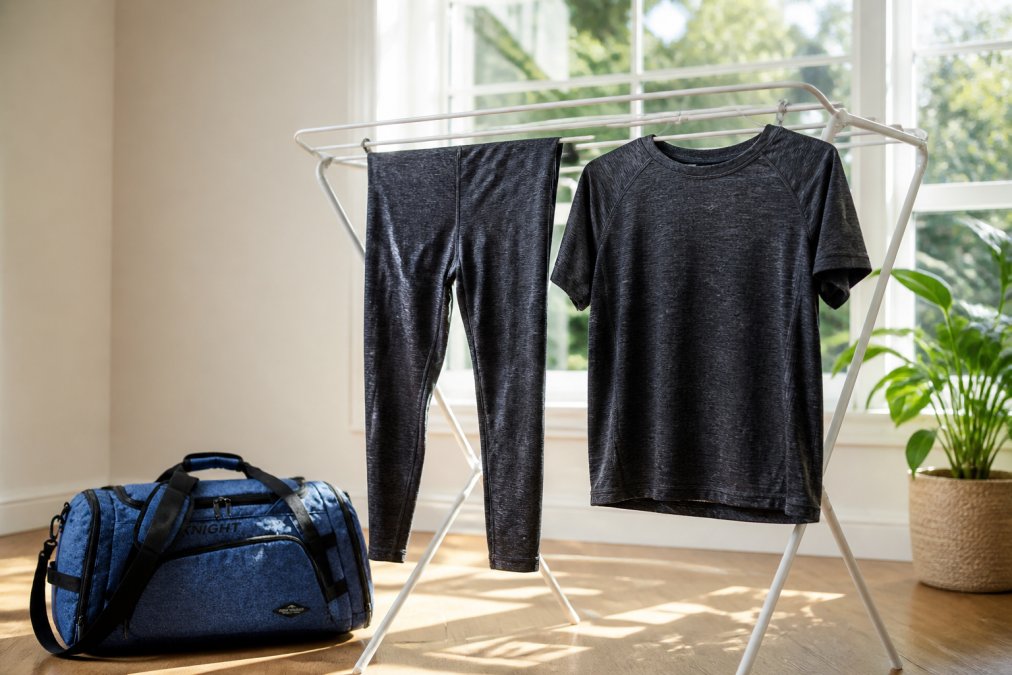
Air-drying is straightforward. Hang garments on a drying rack or clothesline away from direct sunlight. Indoors near a window with good airflow is ideal. Most activewear dries completely within a few hours.
Never put Merino wool in a standard dryer cycle. Lay it flat to dry to prevent stretching.
Fabric-Specific Care: Merino, Spandex, and Polyester
Different fabrics have genuinely different care requirements that affect longevity and performance.
Merino Wool
Merino is naturally odor-resistant, so it doesn't need frequent washing. Many Merino base layers can be worn multiple times between washes. When washing, use cold water on a wool or delicate cycle with wool-specific detergent. Never wring or twist Merino; lay it flat to dry.
Spandex (Elastane)
Spandex is the elasticity engine in compression leggings. It's the most heat-sensitive fiber in your gym wardrobe. Use cold water, delicate cycle, no dryer. Chlorine bleach destroys spandex rapidly. Body oils degrade spandex over time, which is why turning garments inside out and pre-soaking matters especially for compression gear.

Polyester
Polyester is the most durable but has the worst odor retention. Its hydrophobic nature means standard detergents struggle to fully penetrate and clean it. Enzyme-based detergents and white vinegar pre-soaks are most effective for maintaining polyester activewear.
The Textile Exchange's fiber care standards document how different synthetic and natural fiber types respond to heat, detergent chemistry, and mechanical stress during washing.
Microplastic Shedding and Washing Machine Maintenance
Synthetic athletic wear sheds microplastic fibers during every wash cycle. These microplastics pass through standard filters and enter waterways.
Practical steps to reduce shedding:
- Use a microplastic filter bag: Products like Guppyfriend bags capture shed fibers before they reach the drain and reduce mechanical friction on garments.
- Wash full loads: A full machine creates less friction per garment than a partial load.
- Use shorter, gentler cycles: Less mechanical agitation means fewer fibers released.
- Wash less frequently: Washing activewear only when genuinely needed reduces total shedding volume.
Washing machines that regularly handle gym clothes accumulate detergent residue, body oils, and bacterial growth in the drum and gasket. This transfers back onto clothing and causes persistent odor.
Run a hot maintenance cycle monthly with no clothes inside. Add white vinegar or a machine-cleaning tablet to the drum. Clean the rubber gasket and detergent drawer regularly.
Wash Athletic Wear Right to Make It Last
Knowing how to wash athletic wear properly comes down to five non-negotiable habits: cold water, gentle cycle, enzyme-based detergent, no fabric softener, and air-dry whenever possible.
The practical checklist for every wash:
- Remove gear from gym bag immediately after training
- Hang or air out if not washing within a few hours
- Sort by fabric type: Merino separate, spandex on delicate, polyester on gentle
- Turn all garments inside out
- Pre-soak heavily used items in cold water with white vinegar for 15-30 minutes
- Wash on cold, gentle or delicate cycle
- Use enzyme-based activewear detergent, less than the recommended dose
- Skip fabric softener and dryer sheets
- Air-dry or use dryer on lowest heat setting only
- Run a machine cleaning cycle monthly
The gear you invest in deserves the right care. Precision-crafted fabrics engineered for performance lose that performance faster when laundered carelessly.
Frequently Asked Questions
Q: What is the best way to wash athletic clothes?
A: Turn garments inside out, pre-soak in cold water with white vinegar for 15-30 minutes, then run a cold gentle cycle with an enzyme-based detergent. Skip fabric softener entirely, it coats synthetic fibers and traps odor over time. Air-dry whenever possible. This routine protects elasticity, preserves moisture-wicking performance, and prevents bacterial buildup that causes persistent sweat smell in polyester and spandex.
Q: Should you use fabric softener on gym clothes?
A: No. Fabric softener leaves a waxy residue on synthetic fibers like polyester and spandex. That coating blocks the breathable, sweat-wicking structure built into activewear fabrics, reducing performance and trapping odor-causing bacteria. Use white vinegar as a natural alternative, add about half a cup to the rinse cycle. It neutralizes odors, softens fabric slightly, and rinses out completely without damaging fiber structure.
Q: How do you get the smell out of synthetic workout gear?
A: Persistent odor in polyester and spandex comes from bacterial buildup in the fiber weave. Pre-soak the garment in cold water with half a cup of white vinegar or two tablespoons of baking soda for 20-30 minutes before washing. Follow with a cold gentle cycle using an enzyme-based laundry detergent, which breaks down the proteins in body oils and sweat. Avoid hot water, it sets odor rather than removing it.
Q: Can you wash athletic clothes with normal clothes?
A: You can, but it is not ideal. Athletic wear made from synthetic fibers like polyester and spandex needs a cold, gentle cycle that most cotton garments do not require. Washing them together risks exposing activewear to hotter temperatures or longer spin cycles that degrade elasticity and cause fiber damage. If you must mix loads, set the machine to cold water and a gentle cycle, and keep denim or heavy fabrics separate to avoid abrasion.
Gear that holds up through hard training sessions also needs to survive the laundry room. GearrUp's activewear is designed for durability under everyday pressure, but even precision-crafted fabrics benefit from the right care routine. Follow the steps above and your gear will maintain its fit, moisture-wicking performance, and elasticity significantly longer. Ready to upgrade your kit with apparel built to last? Browse GearrUp's performance range and get started with gear that moves with you.
This article was written using GrandRanker

