

Table of Contents
- What Gym Gear for Beginners Actually Needs to Do
- How to Choose Workout Clothes for the Gym
- Essential Gym Accessories for Beginners
- Beginner Weightlifting Gear Checklist
- Fitness Trackers and Wearables for Gym Beginners
- Gear for Specific Fitness Goals: Weight Loss vs. Muscle Gain
- Gym Bag Organization, Hygiene, and Space-Saving Tips
- Conclusion
Last Updated: August 21, 2026
What Gym Gear for Beginners Actually Needs to Do
Gym gear for beginners has one job: remove friction between you and your workout. Not impress anyone. Not signal that you're serious. Remove friction.
The GearrUp team works with everyone from 52-year-olds returning to fitness after a decade off to cyclists training six days a week, and the pattern is consistent. Beginners who buy the wrong gear quit faster. They quit because their leggings roll down mid-squat, their shoes give them knee pain, or their cheap resistance bands snap on week three.
Good gym gear for beginners needs to do four things well:
- Stay in place during dynamic movement (squats, lunges, burpees)
- Manage sweat so you're not soaking through cotton after 10 minutes
- Support the specific movements you're training (lifting vs. cardio vs. flexibility work)
- Hold up over time so you're not replacing it in three months
According to the American Council on Exercise's beginner training guidelines, equipment selection directly affects training consistency for new exercisers. The wrong gear creates discomfort that compounds into excuses.
This guide covers everything you need: clothing, accessories, weightlifting essentials, wearables, and goal-specific gear, plus gym bag organization and space-saving setups.
How to Choose Workout Clothes for the Gym
The biggest mistake beginners make with workout clothing is buying based on appearance rather than function. A good-looking set that fails during your third set of squats is worse than a plain set that performs perfectly.
Sweat-Wicking Fabrics and Breathability
Sweat-wicking fabric pulls moisture away from the skin and moves it toward the outer surface, where it evaporates. Cotton absorbs sweat and holds it against your body, creating chafing, odor, and discomfort.
Look for polyester blends, nylon, or purpose-built technical apparel. Breathability matters most in areas that generate the most heat: underarms, the back, and inner thighs. Mesh panels in these zones are functional features.
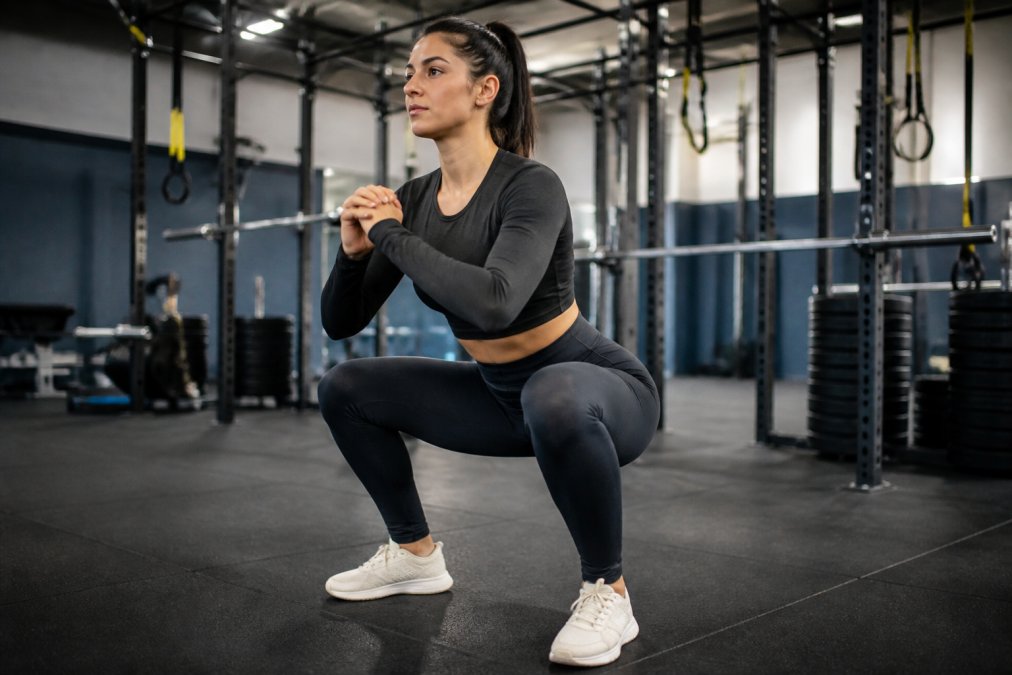
For high-intensity interval training or cardio, moisture management is the primary factor. For strength training, it drops to second priority behind structural performance.
Fit, Stability, and Squat-Proof Construction
Squat-proof construction refers to fabric opacity, waistband engineering, and seam placement that prevents the garment from becoming sheer, rolling, or shifting during loaded movement.
The waistband is the most important element. A wide, high-rise waistband with internal grip tape or double-layer construction stays anchored during squats, deadlifts, and hip hinge movements. GearrUp's precision-crafted apparel is engineered with construction designed for intense training sessions, not just casual wear.
For tops, look for a fitted cut that doesn't bunch when bent over or pressing overhead. A practical test before buying: hold the fabric up to light and stretch it to 150% of its resting size. If it becomes sheer, it will during a squat.
Essential Gym Accessories for Beginners
Exercise Mat and Foam Roller
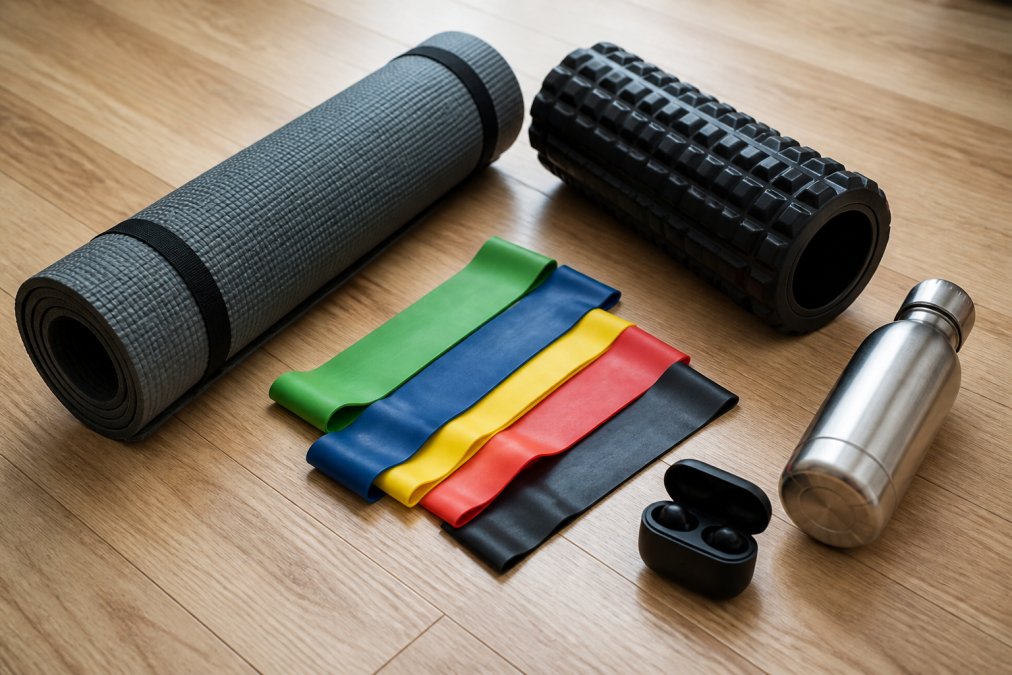
An exercise mat is non-negotiable for floor work, stretching, and bodyweight exercises. The Gaiam Premium Yoga Mat at 6mm thickness balances joint cushioning with stability. The non-slip surface is critical for safety during planks and downward dogs.
A foam roller is the most underused piece of equipment in any beginner's kit. Regular use before and after training improves mobility and reduces muscle soreness. According to the National Academy of Sports Medicine's guide to self-myofascial release, foam rolling before training can improve range of motion without reducing muscle performance, unlike static stretching.
Resistance Bands and Wrist Wraps
Resistance bands are the most versatile piece of portable gym equipment available. A set of three to five bands at different resistance levels covers warm-up activation, mobility work, and supplementary strength training.
Wrist wraps become relevant once you're lifting heavier loads. They provide joint support during pressing movements and reduce grip fatigue. For beginners under three months of training, wrist wraps are optional. After that, as loads increase, they're a smart addition.
Water Bottle and Wireless Earbuds
The Hydro Flask Standard Mouth 24 oz bottle ($39.95) keeps water cold through TempShield double-wall vacuum insulation. The leakproof design matters for gym bags.
For earbuds, the JBL Reflect Aero ($149.95) offers True Adaptive Noise Cancelling and a secure fit during intense movement. If budget is a barrier, the Anker Soundcore Life P3 ($79.99) delivers multi-mode ANC and IPX5 water resistance at roughly half the cost.
Beginner Weightlifting Gear Checklist
Strength training gear for beginners should support progressive overload safely, meaning you can incrementally increase the challenge without the gear becoming a limiting factor.
| Gear Item | Priority Level | Best For | Notes |
|---|---|---|---|
| Adjustable dumbbells | High | Strength training, progressive overload | Space-saving vs. full rack |
| Resistance bands | High | Activation, mobility, supplementary work | Essential for home gym |
| Flat weight bench | Medium | Pressing movements, rows | Optional for home gym |
| Wrist wraps | Medium | Pressing, pulling under load | Add after 3 months |
| Lifting belt | Low | Heavy compound lifts | Not needed until intermediate |
| Chalk/grip aid | Low | Grip strength on pulls | Useful for deadlifts |
Adjustable Dumbbells and Resistance Bands
Adjustable dumbbells are the single most important investment for a home gym setup. They collapse an entire weight range into one compact unit, making them ideal for anyone with space constraints.
The combination of adjustable dumbbells and resistance bands covers the full spectrum of beginner strength training: compound movements, isolation work, and activation drills. For progressive overload tracking, keep a simple training log with weight, sets, and reps. Aim to increase one variable every one to two weeks.
Athletic Footwear for Lifting vs. Cardio
For lifting: You need a flat, stable sole with minimal cushioning. The Nike Metcon 9 ($150-$169.99) is purpose-built for this, with a Hyperlift plate for heel stability during heavy lifts and a wider toe box for natural foot splay.
For cardio: Cushioning and flexibility become the priority. The Under Armour Charged Assert 10 ($75) provides responsive cushioning for everyday runs at an appropriate beginner price point.
If you're splitting time between lifting and cardio, start with a cross-trainer. If you're primarily lifting, invest in a dedicated lifting shoe from the start.
Fitness Trackers and Wearables for Gym Beginners
A fitness tracker is useful for beginners primarily because it creates accountability through data. Seeing your resting heart rate trend downward or watching your step count increase provides concrete evidence that training is working.
The Fitbit Charge 6 ($159.95) is the strongest value proposition for beginners. It includes built-in GPS, heart rate broadcasting to gym equipment, SpO2 blood oxygen monitoring, and an ECG app. Battery life reaches up to seven days.
The Apple Watch SE 2nd Gen ($249) makes sense specifically for iPhone users who want seamless integration with Apple Health. The 18-hour battery life requires daily charging, which some find disruptive to sleep tracking.
As documented in the American Heart Association's physical activity recommendations, monitoring exercise intensity through heart rate data helps new exercisers stay within effective training zones.
Gear for Specific Fitness Goals: Weight Loss vs. Muscle Gain
For weight loss (cardiovascular health focus):
- Fitness tracker with heart rate monitoring
- Resistance bands for circuit training and HIIT
- Quality exercise mat for floor-based cardio
- Supportive cardio shoes
For muscle gain (strength training focus):
- Adjustable dumbbells with a wide weight range
- Flat, stable lifting shoes
- Wrist wraps for pressing movements once loads increase
- Training log to track progressive overload weekly
The most common mistake is buying gear for the goal you want rather than the training you'll actually do.
Gym Bag Organization, Hygiene, and Space-Saving Tips
Gym bag organization by zone:
- Main compartment: Training shoes (in a shoe bag), extra clothing, resistance bands
- Side pockets: Water bottle (always accessible)
- Front zip pocket: Earbuds, fitness tracker charger, small lock
- Interior mesh pocket: Wrist wraps, chalk, training log
Gym bags are high-bacteria environments. Either transfer wet clothes to a separate waterproof laundry bag immediately after training, or air out the bag before sealing it.
Space-saving solutions for small apartments:
Use vertical storage and multi-use equipment. Resistance bands hang on a single hook. Adjustable dumbbells replace an entire rack. A foldable exercise mat stores flat against a wall. A complete beginner home gym fits in a 3-foot by 3-foot floor area when stored.
GearrUp's approach to gear is built around this reality: performance equipment that earns its place in a compact kit, with free shipping and easy returns.
| Setup Type | Essential Gear | Space Required | Best For |
|---|---|---|---|
| Home gym (small apartment) | Resistance bands, adjustable dumbbells, foldable mat, foam roller | 3 ft x 3 ft stored | Space-constrained beginners |
| Gym bag kit | Earbuds, wrist wraps, water bottle, training log | Standard gym bag | Commercial gym users |
| Full home gym | Above + weight bench, barbell, pull-up bar | Dedicated room | Serious home trainees |
Frequently Asked Questions
Q: What are the essential gym gear items for a beginner in 2026?
A: The core items every beginner needs are a supportive pair of athletic shoes suited to their primary activity, moisture-wicking workout clothes, an exercise mat, resistance bands, and a durable water bottle. From there, a fitness tracker and foam roller round out a solid starter setup. These basics cover bodyweight exercises, light strength training, and cardio sessions without overinvesting before you know your routine.
Q: Are expensive gym accessories worth the investment for beginners?
A: Not always. For clothing and shoes, spending more often means better durability, breathability, and fit, which directly affects performance and comfort. For equipment like resistance bands and foam rollers, mid-range options perform nearly as well as premium ones. Prioritize quality where it touches your body: shoes, apparel, and grip accessories. Accessories like water bottles and earbuds have solid options at various price points. Visit GearrUp's site for current pricing on performance-grade gear built to last.
Q: How should beginner gym clothes fit for maximum performance?
A: Workout clothes should allow a full range of motion without bunching, rolling, or riding up. Leggings and shorts should sit firmly at the waist through squats and lunges. Tops should skim the body without restricting arm movement. Avoid anything too loose around the legs during lower-body work, fabric can catch on equipment. Sweat-wicking fabrics that move with you matter more than the exact fit style. When in doubt, size up in tops and true-to-size in bottoms with a wide waistband.
Q: What is the best gym equipment for a beginner starting at home?
A: For a home gym setup, adjustable dumbbells and resistance bands give the most versatility per dollar. Add a quality exercise mat for floor work and stretching, a foam roller for workout recovery, and a stability tool like a balance pad if mobility is a focus. These items cover strength training, cardiovascular health circuits, and bodyweight exercises. They also store easily, making them ideal for small apartments where space is limited.
Q: How do I track progressive overload as a beginner without a personal trainer?
A: Progressive overload means gradually increasing the challenge on your muscles over time, through more weight, more reps, or less rest. A simple workout log (paper or app) works well. Record the exercise, weight or resistance level, sets, and reps each session. Aim to increase one variable every one to two weeks. A fitness tracker with heart rate monitoring adds another layer by showing when your body is adapting. Consistency in tracking matters more than the tool you use.
Q: What gym gear trends are shaping 2026?
A: The biggest shifts in 2026 are toward multifunctional apparel that moves from training to daily wear, fitness trackers with health monitoring beyond step counts (ECG, SpO2, stress scoring), and compact home gym equipment designed for small spaces. Sweat-wicking technical fabrics with four-way stretch are now standard at mid-range price points. Wireless earbuds with active noise cancellation and secure sport fits have also become a staple rather than a luxury for active users.
Starting a fitness routine is straightforward. Staying consistent is where most people struggle, and the right gear removes the friction that creates excuses. GearrUp designs precision-crafted sports apparel and fitness equipment for exactly this purpose: performance quality at fair prices, with free shipping and easy returns so there's no risk in getting started. SHOP EQUIPMENT at GearrUp and build a kit that moves with you.
This article was written using GrandRanker

