

Table of Contents
- Why Return Policy Quality Matters Before You Buy
- Step 1: Locate and Read the Full Return Policy
- Step 2: Understand the Return Window and Proof of Purchase Requirements
- Step 3: How to Spot Hidden Restocking Fees and Shipping Costs
- Step 4: Distinguish Quality Defects from Normal Wear and Tear
- Retail Return Policy Best Practices: Red Flags to Watch For
- Return Policy vs. Quality Guarantee: Know the Difference
- Step 5: Test the Policy Before You Commit
Last Updated: August 25, 2026
Why Return Policy Quality Matters Before You Buy
A strong return policy isn't just about getting your money back, it's your safety net when a purchase doesn't meet expectations. Before committing to any retailer, you need to understand what "quality" actually means in their return policy and how well they'll stand behind their products if something goes wrong.
At GearrUp, we believe that how a company handles returns reveals everything about how much they trust their own products. A transparent, customer-friendly return policy signals confidence. A buried policy filled with hidden fees and restrictive conditions signals the opposite.
The problem most buyers face: they don't evaluate return policies until they've already made a purchase and something goes wrong. By then, it's too late. You're stuck reading fine print you should have read before clicking "buy." This guide walks you through exactly what to look for so you can assess return policy quality upfront, before your money is on the line.
Step 1: Locate and Read the Full Return Policy
Finding the actual policy is your first test. If a retailer makes it difficult to locate, that's already a red flag.
Where to find the policy
Start at the footer of the retailer's website. Most legitimate retailers include a link to their return policy in the footer, usually labeled "Returns," "Shipping & Returns," or "Terms & Conditions." Click it and read the full document. Don't settle for a summary or FAQ section. You need the complete policy.
If you can't find a link in the footer, try searching "[retailer name] return policy" in your browser. If that doesn't work, look for a customer service or help section. Some retailers bury their policy under "Policies" or "Legal."
Red flag: If a retailer doesn't publish a return policy online at all, don't buy from them. A company that won't state its terms upfront is showing you exactly how much it values transparency.
What the return window tells you
The return window is the number of days you have to initiate a return after purchase. This is the first number you should look for in any return policy.
Standard return windows range from 14 days to 90 days (the FTC). A 30-day window is common across most retailers. Some offer 60 or 90 days, which gives you more flexibility. A return window shorter than 14 days is restrictive and suggests the retailer isn't confident in their products.
The return window also tells you something important: whether the clock starts from the date you ordered or the date you received the item. This matters. If it starts from the order date and shipping takes 5 days, you've already lost 5 days of your window before the item even arrives. Better policies start the clock from the delivery date.

Step 2: Understand the Return Window and Proof of Purchase Requirements
Once you've found the return window, the next critical element is proof of purchase. This is what the retailer will demand from you to process your return.
Most retailers require either your order receipt or your account login to verify the purchase. Digital receipts sent via email work fine. Some retailers require the original receipt printed out, which is less convenient but still reasonable.
What you're looking for: Does the retailer make proof of purchase verification straightforward? Or do they require multiple forms of documentation that are hard to gather?
A quality return policy accepts proof of purchase in multiple formats, email receipt, account history, credit card statement. A restrictive one demands the original physical receipt only, knowing that many customers won't have kept it.
Also check whether the retailer requires you to provide the original receipt at the time you initiate the return, or whether they can look it up using your email address or account. The latter is far more customer-friendly.
Step 3: How to Spot Hidden Restocking Fees and Shipping Costs
This is where many return policies hide their true cost. A retailer might advertise free returns, but the fine print reveals different conditions depending on why you're returning the item.
Restocking fees are charges the retailer takes from your refund for the cost of processing the returned item back into inventory. These can range from 10% to 50% of the purchase price (the FTC). Some retailers only charge restocking fees for certain categories of items, apparel, for example, often carries a higher restocking fee than electronics.
Read the policy carefully for language like "restocking fee," "processing fee," "handling fee," or "return fee." These are all variations of the same thing: money the retailer keeps from your refund.
Shipping costs are another hidden expense. Some retailers offer prepaid return labels (they cover the cost). Others require you to pay for return shipping out of pocket. The difference can be significant, return shipping can cost $10-20 depending on the package weight and destination (usps.gov).
What to look for: A quality return policy either covers return shipping entirely or provides a prepaid label. If the policy requires you to pay return shipping, that's a cost you need to factor into your decision to return. If the retailer only covers return shipping for defective items but not for change-of-mind returns, that's a distinction worth understanding before you buy.
Step 4: Distinguish Quality Defects from Normal Wear and Tear
This is where return policy language gets deliberately vague, and where many customers get stuck.
What counts as a manufacturing flaw
A manufacturing flaw is a defect that existed when the product left the factory. Examples include:
- Seams that are stitched incorrectly or come undone immediately
- Fabric with holes, tears, or damage that wasn't caused by use
- Broken zippers, snaps, or closures
- Dye that runs or bleeds when washed
- Elastic that loses its stretch after one wash
- Stitching that unravels from normal wear
The key distinction: Did the defect exist because of how the product was made, or because of how you used it?
Objective quality assessment checklist
Before you return something claiming a quality defect, inspect it using this checklist. This is what a retailer's customer service team will be looking for, and having documentation helps your case.
Fabric and construction:
- Check all seams for loose threads, gaps, or separation
- Look for any holes, tears, or damage that wasn't caused by stretching or snagging
- Examine hems and edges for unraveling or poor finishing
- Feel for any bumps, lumps, or inconsistencies in the weave
Closures and hardware:
- Test zippers, do they slide smoothly or stick?
- Check snaps, buttons, or velcro for secure attachment
- Look for missing hardware or broken pieces
Elastic and fit elements:
- Test waistbands, cuffs, and leg openings for proper tension
- Check if elastic is fraying or coming loose at the edges
- Verify that the item fits as described (not a sizing issue, but actual construction problems)
Color and finish:
- Look for dye inconsistencies or color variations
- Check for stains or discoloration that came with the item
Take photos of any defects you find. Close-up photos with good lighting are invaluable if you need to dispute a denial. Show the defect in context, photo of the entire item, then zoomed-in shots of the problem area.
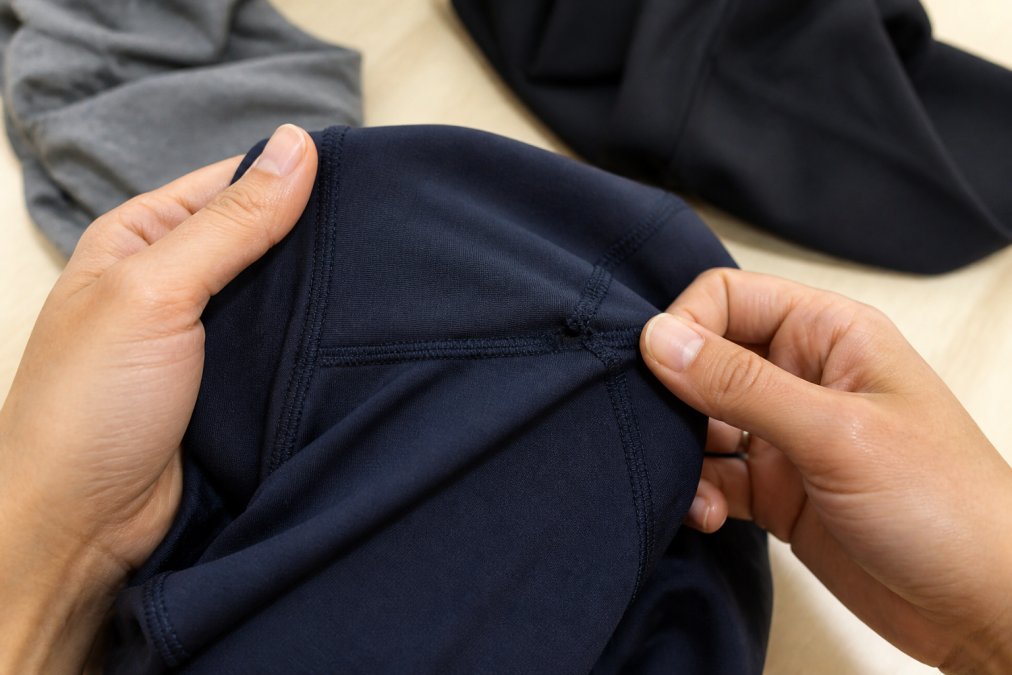
Normal wear and tear, by contrast, is damage that results from using the product as intended. This includes:
- Fading from repeated washing or sun exposure
- Slight pilling on fabric from friction
- Minor stretching of elastic from regular wear
- Small stains that developed during normal use
- General loosening of seams after months of wearing
Most retailers explicitly exclude normal wear and tear from their return policy. This is where the language matters. A quality policy defines what counts as wear and tear so there's no ambiguity. A vague policy says something like "items in good condition" without explaining what that means.
Retail Return Policy Best Practices: Red Flags to Watch For
Certain phrases and conditions in return policies signal that the retailer is more interested in protecting itself than in standing behind its products.
"Final sale" or "all sales final" items: Some retailers mark certain items as non-returnable. This is a major red flag. If a retailer won't accept returns on specific products, ask yourself why. Are those items prone to defects? Are they lower quality? A quality return policy applies to all items equally.
"Item must be unworn and unwashed": This is unreasonable for apparel. You can't fully assess whether something fits or works for you without trying it on. A quality policy allows returns on items that have been tried on or washed once, as long as they're returned in resaleable condition.
Restocking fees on all returns: If the retailer charges a restocking fee on every return, including returns for defective items, that's a sign they're prioritizing profit over customer satisfaction. A quality policy waives restocking fees for manufacturing defects.
Vague language about what qualifies as "defective": Phrases like "significant defects" or "material flaws" without clear definitions are intentionally vague. This gives the retailer room to deny your claim. A quality policy defines exactly what counts as a defect.
Return shipping costs on the customer: If the retailer requires you to pay for return shipping, they're shifting costs to you. This is common, but it's still a cost factor. A quality policy covers return shipping, at least for defective items.
Requiring original packaging: Some policies require that items be returned in original packaging. This is often unrealistic, you may have already discarded the box. A quality policy accepts returns in any secure packaging as long as the item arrives in good condition.
No clear escalation process: If the policy doesn't explain what happens if your return is denied, that's a problem. A quality policy explains how to appeal a denial or escalate to a supervisor.
Return Policy vs. Quality Guarantee: Know the Difference
These terms are often confused, but they mean different things, and that distinction matters when something goes wrong.
A return policy is the retailer's process for accepting returned items and issuing refunds. It covers the mechanics: how long you have to return, what condition the item must be in, what documentation you need, whether you get store credit or a refund, and what fees apply.
A quality guarantee (sometimes called a "quality promise" or "satisfaction guarantee") is the retailer's commitment that the product will meet a certain standard. It's a promise about the product itself, not just the process for returning it.
The difference: A return policy tells you HOW to return something. A quality guarantee tells you WHAT happens if the product doesn't meet expectations.
Some retailers offer both. GearrUp, for example, combines a straightforward return policy with a commitment to premium quality, meaning the products are engineered to perform under everyday pressure and intense training. That commitment is backed by the return policy: if the gear doesn't deliver on that promise, the return process is straightforward.
A quality guarantee often includes language like:
- "We stand behind our products"
- "If you're not satisfied, we'll make it right"
- "We guarantee [specific performance outcome]"
- "Defects will be replaced at no cost"
A return policy, by contrast, focuses on the process:
- "Returns accepted within 30 days"
- "Items must be in original condition"
- "Refunds issued within 5-7 business days"
When evaluating a retailer, look for both. A strong return policy + a clear quality guarantee = a retailer that's confident in what they sell.
Step 5: Test the Policy Before You Commit
The best way to assess a retailer's return policy is to test it on a small purchase before you commit to a larger one.
Buy a single item. Something inexpensive, something that lets you evaluate the retailer's actual behavior without significant financial risk. Then, if something goes wrong, the item doesn't fit, it arrives damaged, or a seam comes undone, initiate a return.
Pay attention to:
- How easy is it to find the return form or initiate the return process?
- How quickly does the retailer respond to your return request?
- Do they provide a prepaid return label or require you to pay for shipping?
- How long does it take to process the return and issue a refund?
- If you dispute something, is there a clear escalation path?
This test return tells you far more than reading the policy ever will. You'll see whether the retailer's actual behavior matches what the policy promises.
Document everything. Take screenshots of the policy, save emails from customer service, photograph any damage or defects. If there's ever a dispute, you'll have evidence to back up your claim.
Choosing where to buy fitness gear comes down to trust. You need to trust that the product will perform, that it will last, and that if something goes wrong, the retailer will handle it fairly. A quality return policy is how retailers prove that trust. Before you buy from any retailer, including GearrUp, read the full return policy, understand the return window, check for hidden fees, and know exactly what counts as a defect. Then, if you ever need to return something, you'll know exactly where you stand.
=== FAQ ANSWERS (audit these too, same rules) ===
[1] Q: What should I look for when checking a return policy quality before purchasing? A: Focus on four core elements: the return window (typically 30-90 days), proof of purchase requirements, what counts as a quality defect versus wear and tear, and any hidden fees. Check if the policy requires original packaging, receipt verification, and documentation for claims. A transparent policy clearly defines eligible items, restocking fees, shipping costs, and the claim submission process. Compare these terms across retailers to identify which ones prioritize customer protection and policy transparency.
[2] Q: How can I tell the difference between a return policy and a quality guarantee? A: A return policy sets the timeframe and conditions for sending items back for any reason (buyer's remorse, size issues, etc.). A quality guarantee specifically covers manufacturing flaws and defective merchandise, items that don't meet the brand's stated standards. Check the fine print: if the policy emphasizes 'defective merchandise' and 'manufacturing flaws' separately from general returns, you have warranty coverage. This distinction matters because quality guarantees often last longer and have fewer restrictions.
[3] Q: What are common red flags in retail return policies? A: Watch for vague language around 'quality defects' without clear examples, restocking fees that aren't disclosed upfront, policies requiring items in 'like-new condition' (nearly impossible to prove), no mention of how case-by-case evaluation processes work, or buried fine print about non-returnable items. Red flags also include policies that shift burden of proof to you (requiring expensive testing), unclear escalation paths for denied claims, and terms that change without notice. Transparent retailers list these details prominently; if you have to hunt for return logistics or claim submission steps, that's a warning sign.
[4] Q: How do I know if a return policy actually covers quality defects? A: Look for explicit language distinguishing 'defective merchandise' or 'manufacturing flaws' from general returns. The policy should define what qualifies: seam failures, fabric tears from normal use, color bleeding, or stitching that comes undone. Verify the documentation needed, most require photos, a description of the flaw, and proof of purchase. If the policy only mentions 'buyer's remorse' returns and avoids discussing defects, contact customer service to ask directly about after-sales guarantee coverage before you buy.
Frequently Asked Questions
What should I look for when checking a return policy quality before purchasing?
Focus on four core elements: the return window (typically 30-90 days), proof of purchase requirements, what counts as a quality defect versus wear and tear, and any hidden fees. Check if the policy requires original packaging, receipt verification, and documentation for claims. A transparent policy clearly defines eligible items, restocking fees, shipping costs, and the claim submission process. Compare these terms across retailers to identify which ones prioritize customer protection and policy transparency.
How can I tell the difference between a return policy and a quality guarantee?
A return policy sets the timeframe and conditions for sending items back for any reason (buyer's remorse, size issues, etc.). A quality guarantee specifically covers manufacturing flaws and defective merchandise, items that don't meet the brand's stated standards. Check the fine print: if the policy emphasizes 'defective merchandise' and 'manufacturing flaws' separately from general returns, you have warranty coverage. This distinction matters because quality guarantees often last longer and have fewer restrictions.
What are common red flags in retail return policies?
Watch for vague language around 'quality defects' without clear examples, restocking fees that aren't disclosed upfront, policies requiring items in 'like-new condition' (nearly impossible to prove), no mention of how case-by-case evaluation processes work, or buried fine print about non-returnable items. Red flags also include policies that shift burden of proof to you (requiring expensive testing), unclear escalation paths for denied claims, and terms that change without notice. Transparent retailers list these details prominently; if you have to hunt for return logistics or claim submission steps, that's a warning sign.
How do I know if a return policy actually covers quality defects?
Look for explicit language distinguishing 'defective merchandise' or 'manufacturing flaws' from general returns. The policy should define what qualifies: seam failures, fabric tears from normal use, color bleeding, or stitching that comes undone. Verify the documentation needed, most require photos, a description of the flaw, and proof of purchase. If the policy only mentions 'buyer's remorse' returns and avoids discussing defects, contact customer service to ask directly about after-sales guarantee coverage before you buy.
This article was written using GrandRanker

