

Table of Contents
- Why Workout Gear Loses Shape Fast: The Real Culprits
- How to Wash Athletic Wear Without Ruining the Stretch
- How to Dry Workout Clothes Properly
- Signs Your Activewear Needs Replacing vs. Just Resting
- Why Fit Changes Aren't Always the Fabric's Fault
- Sustainable Care: Balancing Gear Longevity and Eco-Impact
- Conclusion: Make Your Workout Gear Last
- Frequently Asked Questions
Last Updated: September 7, 2026
Why Workout Gear Loses Shape Fast: The Real Culprits
You wash your favorite leggings three times and suddenly the waistband rolls and the knees bag out. Most people blame cheap fabric, but the real reason why workout gear loses shape fast usually comes down to how you treat it, not what it costs. Polyester, nylon, and spandex are polymers engineered to stretch and snap back, but that recovery mechanism has limits.
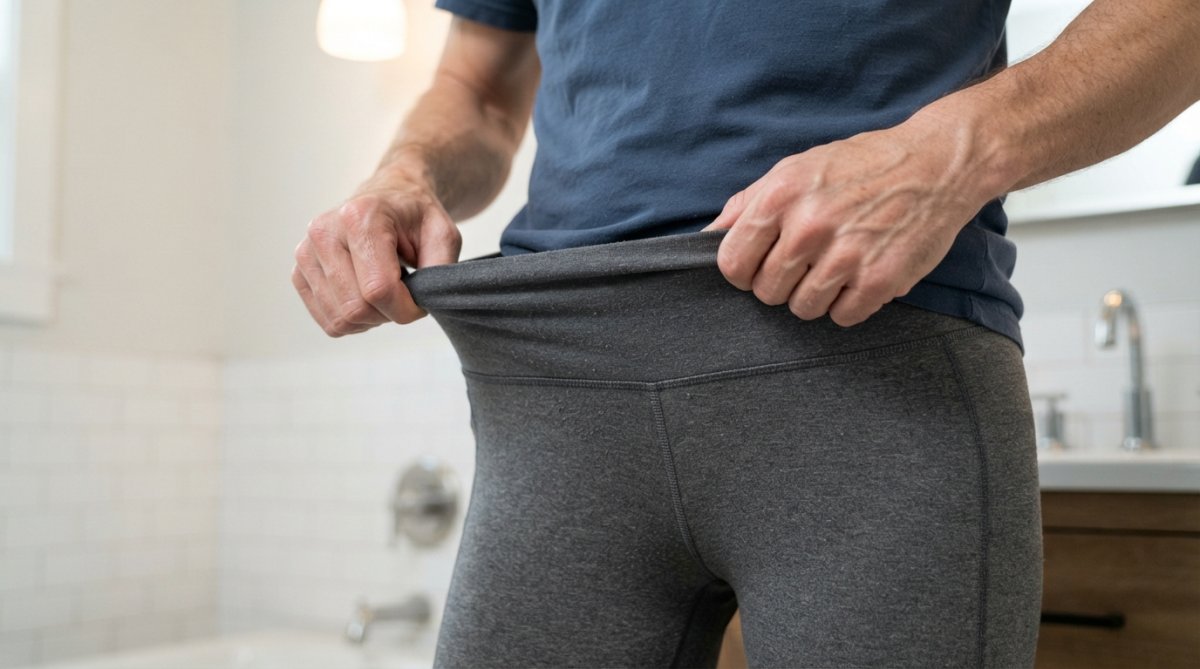
Your gear stops fitting because the elastane fibers inside the fabric are losing tension. When those fibers fatigue, the garment stretches out and cannot return to its original dimensions.
Heat Damage: The Dryer is the #1 Killer
The dryer is the single fastest way to destroy the stretch in your activewear. High heat breaks down the polymer chains in spandex and elastane, permanently reducing their ability to recover. Repeated exposure causes cumulative fiber degradation that no care routine can reverse.
This is why most garment care labels on synthetic athletic wear explicitly instruct you to line dry. If you must use a machine, the American Cleaning Institute's fabric care guidelines recommend the lowest heat setting possible and removing items while still slightly damp.
Chemical Breakdown from Sweat and Body Oils
Heat is not the only enemy. Sweat and body oils are mildly acidic, and over time they break down the chemical bonds in elastane. Leaving gear in a gym bag after a session gives those oils hours to work into the fibers.
The fix is simple: rinse or wash your gear soon after training. Excess detergent traps oils against the fabric and attracts dirt, which accelerates abrasion. Fabric softener is worse, coating the synthetic fibers in a waxy film that masks their moisture-wicking properties and interferes with stretch.
How to Wash Athletic Wear Without Ruining the Stretch
Learning how to wash athletic wear correctly is the most effective way to extend its life. The core principles are cold water, gentle detergent, and minimal mechanical agitation.
Start by turning garments inside out to protect the outer surface from abrasion. Use cold water, which prevents heat damage and helps set the dyes. Choose a detergent designed for synthetics or a mild free-and-clear option, and use about half the recommended amount. Skip the fabric softener entirely.
- Wash activewear in cold water on a gentle cycle
- Use a sports detergent or mild soap without bleach
- Never use fabric softener on stretch fabrics
- Wash items after every heavy session to prevent oil buildup
- Zip up any zippers to avoid snagging and pilling
A common mistake is overloading the machine, which causes friction between garments, leading to pilling and uneven stretching. For heavily soiled pieces, a short pre-soak in cold water works better than a longer cycle.
How to Dry Workout Clothes Properly
Air drying is the only method that fully protects the stretch and recovery of your synthetic gear. Lay garments flat on a clean towel or hang them on a plastic hanger in a well-ventilated area, avoiding direct sunlight as UV rays also degrade elastane.
If you are short on space, a drying rack near a fan works well. Wringing out water by twisting the fabric permanently distorts the fibers; instead, press the garment between two towels to remove excess moisture.
Signs Your Activewear Needs Replacing vs. Just Resting
Not every change in fit means your gear is ruined. Synthetic fibers have a property called fiber memory, which allows them to recover their shape after stretching. Sometimes your leggings just need 24 to 48 hours to rest and return to their original dimensions.
However, there is a clear difference between temporary bagging and permanent deformation. If the waistband stays loose after a full day of rest, the elastane has likely fatigued. Other signs include a loss of compression, fabric that feels thin or see-through in high-stress areas, and pilling that does not wash off.
| Sign | What It Means | Action |
|---|---|---|
| Baggy after a workout, recovers in a day | Normal stretch, fiber memory intact | Rest and rotate gear |
| Waistband stays loose after washing | Elastane fatigue | Replace the garment |
| Fabric feels thin or translucent | Fiber degradation from wear | Replace the garment |
| Pilling on thighs or seat | Surface abrasion | Shave carefully, but expect shorter life |
The Fabric Recovery Test
You can test whether your gear has lost its elasticity with a simple method at home. Stretch the fabric in the problem area to about 50 percent beyond its resting length, hold it for 30 seconds, then release. Watch how quickly it snaps back.
Gear with healthy elastane should recover almost instantly. If the fabric returns slowly or stays stretched, the fiber memory is compromised. Heavier fabrics with higher spandex content tend to pass this test longer than lightweight blends with minimal stretch fibers.
Why Fit Changes Aren't Always the Fabric's Fault
Before you blame the fabric, consider whether your body has changed. Muscle growth, particularly in the glutes, thighs, and shoulders, can make previously comfortable gear feel tight or restrictive. This is not a defect; it is a sign that your current size no longer matches your physique.
The Body Composition Shift
A common pattern among regular lifters is a 1-2 inch increase in glute or thigh circumference over a 6-12 month training cycle. When a garment is stretched beyond its designed capacity, typically more than 50-70 percent of its resting length, the elastane fibers experience micro-tears that do not heal.
To diagnose this, measure the garment flat before and after a workout. If the thigh measurement increases by more than 10 percent after a session and does not return to baseline within 48 hours, the fabric is fatigued. If it returns to baseline but still feels restrictive, the issue is likely your body, not the gear.
Sizing for Your Largest Muscle Group
The right approach is to buy for your largest muscle group. For bottoms, fit your hips and glutes first, then adjust the waistband. For tops, fit your shoulders and chest, and do not size down for a slimmer look at the waist. A properly fitted garment experiences far less stress during exercise.
Here is a practical sizing checklist for common fit issues:
| Fit Issue | Likely Cause | Solution |
|---|---|---|
| Waistband rolls down during squats | Waist too loose relative to hips | Size down if hips allow, or choose a high-rise style with a wider waistband |
| Legs feel tight at the calf but loose at the knee | Muscle imbalance or cut mismatch | Try a tapered or straight-leg cut; avoid compression fits if calves are developed |
| Shoulders feel restricted during overhead press | Top too small in the chest/shoulders | Size up and take in the waist if needed, or choose a raglan sleeve cut |
| Fabric bunches behind the knees | Garment too long or too loose in the leg | Try a shorter inseam or a more fitted lower-leg cut |
The 10 Percent Rule for Compression Wear
For compression garments specifically, a useful benchmark is the 10 percent rule. New compression leggings should feel snug but not restrictive, and you should be able to slide two fingers flat between the fabric and your skin at the waistband. If you cannot, the garment is too small and will overstretch the elastane within weeks. If you can fit your entire fist, it is too loose.
This rule also applies to sports bras and compression tops. A bra that is too small will strain the underband elastic, causing it to lose its snap within a month. A top that is too large will not hold the fabric against your skin, leading to chafing and premature abrasion.
When to Accept the Change
If you have gained muscle mass, accept that your old size may no longer work. Trying to squeeze into a smaller size accelerates fabric failure. Instead, invest in one or two new pieces in the correct size and rotate them with your existing gear.
Sustainable Care: Balancing Gear Longevity and Eco-Impact
There is a tension between making your gear last and reducing your environmental footprint. Frequent washing uses water and energy, but replacing worn gear more often also has a cost. The most sustainable approach is to wash less frequently and more efficiently.
The Hidden Conflict: Cold Water vs. Bacterial Breakdown
Most eco-conscious advice centers on washing in cold water to save energy. However, cold water is significantly less effective at removing body oils and bacteria than warm water. A 2023 study from the American Cleaning Institute found that cold water (below 60°F) removes only about 60 percent of the fatty acids found in human sebum, compared to over 90 percent removal in water at 100°F (cleaninginstitute.org). Those residual oils chemically degrade elastane over time, accelerating the exact shape loss you are trying to prevent.
This creates a genuine dilemma: wash cold to save energy, but risk faster fiber breakdown from oil buildup, or wash warm to protect the fabric, but use more energy. The solution is a strategic approach that balances both concerns.
The Two-Stream Wash Strategy
A practical framework used by many performance fabric specialists is the two-stream approach:
Stream 1: Rinse-Only for Light Sessions
For low-intensity sessions (yoga, light walking, stretching) where you did not sweat heavily, a simple cold-water rinse is sufficient. Rinse the garment in the sink with cold water for 30 seconds, gently pressing out the sweat. This removes surface salts and prevents bacterial growth without any energy cost.
Stream 2: Full Wash for Heavy Sessions
For high-intensity sessions (HIIT, running, heavy lifting) where you sweat profusely, a full wash is necessary. Use warm water (around 85-90°F) rather than hot, which removes oils effectively without the energy cost of a hot cycle. The U.S. Department of Energy estimates that heating water accounts for about 18 percent of a home's energy use, and dropping from hot (120°F) to warm (90°F) cuts that portion by roughly half (energy.gov).
The Detergent Efficiency Rule
Most people use too much detergent, which leaves a residue that traps oils against the fibers. The American Cleaning Institute recommends using only 1 to 2 tablespoons of liquid detergent for a standard load, not the cap-full that most bottles suggest. High-efficiency (HE) machines need even less, typically 1 tablespoon or less.
For synthetic activewear, a sports-specific detergent or a free-and-clear formula without optical brighteners is ideal. Optical brighteners can coat polyester and nylon fibers, reducing their moisture-wicking ability and making them feel stiff.
The Energy-Longevity Tradeoff Calculator
To make this decision concrete, consider the following comparison based on typical U.S. residential energy costs:
| Wash Method | Energy Cost per Load (est.) | Fiber Protection | Bacterial Removal |
|---|---|---|---|
| Cold rinse only (no machine) | $0.00 | Excellent | Poor |
| Cold machine wash (60°F) | $0.05 | Good | Moderate |
| Warm machine wash (90°F) | $0.15 | Good | Good |
| Hot machine wash (120°F) | $0.30 | Poor (heat damage) | Excellent |
Estimates based on average U.S. electricity rates of $0.17 per kWh and a standard washing machine using 25 gallons per load.
The 48-Hour Rule for Sweat Management
The single most effective sustainable practice is to never let sweat-soaked gear sit for more than 48 hours before washing. After 48 hours, bacteria multiply exponentially, and their metabolic byproducts become significantly more acidic, accelerating elastane breakdown. If you cannot wash immediately, at least rinse the garment in cold water and hang it to dry.
The Most Sustainable Gear Is the Gear You Own
By adopting this balanced approach, you avoid the false choice between eco-friendly care and garment longevity.
Conclusion: Make Your Workout Gear Last
Understanding why workout gear loses shape fast is the first step to preventing it. Heat from the dryer, chemical breakdown from sweat, and simple fiber fatigue all play a role. Most of the damage is preventable with consistent care habits: wash in cold water, skip the dryer, and rotate your gear so each piece gets time to recover.
When you do need to replace pieces, choose gear built to handle the abuse. GearrUp designs training apparel with the right balance of cotton and elastane for movement, cut to fit properly without restricting your range of motion. Our GearrUp's men's training collection focuses on durable construction at fair prices, so you are not replacing your wardrobe every season.
Get started with GearrUp and build a kit that holds its shape.
Frequently Asked Questions
Why does my workout gear lose its elasticity over time?
The spandex or elastane fibers in your activewear are polymer chains that snap under stress. Heat from a dryer, chlorine, and the chemical breakdown from sweat and body oils all attack these bonds. When enough fibers break, the fabric loses its ability to snap back, leading to baggy knees and loose waistbands.
Does high heat in the dryer ruin athletic fabric?
Yes. Tumble drying is the fastest way to destroy the elastane in your gear. High heat causes the polymer fibers to become brittle and break. Always air dry your workout clothes flat or on a line. If you must use a dryer, select the lowest heat or no-heat setting and remove the items while they are still slightly damp.
What role does fabric softener play in damaging workout gear?
Fabric softener and dryer sheets coat synthetic fibers like polyester and spandex with a waxy residue. This buildup clogs the pores that allow the fabric to breathe and wick moisture. It also interferes with the fibers' ability to grip each other, which can accelerate stretching. Skip the softener and use a sports-specific detergent instead.
How can I tell if my leggings are losing their compression?
If you have to keep pulling your leggings up during a workout, or if the fabric feels loose around the knees and ankles even when new, the compression is gone. A simple test is to stretch the fabric and see if it snaps back. If it stays stretched out or takes time to recover, the elastane fibers are fatigued and the garment is past its prime.

