

Table of Contents
- What Makes High Quality Workout Fabric Different
- The Best Moisture-Wicking Fabrics for Performance
- Key Indicators of Durable, Squat-Proof Fabric
- Signs of Cheap Activewear to Avoid
- How to Wash Athletic Wear to Preserve Quality
- Activity-Specific Fabric Matching
- Sustainability and Fabric Certifications
- Conclusion
Last Updated: August 28, 2026
What Makes High Quality Workout Fabric Different
High quality workout fabric is engineered to perform under stress, maintaining its integrity through sweat, movement, and repeated washing. The difference between premium activewear and cheap alternatives comes down to fiber composition, construction methods, and how the fabric responds to intense physical activity.
When you invest in quality workout gear, you're paying for fabric that wicks moisture away from your skin, resists pilling and degradation, and maintains its shape through hundreds of washes. At GearrUp, we've built our entire product line around these principles because we know that a $16 pair of shorts that lasts two years beats a $90 pair that falls apart after three months. The real tell of quality fabric is how it performs after your toughest workout and how it looks after your tenth wash.
The Best Moisture-Wicking Fabrics for Performance
Moisture-wicking is the foundation of performance activewear. The best moisture-wicking fabrics pull sweat away from your skin and move it to the outer surface where it can evaporate. Synthetic fibers like polyester and nylon are naturally hydrophobic, meaning they repel water. When sweat hits the fabric, it travels along the fibers toward the surface instead of absorbing into them. This is why synthetic blends outperform cotton in athletic applications.
Polyester and Nylon Blends
Polyester dominates the activewear market for good reason. It's durable, affordable, and delivers reliable moisture-wicking performance. An 88% polyester and 12% spandex blend is standard across the industry because it balances moisture management with stretch and recovery (peer-reviewed research). The polyester handles sweat management while the spandex provides four-way stretch, meaning the fabric moves with you in all directions without losing its shape.
The key indicator of quality in polyester blends is denier count, which measures fiber thickness. A 75-denier polyester will outlast a 50-denier fabric because the fibers are more resistant to breaking down during friction and repeated movement (peer-reviewed research). Nylon additions improve the sensory experience significantly. An 82% polyester, 12% nylon, 6% spandex blend feels softer against your skin than pure polyester while maintaining identical moisture-wicking and durability.
Merino Wool and Synthetic Hybrids
Merino wool is a premium natural fiber that performs like synthetics in many ways. It's naturally moisture-wicking, temperature-regulating, and antimicrobial, meaning it resists odor better than polyester alone. A merino-synthetic blend (typically 50% merino wool, 40% polyester, 10% spandex) creates fabric that feels luxurious while delivering exceptional performance.
The trade-off with merino blends is cost and care. Merino wool requires gentler washing than synthetic blends and costs significantly more per garment. For athletes willing to invest in premium gear and commit to proper care, merino hybrids deliver unmatched comfort and odor resistance. Synthetic-natural hybrids work best for specific use cases: merino excels in cold weather for temperature regulation, while polyester-nylon blends are more practical for high-volume training.
Key Indicators of Durable, Squat-Proof Fabric
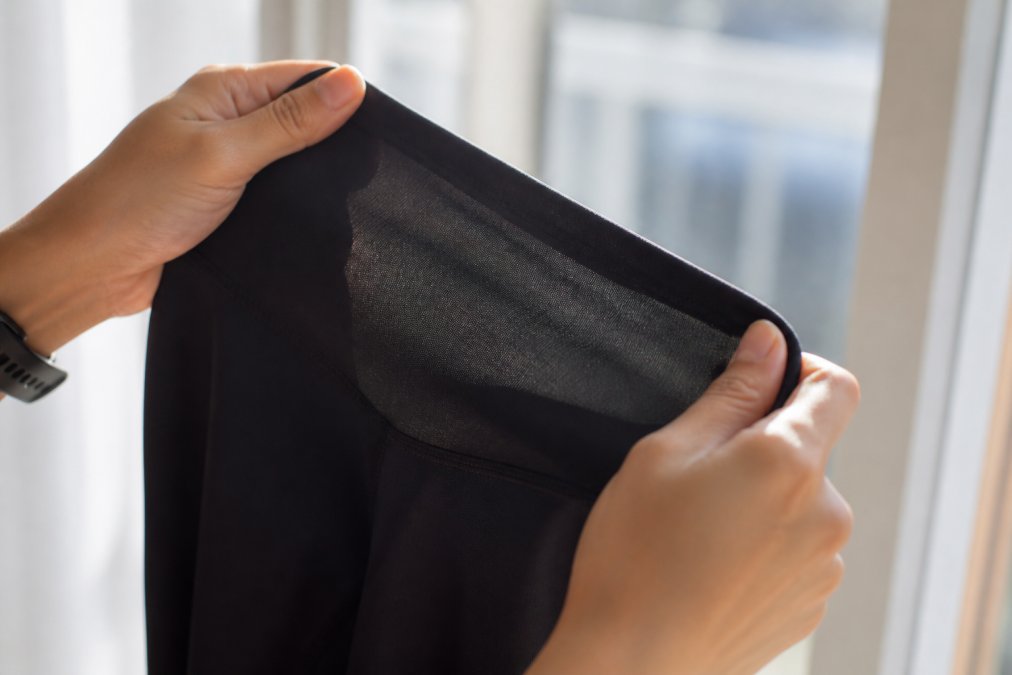
Squat-proof fabric means the material maintains opacity even under tension. True squat-proof fabric requires sufficient fabric weight (measured in GSM, or grams per square meter) and proper fiber composition. Cheap activewear often uses thin, loosely-woven synthetic blends that become translucent under stretch.
Opacity and Stretch Testing
Hold the fabric up to bright light and stretch it gently. Quality activewear should remain completely opaque. GSM weight matters significantly: fabric under 200 GSM tends to be sheer under tension, while quality workout leggings typically measure 250-350 GSM (peer-reviewed research). This provides opacity, durability, and the right weight for movement. The sweet spot for most athletes is 280-320 GSM.
Stretch recovery is equally important. After stretching fabric, it should snap back to its original shape within seconds. Press your thumb into the fabric and release; quality activewear bounces back immediately.
Pilling Resistance and Tensile Strength
Pilling happens when fibers break and ball up on the fabric surface. Quality fabric resists pilling because the fibers are stronger and the weave is tighter. Tensile strength measures how much force the fabric can withstand before tearing. You can assess this by feeling the fabric; quality material feels smooth and uniform.
The flatlock seams on quality activewear are another durability indicator. Flatlock construction eliminates the raised seams that create friction points during movement. Quality brands use flatlock seams specifically to extend garment life and improve comfort.
Signs of Cheap Activewear to Avoid
Cheap activewear shares predictable failure patterns. The first red flag is thin, loose-weave fabric that feels papery. Quality fabric feels dense and smooth.
Seams that are raised, visible, or stitched with thin thread indicate low-quality construction. Quality activewear uses reinforced seams with heavy-duty thread and flatlock construction that sits flush against your skin.
Fabric that loses its color after one or two washes indicates low-quality dyes and degrading fibers. Check the tag for fiber composition; if the label lists "100% polyester" with no spandex, the fabric won't have adequate stretch. Quality activewear always includes spandex (typically 8-15%) for recovery and movement. Finally, avoid activewear with obvious pilling right out of the package.
How to Wash Athletic Wear to Preserve Quality
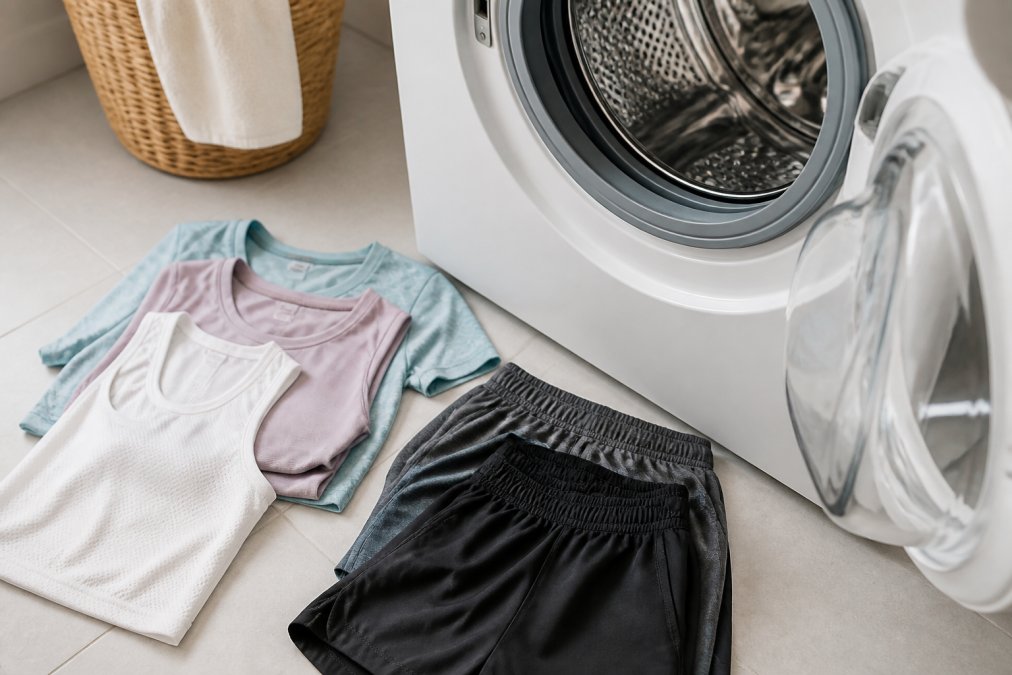
Proper washing is the difference between gear that lasts two years and gear that falls apart in six months. The fundamentals are simple: cold water, gentle detergent, and air drying. Heat damages synthetic fibers and breaks down spandex.
Washing Temperature and Detergent Selection
Cold water is non-negotiable for preserving quality activewear. Hot water breaks down spandex fibers and causes color fading. Use a mild, sport-specific detergent rather than standard laundry detergent. Regular detergent contains heavy surfactants that strip the moisture-wicking properties from synthetic fibers.
Avoid fabric softener completely. Softener coats fibers and reduces breathability and moisture-wicking. Turn garments inside out before washing to reduce friction on the outer surface where pilling is most visible.
Drying Methods That Prevent Degradation
Air drying is the only method that truly preserves quality activewear. Lay garments flat or hang them on a drying rack in a well-ventilated space. Avoid direct sunlight for extended periods because UV exposure fades colors and degrades synthetic fibers.
If you must use a dryer, use the lowest heat setting and remove garments immediately when the cycle ends. Avoid the dryer entirely for spandex-heavy items; spandex degrades significantly in heat, losing elasticity and recovery. For leggings and compression gear, air drying is essential.
Activity-Specific Fabric Matching
Different activities demand different fabric characteristics. For high-intensity interval training and CrossFit, you need fabric with maximum durability and sweat management. An 88% polyester, 12% spandex blend with 300+ GSM weight handles the friction and sweat volume.
For distance running and endurance training, breathability and weight matter more than maximum durability. An 82% polyester, 12% nylon, 6% spandex blend with 250-280 GSM provides excellent moisture-wicking while staying lightweight.
For cycling, you need fabric that resists friction in high-contact areas. Look for blends with reinforced seams and flatlock construction. For yoga and flexibility training, a higher spandex percentage (15-20%) and softer hand-feel matter more than maximum durability. Temperature also affects fabric choice: cold-weather training benefits from merino wool blends or thicker synthetic blends, while warm-weather training requires lightweight, breathable synthetics with maximum moisture-wicking.
Sustainability and Fabric Certifications
Quality activewear increasingly includes sustainability certifications that indicate responsible manufacturing and material sourcing. The Global Organic Textile Standard (GOTS) certifies organic cotton and other natural fibers. The OEKO-TEX Standard 100 certification means the fabric has been tested for harmful substances, ensuring the dyes and finishes won't irritate skin or degrade during washing.
Recycled polyester is becoming standard in quality activewear. Recycled polyester performs identically to virgin polyester while reducing environmental impact. Look for certifications on the product tag or company website. Brands that invest in certified sustainable materials are typically more rigorous about overall quality.
Choosing quality workout fabric comes down to understanding fiber composition, construction methods, and how fabric performs under the stress of real training. When you shop for activewear, test the fabric yourself: stretch it, hold it to light, feel the seams. Quality is obvious once you know what to look for. At GearrUp, we've engineered our activewear around these principles, offering precision-crafted gear like our Quick-Dry Fitness T-Shirt and Pro-Dry Training Shorts that deliver durability and performance without premium pricing. Start with gear that's built to perform, and your training will feel the difference.


Frequently Asked Questions
Q: How can you tell if workout fabric is high quality by touch?
A: High quality workout fabric feels smooth and dense, with no loose threads or rough spots. Run your fingers across the material, premium activewear has a consistent hand-feel with no pilling or bobbles. The fabric should have slight elasticity when stretched, then snap back to its original shape. Cheap activewear often feels thin, flimsy, or has an uneven texture. Press the fabric between your fingers; quality material resists wrinkling and maintains its shape, while low-quality alternatives crease easily and feel papery or synthetic.
Q: What are the best moisture-wicking fabrics for high-intensity training?
A: Polyester and nylon blends are the gold standard for moisture-wicking performance. These synthetic fibers pull sweat away from your skin and dry quickly, typically within 30 minutes of moderate activity. Four-way stretch polyester-spandex combinations offer both moisture management and freedom of movement. Merino wool blends are excellent for temperature regulation and odor resistance, though they dry slower than synthetics. The key is looking for fabric labeled with moisture-wicking or hydrophobic properties. GearrUp's Pro-Dry Training Shorts ($19.99) use premium polyester specifically engineered for rapid moisture transfer and quick-dry performance.
Q: What signs indicate cheap activewear I should avoid?
A: Cheap activewear shows visible pilling after just a few wears, has thin, transparent fabric that's not squat-proof, and uses low-denier materials that tear easily. Check for loose seams, unfinished hems, and poor stitching quality. The fabric may feel stiff, plastic-like, or overly slippery. Cheap alternatives often lack proper odor-resistant or anti-microbial treatments, so they retain sweat smell even after washing. Avoid pieces where the elastic waistband loses tension after a few wears or where the fabric develops wrinkles that won't smooth out. Premium activewear maintains its shape, color, and integrity through dozens of wash cycles.
Q: How often should I wash athletic wear to maintain fabric quality?
A: Wash athletic wear after every workout to prevent odor-causing bacteria from breaking down the fabric's anti-microbial treatments. Use cold water (below 86°F) and gentle detergent, avoid bleach and fabric softeners, which damage moisture-wicking properties and elasticity. Turn garments inside out before washing to reduce pilling and fading. Air dry whenever possible; high heat weakens synthetic fibers and spandex. Machine drying on low heat is acceptable but shortens fabric lifespan. Proper washing preserves the tensile strength and shape retention that define high quality activewear.
This article was written using GrandRanker

