

Table of Contents
- What Makes Athletic Gear Perform Under Intense Training
- Durable Workout Clothes for Heavy Lifting: Fabric and Construction Standards
- Moisture-Wicking Athletic Apparel Benefits for High-Intensity Workouts
- How to Choose Compression Gear for Training: A Practical Framework
- Top Equipment for Intense Training Sessions
- Selecting Gear by Workout Type: HIIT, Lifting, and Cardio
- Budget-to-Performance Ratio: What You Actually Need vs. Marketing Hype
- Frequently Asked Questions
Last Updated: September 18, 2026
What Makes Athletic Gear Perform Under Intense Training
The difference between gear that lasts through a season and gear that falls apart after three weeks isn't complicated. It comes down to fabric construction, seam engineering, and honest durability testing. When you're pushing hard in the gym or on the track, your clothes absorb punishment: sweat, friction, repeated stretching, abrasion against equipment. Cheap gear fails under that load. Quality gear is engineered to handle it.
The best athletic gear for intense training combines three non-negotiable elements: moisture-wicking fabric that pulls sweat away from skin, construction that resists chafing and tearing, and materials chosen specifically for the training style you're using. A sprinter needs different gear than a powerlifter. A cyclist needs different gear than someone doing HIIT.
Durable Workout Clothes for Heavy Lifting: Fabric and Construction Standards
Heavy lifting places unique stress on apparel. Your clothes need to move with your body through extreme ranges of motion without tearing, sliding, or creating pressure points. Durability here means abrasion-resistant fabric, reinforced seams, and strategic panel placement.
The best fabrics for heavy lifting combine nylon or polyester with elastane (spandex). Nylon offers tensile strength and resists snagging. Elastane provides the stretch needed for squats, deadlifts, and overhead presses. A 85% nylon / 15% elastane blend is standard for serious lifting apparel because it balances durability with recovery (the fabric returns to shape after each rep).
Seams matter more than most people realize. Flat-lock seams or reinforced stitching reduce chafing and prevent thread breakage. Look for double-stitched or triple-stitched construction in high-stress areas: the crotch, armpits, and side seams. Single-stitched seams fail fast under heavy loading.
Panel construction also determines durability. Four-way stretch fabric (stretches in all directions) is essential for lower-body gear because it accommodates the extreme flexion of squatting and lunging without creating pressure points or restricting movement. Gusseted crotches (reinforced triangular inserts) prevent seam separation during deep squats.
Mid-weight fabric (200-300 gsm) balances durability with breathability for heavy lifting.
Moisture-Wicking Athletic Apparel Benefits for High-Intensity Workouts
Moisture-wicking fabric pulls sweat away from skin to the outer surface where it evaporates faster, maintaining stable core temperature and reducing fatigue during intense efforts.
Polyester and nylon are naturally hydrophobic and wick moisture effectively. Avoid cotton for intense training, it absorbs sweat and holds it against your skin.
During HIIT or sprint training, moisture-wicking apparel reduces chafing and heat stress by eliminating friction of wet fabric against skin.
How to Choose Compression Gear for Training: A Practical Framework
Compression gear increases venous return, reducing muscle fatigue and improving oxygen delivery to working muscles.
For training, moderate compression (20-30 mmHg) provides measurable benefits without restricting movement.
Placement matters as much as pressure. For heavy lifting, compression tights or shorts stabilize the thighs and glutes. For upper-body work, compression sleeves reduce muscle oscillation during pressing movements.
Choose compression gear based on your primary training style:
- For lower-body lifters: compression tights or shorts with 20-30 mmHg pressure
- For upper-body focus: compression sleeves on arms and shoulders
- For full-body training: compression shirt or full-length compression suit
Compression gear should fit snugly without restricting breathing or range of motion.
Top Equipment for Intense Training Sessions
The best athletic gear for intense training extends beyond apparel to include the equipment that supports your workouts. The right gear makes the difference between a safe, effective session and a frustrating one where you're fighting the equipment instead of focusing on performance.
Multi-Use Power Cage: Versatility for Serious Lifters
The GearrUp Power Cage Home Gym Rack at $399.99 is the entry point for serious home lifters. It's built from thickened SPCC steel pipes with a 1,000-pound weight capacity, designed to handle heavy squats, bench presses, and pull-ups without flex or instability.

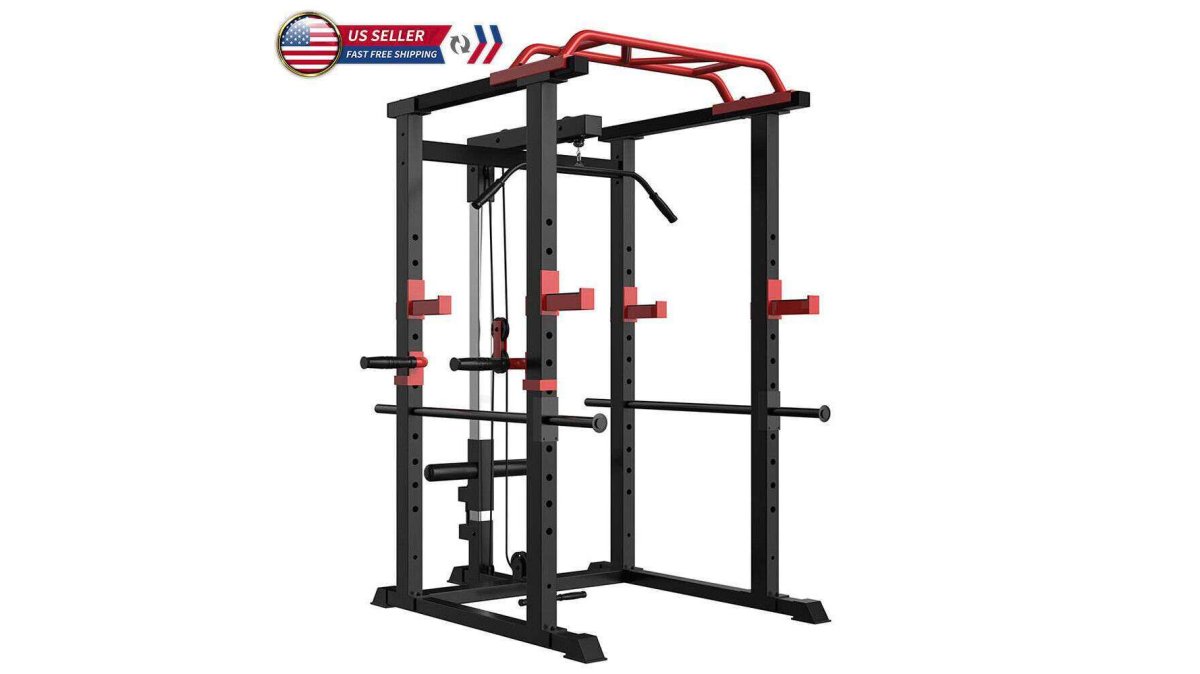
The compact footprint (43.3" x 55" x 86.6") fits real home spaces. The multi-functional design supports squats, cable work, and pull-ups with a protective red piano finish.
It excels in versatility and stability, enabling dozens of exercises without multiple equipment purchases.
It requires standard weight plates and barbells (purchased separately), allowing you to grow your training over time.
Adjustable Weighted Vest 12-30 lb →
Olympic Weight Bench with Squat Rack: Affordable All-in-One Solution
The GearrUp Olympic Weight Bench with Squat Rack at $199.99 combines a weight bench with a squat rack, making it ideal for lifters with limited space or budget. Heavy-duty steel construction, adjustable bench positions (incline, flat, decline), and compatibility with standard Olympic plates.

Ideal for beginners or lifters returning to training. The foldable frame allows space-efficient storage, and anti-slip feet maintain stability during heavy loading.
The squat rack portion is functional but not as strong as a standalone power cage, making it a stepping stone for long-term serious lifting.
Elite Home Fitness Treadmill: Cardio Performance for High-Intensity Training
The GearrUp Elite Home Fitness Treadmill at $699.99 is engineered for high-intensity cardio training. A 3.5HP brushless motor delivers quiet, consistent power. Auto-incline adjustment from 0-15 degrees lets you simulate real-world terrain and vary training intensity.
The quiet motor enables early morning or late-night workouts without disturbance. Transport wheels allow easy repositioning.
It's built for repeated sprint intervals and sustained cardio work without overheating.
Adjustable Weighted Vest: Portable Resistance for Functional Training
The GearrUp Adjustable Weighted Vest 12-30 lb at $39.99 is one of the most underrated pieces of training gear. It adds resistance to bodyweight exercises, cardio work, and functional movements without requiring equipment changes.

Premium neoprene with breathable mesh, dual adjustable buckles (35"-45" chest), and evenly distributed weight with padded shoulders. Detachable pockets hold essentials.
Use this for weighted pull-ups, loaded carries, or HIIT circuits. The portability means you can train outdoors or travel with resistance training built in. For runners or cyclists needing functional strength, this vest adds load without the bulk of a barbell.
Selecting Gear by Workout Type: HIIT, Lifting, and Cardio
Different training styles demand different gear. What works for powerlifting doesn't work for sprinting. What works for steady-state cardio doesn't work for HIIT.
For HIIT: Moisture-wicking apparel is non-negotiable. Your body temperature spikes rapidly, and sweat production is extreme. Wear lightweight, breathable clothing with four-way stretch. Compression shorts reduce muscle oscillation during explosive movements. Footwear with good lateral support prevents ankle stress during rapid direction changes. The GearrUp Elite Home Fitness Treadmill supports high-intensity intervals without motor lag.
For heavy lifting: Durability and support matter more than breathability. Wear thicker, reinforced apparel with flat-lock seams and gusseted construction. Compression tights or shorts provide stability during loaded movements. Footwear with minimal cushioning (flat sole) improves stability during squats and deadlifts. The GearrUp Power Cage Home Gym Rack and GearrUp Olympic Weight Bench with Squat Rack support the extreme ranges of motion and heavy loading.
For steady-state cardio: Breathability and chafing prevention are primary concerns. Wear lightweight, moisture-wicking apparel with minimal seams. Avoid compression gear unless you're training for recovery benefits. Footwear should have good cushioning and support for repetitive impact. The GearrUp Elite Home Fitness Treadmill handles sustained efforts without overheating.
Budget-to-Performance Ratio: What You Actually Need vs. Marketing Hype
Most athletes overspend on gear that doesn't match their training style. Start with essentials and add strategically.
Essential apparel: One pair of squat-proof leggings or shorts, one moisture-wicking top, one compression piece. Total: $100-150 for quality gear lasting 2+ years.
Essential equipment for home training: A power cage or multi-functional rack and an adjustable bench.
| Gear Category | Budget Option | Performance Gain | Worth It? |
|---|---|---|---|
| Moisture-wicking apparel | $30-50 per item | Prevents chafing, improves comfort | Yes, essential |
| Compression gear | $40-80 per item | Reduces soreness, aids recovery | Yes, if training 4+ days/week |
| Power cage | $399.99 | Enables heavy lifting safely | Yes, foundational |
| Weight bench | $199.99 | Expands exercise options | Yes, complements cage |
| Treadmill | $699.99 | High-intensity cardio training | Yes, if cardio is part of routine |
| Weighted vest | $39.99 | Adds resistance portably | Yes, if doing functional training |
Frequently Asked Questions
What features should I look for in athletic gear for intense training?
Prioritize four-way stretch fabric, moisture-wicking capability, and ergonomic seams that prevent chafing during high-intensity movement. Look for breathability through mesh panels or perforations, compression support for stability, and abrasion-resistant materials. Test the fit before committing, squat-proof construction and secure waistbands are non-negotiable for heavy lifting. Equipment should offer balanced weight distribution, adjustable components, and durability under sustained load.
How do moisture-wicking athletic apparel benefits improve performance during training?
Moisture-wicking fabrics pull sweat away from skin to the outer surface, where it evaporates faster. This thermal regulation keeps your core temperature stable, preventing overheating during HIIT or cardio. By reducing moisture against your skin, you avoid chafing, discomfort, and the weight penalty of sweat-soaked fabric. Better sweat management also improves grip on equipment and extends your training capacity before fatigue sets in.
Should I invest in compression gear for heavy lifting?
Compression gear provides measurable benefits: improved blood flow during recovery, reduced muscle oscillation during movement, and enhanced proprioceptive feedback that supports proper form. For heavy lifting, compression on legs and core offers stability during squats and deadlifts. However, compression alone doesn't replace proper technique or adequate rest. Start with one compression piece (leggings or shorts) and assess the difference in your performance and recovery before expanding.
How often should I replace athletic training gear?
High-quality athletic apparel typically lasts 12-18 months with regular intense use (4-5 sessions per week). Replace gear when elasticity fails, seams fray, or moisture-wicking performance degrades. Equipment like power cages and benches can last 5-10 years with proper maintenance if constructed from durable steel and regularly inspected for wear. Weighted vests and smaller accessories may need replacement sooner if padding compresses or straps weaken.

