

Table of Contents
- Seamless vs Seamed Workout Leggings: A Quick Comparison
- How Seams Cause Chafing and Irritation on Sensitive Skin
- Flatlock Seams vs Standard Seams: What's the Difference?
- Best Leggings for Eczema: What to Look For
- How to Prevent Chafing from Workout Leggings
- Moisture-Wicking, Breathability, and Thermal Regulation
- Sizing, Compression, and Pressure Points for Sensitive Skin
- Caring for Seamless Leggings: Laundry Tips for Sensitive Skin
- Frequently Asked Questions
Last Updated: September 25, 2026
Seamless vs Seamed Workout Leggings: A Quick Comparison
For sensitive skin, the choice between seamless vs seamed workout leggings for sensitive skin comes down to where the fabric meets your body. Seamless leggings are knit as a single tube with no side seams; seamed leggings are cut from flat fabric and stitched together. That difference decides how much friction your skin absorbs during every squat, sprint, and stretch.
Here is the short version:
- Seamless wins for eczema-prone skin, chafing, and high-sweat training.
- Seamed wins on price, structured compression, and precise fit for some body types.
- Flatlock seams are the middle ground: stitched, but flat enough to reduce friction.
Comparison Table: Seamless vs Seamed Leggings
| Factor | Seamless Leggings | Seamed Leggings |
|---|---|---|
| Construction | Knit as one piece, no side seams | Cut panels joined by stitching |
| Chafing risk | Low, fewer friction points | Higher unless flatlock seams used |
| Fit feel | Second-skin, contouring | Structured, more panel shaping |
| Breathability | Depends on knit density | Depends on fabric and seam placement |
| Best for | Sensitive skin, eczema, sweat-heavy sessions | Budget buyers, structured support |
| Care | Cold wash, hang dry | Cold wash, tumble low |
Pros and Cons at a Glance
Seamless leggings
- Pros: minimal chafing, smooth second-skin feel, no seam ridges under clothing, good for sensory issues
- Cons: usually pricier, less structured compression, sizing runs less forgiving
Seamed leggings
- Pros: lower cost, stronger panel-based shaping, easier to find exact fits
- Cons: seam lines can rub, standard seams sit proud against the skin, irritation risk rises with sweat and movement
How Seams Cause Chafing and Irritation on Sensitive Skin
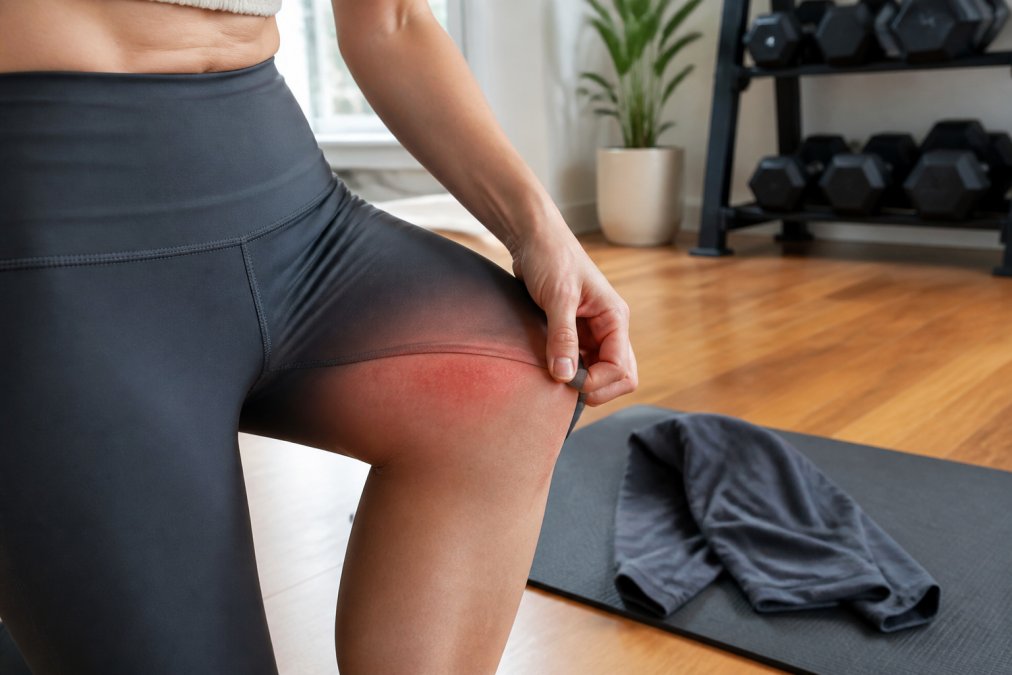
Chafing starts where fabric edges and thread rub the same patch of skin thousands of times per session. A raised seam acts like a tiny ridge; add sweat, heat, and motion, and it wears down the skin barrier.
Friction, Contact Dermatitis, and the Skin Barrier
A standard seam creates a raised line with thread loops that catch on skin, presses harder under compression, and slides against damp skin with every rep.
Flatlock Seams vs Standard Seams: What's the Difference?
Flatlock seams are stitched seams that lie flat against the skin instead of forming a raised ridge. A standard seam joins two fabric edges with an overlap or bulky stitch, leaving a bump; flatlock stitching interlocks the edges so the seam sits nearly flush.
Best Leggings for Eczema: What to Look For
Most guides answer this with construction alone: go seamless, avoid seams. That is only half the equation. For eczema and contact dermatitis, the fabric matters as much as the seam: some fibers trap heat and moisture against a compromised barrier while others move it away. Construction decides where friction happens; fiber composition decides how much the skin suffers.
Start With Fiber, Not Just Seams
A seamless knit made from the wrong fiber can still trigger a flare. How common legging materials behave against reactive skin:
- Nylon (polyamide) blends. Smooth, strong, and highly elastic. Nylon holds its shape and dries quickly, which is why most high-end seamless leggings use it. Dense nylon knits can feel occlusive in heat.
- Polyester. Durable and moisture-wicking, but lower grades can feel slick and trap odor. Look for polyester blended with spandex.
- Spandex (elastane). The stretch engine in almost every performance legging. Rarely the irritant on its own, but high percentages create more compression and pressure points.
- Bamboo viscose. Soft, breathable, and moisture-absorbent. Gentle on reactive skin but has less compression and can pill faster, so it suits low-impact training and lounging.
- Cotton-heavy blends. Comfortable at rest, but cotton holds sweat against the skin, softening the barrier and worsening friction damage.
The Dermatological Mechanism
Dermatologists describe two pathways for legging-related skin problems. Irritant contact dermatitis is direct damage from repeated friction, sweat, and heat. Allergic contact dermatitis is an immune reaction to something touching the skin, most often residual detergent, fabric softener, disperse dyes, or formaldehyde-based finishes.
A Practical Selection Checklist
- Seamless knit, or flatlock seams only
- Smooth synthetic or bamboo blend, not cotton-heavy for sweaty training
- Moisture-wicking and quick-drying
- No seam running through the inner thigh
- Wide, flat waistband with no exposed elastic edge
- Four-way stretch so the fabric moves with you, not against you
- Tagless or printed label, no scratchy neck tag
- Fragrance-free, dye-conscious finish where possible
Sizing and Hidden Pressure Points
Even a seamless garment can create "hidden seams" if it fits wrong. A rolling waistband, bunched gusset, or riding crotch seam concentrates pressure on the same patch of skin, rep with rep. If you are between sizes and your skin is reactive, size up, it usually chafes less. Test new pairs on a short session first.
How to Prevent Chafing from Workout Leggings
Preventing chafing from workout leggings comes down to three levers: construction, fit, and moisture. Fix all three and most people stop getting chafed entirely.
Infinite Sculpt High-Elastic Seamless →
Moisture-Wicking, Breathability, and Thermal Regulation
Moisture management is where sensitive-skin leggings are won or lost.
How Wicking Works
Moisture-wicking fabric pulls sweat away from the skin through capillary action and spreads it across the surface, where it evaporates faster. Breathability is the other half: the knit's ability to let air and heat escape. Together they keep skin temperature steadier during hard training.
Why Seamless Knits Behave Differently
Seamless knits can be highly breathable or dense depending on how they are made. Dense knits give more compression and opacity but hold heat and dry slowly; lightweight seamless knits breathe better but can be sheer under stretch. If you overheat easily or flare in heat, look for leggings described as lightweight and breathable. A heavier knit is not automatically better, just warmer.
The Laundry Connection
Moisture-wicking performance is fragile, and the wrong laundry routine destroys it. Fabric softener and dryer sheets coat fibers with a waxy film that blocks capillary action, so the fabric stops moving sweat and starts holding it against your skin, and that residue is a common contact irritant. Wash cold, skip the softener, and air dry.
Matching Fabric to Activity
- High-sweat training (HIIT, running, cycling): lightweight, quick-drying synthetic knit with high spandex content for stretch.
- Low-impact training (yoga, pilates, walking): bamboo or cotton-blend seamless knits feel gentler and breathe well at lower sweat levels.
- Recovery and lounging: prioritize softness and airflow over compression.
For cyclists and outdoor athletes, airflow matters most. A seamless short with a high-stretch, moisture-wicking knit, like the Prism Performance Yoga Shorts, moves sweat off the skin without seams catching on the saddle. That combination of breathability and no seam ridges is what keeps long rides comfortable.

Sizing, Compression, and Pressure Points for Sensitive Skin
Pressure points are where tight fabric concentrates force: the waistband, inner thigh, and behind the knee. For sensitive skin, these mark, itch, and flare first, so getting sizing right is the most effective way to reduce pressure-point irritation.
A few practical rules:
- Measure your waist and hip, then follow the brand's size chart rather than your usual size.
- Choose a high-waist design with a wide band. A 9-inch waistband spreads pressure far better than a thin elastic strip.
- If you are between sizes for sensitive skin, size up. A slightly relaxed fit chafes less than a tight one.
- Test new leggings on a short session before a long one. Pressure points show up fast.
Caring for Seamless Leggings: Laundry Tips for Sensitive Skin
Laundry habits decide how long seamless leggings stay skin-friendly. Residue from detergent, fabric softener, and dryer sheets builds up in the knit and can irritate sensitive skin on contact. The fix: wash cold, skip the softener, and air dry.
- Wash after every wear. Sweat and body oils break down elasticity and sit in the fibers.
- Use cold water and a fragrance-free detergent. Hot water stresses the knit; fragrance and dyes are common irritants.
- Skip fabric softener and dryer sheets. They coat the fibers, reduce moisture-wicking, and leave residue against the skin.
- Turn leggings inside out. This protects the outer surface and rinses the interior.
- Hang or lay flat to dry. Heat from a dryer degrades elasticity and can shrink the knit.
Frequently Asked Questions
What kind of legging doesn't itch?
Leggings made with seamless knit construction and smooth, moisture-wicking fabrics are least likely to itch. Seamless leggings eliminate the raised stitched lines that rub against skin, which is the main source of itch for people with textile sensitivity. Look for high-elasticity nylon or similar blends that sit flat against the body, plus a wide high-waist band that distributes pressure instead of digging in. Avoid leggings with bulky standard seams, rough inner labels, or scratchy decorative stitching.
Why do seamed leggings cause chafing during workouts?
Seams create raised ridges that rub against skin with every step, squat, or stride. During sweaty workouts, moisture softens the skin barrier and increases friction, so those ridges cause irritation faster. Standard seams are the worst offenders because they sit proud of the fabric surface and can bunch in high-movement areas like the inner thigh and groin. Flatlock seams reduce this because they lie almost flush with the fabric, but seamless construction removes the problem entirely by knitting the shape rather than stitching panels together.
Are seamless leggings actually better for preventing skin irritation?
For most people with sensitive skin, yes. Seamless leggings remove the raised seam lines that cause friction and contact irritation, and their knit construction typically delivers a smoother, second-skin feel. That said, fit still matters: a seamless legging that is too tight can create waistband pressure and compression irritation. Choose the right size, look for breathable moisture-wicking fabric, and wash them properly. If you have a diagnosed skin condition, check with a dermatologist about fabric choices.
What features should I look for in leggings if I have eczema?
Prioritize seamless or flatlock-seam construction, moisture-wicking and breathable fabric, and a high-waist band that spreads pressure rather than pinching. Avoid rough inner seams, tight elastic edges, and heavy synthetic blends that trap sweat. Fabric weight matters too: medium-weight knits with four-way stretch move with your skin instead of dragging across it. Wash new leggings before wearing them to remove any manufacturing residue, and use a fragrance-free detergent to reduce the chance of a flare.
Do seamless leggings provide the same support as seamed leggings?
Modern seamless leggings can match seamed leggings for support when the knit is engineered well. High-elasticity nylon and body-mapping knit zones deliver compression and shape without stitched panels. Seamed leggings sometimes offer more structured compression because panels can be cut and stitched for targeted hold, but that structure comes at the cost of seam friction. For sensitive skin, a well-made seamless legging with high stretch and a secure high waist usually gives enough support for lifting, yoga, and running.

