

Table of Contents
- The Real Cost of Free Shipping: What Retailers Aren't Telling You
- Average Shipping Times for Online Retailers: What to Expect
- Is Expedited Shipping Worth the Extra Cost?
- Shipping Policies for Fitness Equipment: What You Need to Know
- Free Shipping vs. Paid Shipping: A Conversion and Cost Comparison
- The Environmental Impact of 'Free' Shipping
- Managing the Wait: Psychological Strategies for Customer Retention
- Frequently Asked Questions
Last Updated: September 14, 2026
The Real Cost of Free Shipping: What Retailers Aren't Telling You
Free shipping is a promise someone else pays for, rarely the retailer. This GearrUp guide breaks down whether free shipping is worth the wait for shoppers and sellers, and where the real costs land.
The short answer: free shipping is worth the wait when the item isn't urgent and the order clears the retailer's threshold. It stops being worth it when you need the product this week, when the "free" offer pushes you to overspend, or when the return policy claws back the savings.
The psychology is well documented. Research from Baymard Institute's cart abandonment research consistently ranks extra shipping costs among the top reasons shoppers abandon checkout. Retailers know this, which is why "free" delivery has become the default expectation rather than a perk.
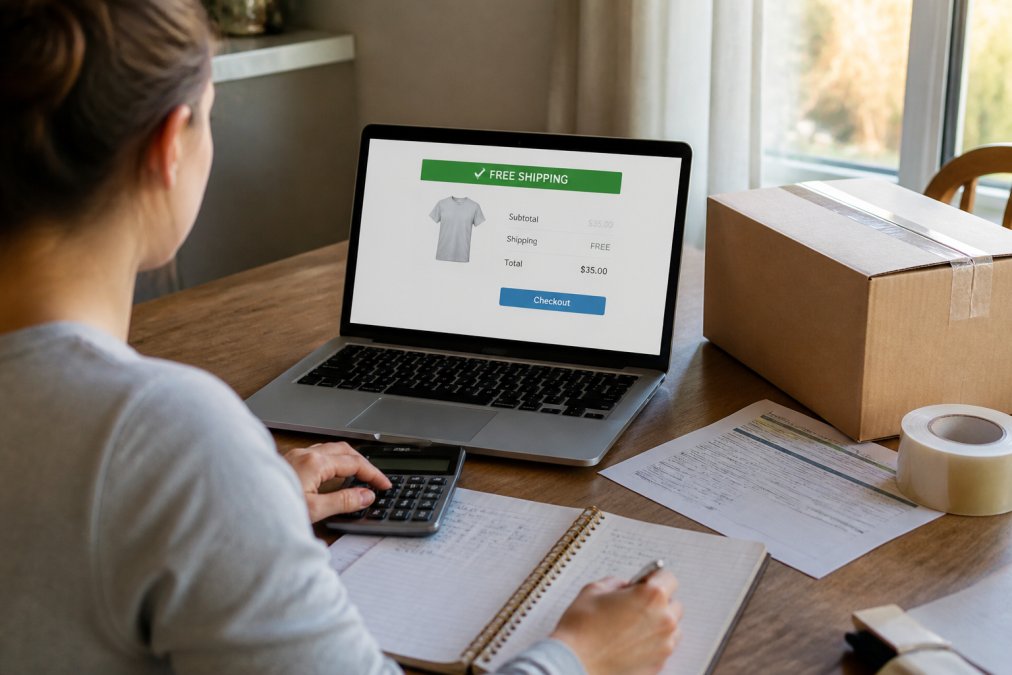
The Hidden Costs Behind 'Free' Delivery
Nothing ships for nothing. When a retailer advertises free shipping, the cost moves somewhere else in the transaction:
- It's baked into the product price. The margin absorbs it, or the list price already accounts for it.
- It's gated behind a threshold. You spend more to qualify, which raises the retailer's average order value.
- It's slower. Economy carrier services and consolidated routes cost less, so they take longer.
- It's recovered at returns. Restocking fees or customer-paid return labels can offset the original "savings."
Many businesses find free shipping works best as a threshold offer rather than an unconditional one, it protects margin while driving larger baskets.
Average Shipping Times for Online Retailers: What to Expect
Average shipping times for online retailers typically run three to five business days for standard ground within the contiguous states, with economy options stretching to seven days or more. But the number that answers "is free shipping worth the wait" isn't carrier transit time, it's the total from click to porch.
Here's the full clock, broken into its parts:
- Order processing (handling): the time the retailer takes to pick, pack, and hand the parcel to the carrier. Commonly 1-3 business days; some high-volume sellers ship same day, others batch orders and take longer.
- Carrier transit: the time the carrier actually moves the package. Standard ground is typically 3-5 business days; economy or consolidated services run 5-8; expedited is 2-3; overnight is next business day.
- Last-mile and delivery attempts: the final leg to your door. This is where signature requirements, freight scheduling, and missed-delivery reattempts add unplanned days.
Add those three for the realistic arrival window. A "free" order that ships in 2 days and transits in 5 is a 7-business-day wait, about a week and a half on the calendar. That's the trade you're making.
Wait times vary sharply by product category
The same free-shipping offer means different things depending on what you bought:
- Low-cost impulse buys (accessories, apparel, small gear): the item is cheap and non-urgent, so a 7-10 day wait is usually fine. The savings matter more than the speed.
- Mid-ticket routine purchases: a 5-7 day wait is tolerable when you planned the purchase in advance.
- High-ticket or bulky items (equipment, machines, furniture): these often ship freight, not parcel. Freight adds delivery scheduling, a phone call to arrange a window, and sometimes a signature, so the effective wait can stretch to 1-3 weeks regardless of what you paid for shipping.
- Time-sensitive purchases (gifts, replacements, event gear): any wait longer than the deadline is a failure, no matter how much you saved.
The rule of thumb: the cheaper and less urgent the item, the more a long free-shipping window is worth tolerating. The more expensive or deadline-bound, the more you should consider paying for speed.
How to read a delivery estimate without getting burned
Retailers quote estimates differently, and the differences hide real days:
- "Ships in" vs. "arrives by": "Ships in 1-2 business days" tells you nothing about transit. "Arrives by Friday" is a commitment. Trust the arrival date, not the ship date.
- Business days vs. calendar days: a "5-day" estimate is usually 5 business days, which is a full calendar week. Weekend orders often don't start the clock until Monday.
- Cutoff times: an order placed after the retailer's daily cutoff (commonly early afternoon) usually doesn't process until the next business day. That single cutoff can add a day.
- Holidays and peak season: carrier networks slow down around major holidays and during peak shopping periods. A window that's accurate in March can be optimistic in December.
Is Expedited Shipping Worth the Extra Cost?
Expedited shipping is worth the extra cost when the item is time-sensitive, a gift, a broken-item replacement, or gear needed before an event. Otherwise, standard ground delivers the same product for less.
The premium for speed rarely reflects the carrier's actual cost difference, it reflects convenience and priority handling. A fair trade when timing matters, a waste when it doesn't.
Here's how to decide:
| Situation | Best Choice | Why |
|---|---|---|
| Gift with a fixed date | Expedited | Arrival date is non-negotiable |
| Replacement for a broken item | Expedited | You're already without the product |
| Stocking up on routine gear | Standard ground | No deadline, lowest cost |
| Large or heavy equipment | Standard freight | Expedited rates scale badly with weight |
For fitness equipment specifically, expedited shipping often costs disproportionately more because carriers price by dimensional weight. A bulky item that ships cheaply on a slow freight route can become expensive the moment you ask for speed.
Shipping Policies for Fitness Equipment: What You Need to Know
Shipping policies for fitness equipment differ from standard retail because weight, dimensions, and handling change the economics. Read three things before ordering: the shipping threshold, handling time, and return terms.
Bulky items like racks, benches, and machines usually ship freight, meaning longer transit, delivery scheduling, and sometimes a signature. Smaller items like apparel, bands, and accessories ship as normal parcels and rarely justify expedited rates.
What most guides miss is the return side. A free outbound shipment can sit next to a costly return shipment for heavy goods, and that asymmetry is where the "free" promise quietly disappears. GearrUp is committed to delivering premium quality at fair prices, ensuring you have the reliable gear you need to move with confidence. We offer free shipping, secure payment, and easy returns.
Free Shipping vs. Paid Shipping: A Conversion and Cost Comparison
Free shipping generally wins on conversion rate while paid shipping protects margin. What most guides never give you is a way to decide, so here's a framework, plus the math that turns "it depends" into a number.
For shoppers, the comparison is simple: free shipping saves money but costs time; paid shipping buys speed. Neither is universally better, it comes down to what you value more in that purchase.
For retailers, the trade-off shows up in two places:
- Conversion rate: free shipping removes a known friction point at checkout, and fewer abandoned carts means more completed orders.
- Profit margin: every free shipment is a cost the business absorbs, so the offer only works if the margin on the order covers it.
A common approach is a hybrid: free shipping above a threshold, flat-rate below it. That structure encourages larger baskets without giving away delivery on every small order.
The free-shipping break-even formula
This is the calculation most articles leave out. Before you offer free shipping, run your own numbers through it:
Break-even order value = average shipping cost ÷ gross margin percentage
Suppose your average shipping cost per order is $8 and your gross margin is 40% (0.40). Divide $8 by 0.40 and you get $20. Any order below $20 loses money if shipped free, the product margin doesn't cover the shipping absorbed. Above $20, the order still contributes profit.
So the break-even order value tells you the floor. Set your free-shipping threshold at or above that number, and the offer stops being a giveaway.
Two adjustments make the formula more honest:
- Use fully loaded shipping cost. Include the carrier rate, packaging, and any handling labor, not just the postage label.
- Account for return rate. If a meaningful share of orders come back, the outbound shipping cost is effectively spent on orders that generate no revenue (Consumers Expected to Return Nearly $850 Billion in Merchandise in 2025). A higher return rate pushes your break-even order value up.
Setting a threshold that actually raises average order value
Free shipping raises average order value when tied to a spending threshold. Shoppers add an extra item to clear the minimum, growing basket size. A threshold converts shipping from a fixed cost into a target: instead of paying for delivery, the shopper buys one more item and feels like they won.
The risk is the opposite: shoppers who'd have spent above the threshold anyway get free shipping they would have paid for. Set the threshold just above your current average order value to capture benefit without giving away margin.
A practical pattern many retailers use:
- Find your current average order value.
- Set the free-shipping threshold modestly above it, enough to nudge an add-on, not so high that shoppers abandon.
- Keep a flat-rate paid option below the threshold so small orders still convert.
- Recheck the break-even formula whenever carrier rates change.
When paid shipping is the better offer
Free shipping is not automatically the stronger play. Paid shipping wins when:
- Margins are thin. Low-margin categories can't absorb delivery without losing money on every order.
- Items are heavy or bulky. Dimensional weight makes shipping expensive, and free shipping on a bulky item can wipe out the entire order's profit.
- The customer is time-sensitive. A shopper who needs it now will happily pay for speed, and that paid upgrade is often pure margin.
- You want to signal quality or speed. A paid express tier can position the brand around reliability rather than discount.
The honest answer to "is free shipping worth the wait" is that it depends on which side of the transaction you're on. Shoppers should weigh the wait against the savings and their deadline. Retailers should run the break-even formula before promising anything, because "free" is only free to the person who isn't paying for it.
The Environmental Impact of 'Free' Shipping
"Free" shipping has a real environmental cost. When delivery appears free, shoppers order more frequently and in smaller batches, more individual trips, more packaging, and more last-mile vehicles on the road (the EPA).
Consolidating orders reduces that impact: one shipment of three items uses less packaging and fewer delivery stops than three separate shipments. Slower shipping also helps, since carriers batch economy deliveries onto fuller, more efficient routes.
If sustainability matters to you, the practical moves are simple:
- Order everything you need in one transaction
- Choose standard or economy shipping when timing allows
- Skip expedited unless the deadline is real
None of these require giving up convenience. They just shift the default from fastest to sensible.
Managing the Wait: Psychological Strategies for Customer Retention
Managing the wait is a retention strategy, not a logistics problem. Customers tolerate slow delivery far better when they know what's happening and when to expect it.
The gap between expectation and reality drives most shipping complaints. A five-day delivery promised in five days satisfies; a three-day delivery promised in two angers, even though it arrived faster.
Retailers that retain customers through the wait usually do three things well:
- Set accurate expectations upfront. Underpromise on the window and overdeliver on the arrival.
- Send proactive tracking updates. A shipping confirmation and a delivery-day notification remove the uncertainty that causes anxiety.
- Make the wait feel productive. Order updates, preparation tips, or setup guides give the customer something to engage with while the package is in transit.
For shoppers, the logic reverses: if you need something by a date, build in a buffer and choose the shipping speed that guarantees it rather than the one that might.
Frequently Asked Questions
What are the drawbacks of free shipping?
Free shipping often means slower delivery times, as retailers use the most economical methods. It can also lead to higher prices elsewhere, as shipping costs are built into product pricing. Some retailers set minimum order thresholds, encouraging you to spend more than planned. Additionally, returns may be more complicated or costly. Understanding these trade-offs helps you decide if the wait is worth it for your order.
How long does free shipping usually take?
Free shipping typically takes 5 to 10 business days for standard delivery, depending on the retailer and your location. Some companies offer free shipping with faster timelines, but those often require membership or higher order values. For fitness equipment, bulky items may take longer due to special handling. Always check the estimated delivery window before ordering to avoid surprises.
Is expedited shipping worth the extra cost?
Expedited shipping is worth it when you need your gear quickly, such as for an upcoming event or replacing a broken item. It typically costs $15 to $30 more and can cut delivery time to 1-3 business days. If you're not in a hurry, standard free shipping saves money. Consider your timeline and budget before choosing expedited options.
What should you consider before opting for free shipping?
Before choosing free shipping, check the estimated delivery date, return policy, and any minimum purchase requirements. Compare the total cost with paid options, including potential membership fees. For fitness equipment, verify that free shipping covers bulky items and doesn't exclude certain locations. Reading the fine print ensures you know exactly what to expect and avoid hidden fees.
The real question isn't whether free shipping exists, it's whether the wait and the terms behind it match what you actually need. GearrUp builds gear for people who train hard and expect it to last, and we back that with free shipping, secure payment, and easy returns so the value holds from checkout to delivery. Our precision-crafted apparel and equipment is engineered to perform under everyday pressure at fair prices. Get started with GearrUp and shop equipment built to move with you.

