

Table of Contents
- Why Durable Workout Gear Matters for Older Athletes
- Essential Fabric Features That Last Through Intense Training
- How to Choose Gym Shoes in 2026 for Stability and Longevity
- Moisture-Wicking Fabrics for Older Adults: Comfort Without Compromise
- Durable Compression Gear for Recovery and Joint Support
- Layering Strategies and Adaptive Gear for Limited Mobility
- Care and Maintenance: Making Your Gear Last Years, Not Months
- Conclusion
Last Updated: August 29, 2026
Why Durable Workout Gear Matters for Older Athletes
Getting back into fitness after years away, or staying competitive well into your 50s and beyond, demands gear that actually holds up. When you're pushing through heavy lifts, long cardio sessions, or recovery work, the last thing you need is leggings that roll down mid-squat or a compression sleeve that loses its support after three weeks.
The difference between gear that lasts and gear that falls apart comes down to fabric construction, seam quality, and how well materials handle repeated stress. At GearrUp, we've built our entire apparel line around this principle: precision-crafted products engineered to perform under everyday pressure, whether you're commuting to the gym or grinding through intense training sessions.
Most athletes over 40 have experienced gear failures: expensive leggings that pilled after five washes, "premium" compression gear that lost elasticity within months, shoes that developed painful pressure points during long runs. What separates durable gear from disposable gear is attention to details that matter most: fabric blends that resist pilling and degradation, reinforced seams at high-stress points, and construction methods that maintain shape and support through hundreds of workouts. When your body recovers slower than it used to and joint stress matters more, gear durability directly impacts your ability to train consistently without injury.
Essential Fabric Features That Last Through Intense Training
High-quality synthetic blends combine nylon, elastane, and polyester in specific ratios designed for longevity. Nylon provides durability and abrasion resistance, elastane delivers four-way stretch and recovery, and polyester adds moisture-wicking capability. When blended correctly, they create fabric that resists pilling, maintains shape after hundreds of washes, and keeps its elasticity season after season.
Moisture-wicking technology matters more than most guides acknowledge. As you age, your body's thermoregulation becomes less efficient, and sweat management directly impacts comfort during workouts. Fabrics engineered to pull moisture away from skin, rather than absorbing it, dry faster and resist odor development. Look for fabrics specifically treated with anti-microbial properties, which prevent bacteria and fungus growth that breaks down fibers from the inside out.
The construction method matters as much as the material itself. Flatlock seams, where seams are stitched flat against the fabric rather than overlapped, reduce bulk and eliminate pressure points that cause chafing. Reinforced seams at stress points like the crotch, underarms, and shoulders prevent blowouts that make gear unwearable. Breathable fabrics with proper ventilation panels keep your core temperature stable without overheating. For older athletes, this is a necessity, your body works harder to cool itself, and gear that traps heat accelerates fatigue and increases injury risk.
How to Choose Gym Shoes in 2026 for Stability and Longevity
The right gym shoe for an older athlete balances three priorities: stability to protect aging joints, durability to handle repeated impact, and comfort that doesn't degrade over time.
Stability comes from three design elements: a firm heel counter that prevents excessive ankle roll, structured arch support that maintains the foot's natural alignment, and a wide base that distributes impact evenly. For older athletes, this matters because proprioception declines with age (peer-reviewed research). A shoe that provides external stability compensates for this natural decline and reduces your risk of ankle sprains or knee strain during weighted movements.
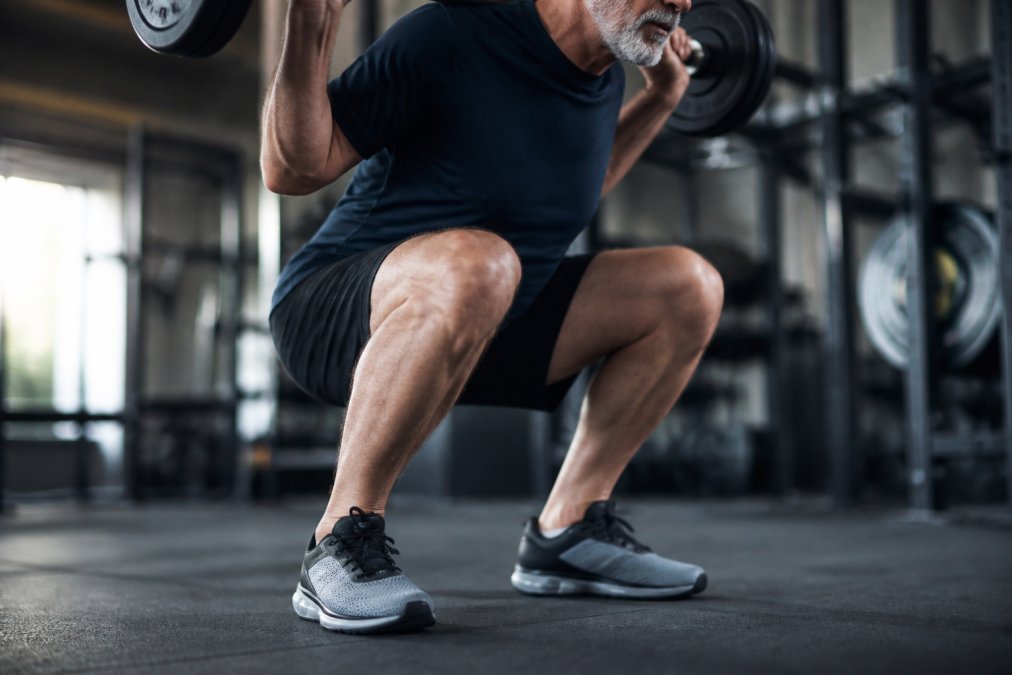
Impact absorption technology determines how long a shoe remains functional. The outsole, the rubber contact surface, determines durability and traction. Thicker rubber compounds resist wear better than thin ones, and specific rubber blends designed for gym floors maintain grip without slipping even when wet.
Fit and sizing for older athletes requires attention to width and volume. Your feet often widen with age and the arch can flatten. A shoe that fits your current foot prevents pressure points that develop into blisters or plantar fasciitis. Many brands now offer multiple width options; don't compromise on fit for aesthetic reasons.
Moisture-Wicking Fabrics for Older Adults: Comfort Without Compromise
Moisture-wicking technology is a combination of fabric treatment, fiber selection, and garment design. For older athletes, understanding how this works directly impacts your ability to train comfortably and safely.
Moisture-wicking fabrics pull sweat away from skin and move it to the outer surface where it can evaporate. This keeps your skin dry, reduces friction-related chafing, and prevents the heat buildup that accelerates fatigue. Synthetic fibers like polyester and nylon naturally repel water, making them better at this than cotton, which absorbs moisture and holds it against your skin.
Hydrophobic finishes create microscopic channels that encourage water molecules to move across the fabric surface rather than soaking in. Quality moisture-wicking gear maintains this treatment through 50+ wash cycles; cheaper versions lose effectiveness after 10-15 washes (peer-reviewed research).
Temperature regulation becomes increasingly important as you age. Your body's ability to dissipate heat declines, and overheating during workouts accelerates fatigue and increases injury risk. Moisture-wicking fabrics prevent sweat from accumulating on your skin, allowing evaporative cooling to work effectively. Anti-microbial treatments prevent bacterial growth, keeping your gear fresher longer between washes. This matters because repeated washing degrades fabric faster than anything else. Gear that stays fresher longer requires fewer washes, which means it lasts significantly longer overall.
Durable Compression Gear for Recovery and Joint Support
Compression gear serves two distinct functions for older athletes: it provides external joint support during workouts, and it aids recovery by improving blood circulation during and after training.
Graduated compression applies more pressure at the extremity and decreases toward the heart, which promotes venous return and reduces swelling. For knees, ankles, and elbows, this external support stabilizes joints during high-stress movements like heavy squats or overhead pressing. The compression also provides proprioceptive feedback, helping your body sense joint position more clearly, which improves movement quality and reduces injury risk.
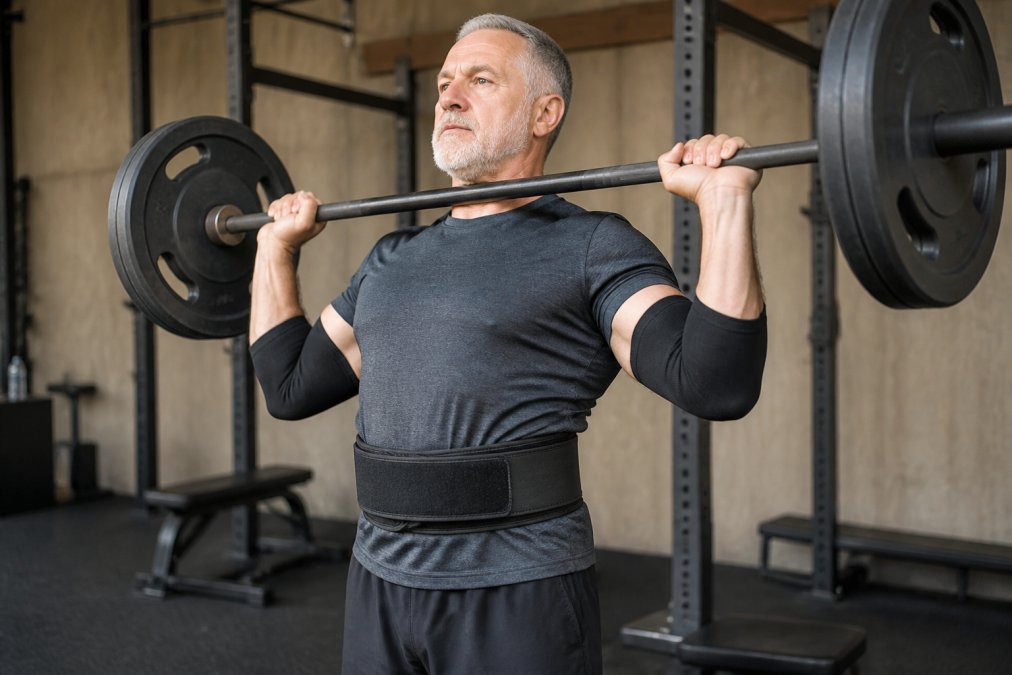
Joint support from compression gear works best when the material maintains consistent pressure through hundreds of wears. Quality compression uses high-density neoprene or specialized compression blends that resist stretching out.
GearrUp's Pro-Series Neoprene Waist Support uses high-density SBR neoprene with a smooth mercerised cloth face, designed to brace your core during heavy lifts while trapping heat around the lower back. Warm muscle is less prone to strain, which matters most on the first heavy set of the day when your tissues are still cold. The U-Shaped Weightlifting Belt provides similar support with a different design philosophy, bridging the gap between bodyweight training and heavy resistance exercises.

Post-workout compression accelerates blood flow to muscles, which helps clear metabolic waste and deliver nutrients for repair. Wearing compression gear for 2-4 hours after training provides measurable recovery benefits. Durability in compression gear means the elastic fibers maintain their recovery properties through repeated compression and release cycles, with reinforced seams at areas that experience the most movement.
Layering Strategies and Adaptive Gear for Limited Mobility
Layering extends gear lifespan and adapts your outfit to changing conditions within a single workout. For older athletes with limited mobility or recovering from injury, layering provides flexibility to modify your setup as your body warms up or as different movements demand different support.
The base layer should be moisture-wicking synthetic material that pulls sweat away from skin. This is where quality matters most because the base layer stays against your skin for the entire workout. The mid layer provides insulation and additional moisture management. For cooler workouts, a lightweight fleece-lined layer traps warmth without bulk. For warm conditions, a breathable mid layer keeps air moving across your skin. Mid layers should also be moisture-wicking, not absorbent.
The outer layer protects against wind and external moisture while remaining breathable enough to let trapped heat escape. For indoor gym work, this might just be a lightweight jacket. For outdoor training, the outer layer needs to be wind-resistant and water-resistant without being completely waterproof, which traps sweat.
Adaptive gear specifically designed for limited mobility removes barriers that prevent older athletes from training effectively. Compression gear with extended coverage provides stability across multiple joints simultaneously. Waist support belts that adjust without removing other gear allow you to modify support mid-workout. Zippers and closures matter more than most guides acknowledge. Velcro adjustments allow you to fine-tune compression without removing gear. Full-length zippers on jackets let you vent quickly without taking off the entire layer.
Care and Maintenance: Making Your Gear Last Years, Not Months
The durability advantage of quality gear evaporates if you don't maintain it properly. Understanding proper care extends your gear's lifespan by years and preserves the technical properties that make it perform.
Wash in cold water, not hot. Heat breaks down synthetic fibers and causes elastic materials to lose recovery properties faster. This single change extends gear lifespan by 30-50% (the FTC). Turn gear inside out before washing to protect the outer surface while exposing the inside, where sweat, bacteria, and odor accumulate, to the detergent.
Use gentle detergent and skip fabric softener. Fabric softener coats fibers and reduces their ability to wick moisture. Air dry everything, dryer heat is the fastest way to destroy elastic materials and break down synthetic fibers.
Wash less frequently than you think necessary. Moisture-wicking gear with anti-microbial treatment stays fresher longer than you expect. Washing every 3-4 workouts, or when the gear actually smells, extends lifespan without hygiene compromise. This alone can double your gear's functional lifespan.
Store gear properly between workouts. Hang gear to dry immediately after workouts; don't let it sit in a pile. Proper storage prevents the bacterial growth that degrades fabric from the inside out. Inspect seams and elastic regularly. Small issues become major failures if ignored. Quality gear is worth repairing; disposable gear isn't.
Durability in workout gear isn't a luxury, it's foundational to training consistently without frustration. When your gear holds up through hundreds of workouts, you can focus on your training instead of managing equipment failures. GearrUp's precision-crafted apparel is engineered specifically for this: high-quality synthetic blends, reinforced seams, and construction methods that maintain performance through years of use. Whether you're choosing compression support like our Pro-Series Neoprene Waist Support, investing in stability with a weightlifting belt, or building a complete training wardrobe, the difference between gear that lasts and gear that fails comes down to materials, construction, and maintenance. Start with quality foundations, maintain them properly, and your investment pays dividends for years.

Frequently Asked Questions
Q: What makes durable workout gear for older athletes different from standard fitness apparel?
A: Durable workout gear for older athletes prioritizes joint support, moisture-wicking technology, and fabric durability over trends. Look for four-way stretch fabrics, reinforced seams, and compression elements that reduce impact on aging joints. Fabrics like nylon and elastane blends resist pilling and maintain shape through hundreds of washes. Standard apparel often sacrifices these features for cost or aesthetics, which means shorter lifespan and less functional support during high-intensity training.
Q: How do I choose gym shoes in 2026 that will actually support my feet during heavy lifting?
A: Prioritize arch support, stability, and impact absorption over cushioning trends. Look for shoes with a firm midsole that won't compress under heavy loads, reinforced heel counters for ankle stability, and breathable uppers to manage sweat. Shoes designed for weightlifting typically have a flat or slightly elevated heel to support proper form during squats and deadlifts. Test the shoe's range of motion by flexing it, quality lifting shoes should feel rigid across the midfoot but flexible at the toe.
Q: Why is moisture-wicking fabric important for older adults during workouts?
A: Moisture-wicking fabrics pull sweat away from your skin, preventing chafing and reducing odor buildup, both common concerns for older athletes training at high intensity. These fabrics also regulate temperature, which is critical as aging bodies are more sensitive to overheating. Quick-dry synthetic blends like nylon and polyester with elastane maintain their shape better than cotton and resist bacterial growth. This means fewer skin irritations, longer gear lifespan, and more comfortable training sessions.
Q: How long should quality durable workout gear actually last with proper care?
A: High-quality durable workout gear should last 18-24 months of regular training (3-5 sessions per week) before showing significant wear. This assumes proper care: washing in cold water, air-drying instead of machine-drying, and avoiding fabric softeners that break down elastane. Compression gear and support items may need replacement sooner due to repeated stretching. GearrUp's products are engineered with reinforced seams and premium fabric blends specifically to extend durability beyond standard apparel timelines.
This article was written using GrandRanker

