

Table of Contents
- What Makes Gym Clothes Commuter-Friendly?
- Moisture-Wicking Office Wear: Blending Performance with Professional Style
- How to Pack Workout Clothes for Work: A Step-by-Step Guide
- Top GearrUp Bags for Commuters
- Layering for Transit: Weather-Resistant Outer Layers
- Odor Control and Post-Workout Transition
- Frequently Asked Questions
Last Updated: September 16, 2026
What Makes Gym Clothes Commuter-Friendly?
Comfortable gym clothes for commuters solve a specific problem: gym clothes for commuters have to work on a crowded train at 7 a.m., in a squat rack at noon, and at a desk afterward without looking like you slept in them. That's a harder brief than activewear brands admit.
Most "gym clothes" are built for the gym only. They wick sweat, they stretch, and they look like gym clothes. That's fine if your car is in the parking lot. It falls apart when you're carrying a bag, standing on a platform, and heading straight to work.
The commuter wardrobe has to do four jobs at once:
- Manage sweat without staying damp for the rest of your trip
- Move with you through stairs, seats, and a full training session
- Survive the weather between your front door and the office
- Pass as normal clothing once you're at your desk
Get any one of those wrong and the whole outfit fails. The sections below break down which fabrics, fits, and features actually deliver.
Fabric Technology: Moisture-Wicking and Quick-Dry
Moisture-wicking fabric is engineered to pull sweat away from your skin and spread it across the surface of the garment so it evaporates faster. Quick-dry construction is what stops that fabric from staying heavy and clammy once you stop moving.
This matters more for commuters than for anyone else. A cotton t-shirt holds moisture against your body for hours. On a packed train, that's uncomfortable. At your desk, it's worse.
Synthetic blends do this best. Look for polyester and nylon bases with spandex woven in for stretch. Those blends dry quickly, resist odor better than cotton, and hold their shape through repeated washing. Many performance fabrics also use antimicrobial treatments to slow bacterial growth, which is what actually causes gym gear to smell.
The practical test: hold the fabric up to a light. If you can see through it, it will breathe. If it feels slick and heavy, it will trap heat.
Fit and Mobility: Four-Way Stretch and Ergonomic Design
Four-way stretch means the fabric stretches in both directions, not just across the body. That's the difference between leggings that move with a deep squat and leggings that pull tight and roll down at the waist.
Ergonomic design goes further. Seamless construction removes the side seams that cause chafing on long commutes. Flatlock stitching does the same job on paneled garments. A supportive waistband with a wide, flat profile stays put during lifting instead of digging in when you sit down.
Inseam length is the detail most buyers overlook. A 7-inch inseam on men's shorts hits mid-thigh and works for both the gym and the walk to the office. A 5-inch inseam reads as gym-only. For women's leggings, a high-rise waist with a contoured panel stays in place through squats and looks normal under a work top.
Compression gear has its place here too. Light compression improves circulation and reduces muscle fatigue, which helps on days when you train before work rather than after.
Moisture-Wicking Office Wear: Blending Performance with Professional Style
Moisture-wicking office wear is performance fabric cut to look like ordinary work clothing. The fabric does the technical job; the design hides it.
This is where athleisure and performance wear split. Athleisure borrows gym styling for casual settings. Performance wear built for commuting borrows office styling and keeps the technical fabric underneath.
What to look for:
Lightweight Tote Gym Bag - Wet & Dry →
- Polo shirts and button-downs in polyester-spandex blends that drape like cotton but dry in minutes
- Chinos and joggers with four-way stretch and a clean, tapered leg
- Blazers and overshirts in lightweight technical fabric that pack flat in a bag
- Merino or synthetic-blend base layers that regulate temperature under a jacket
The test is simple. If a garment looks like it belongs in a locker room, it fails the commute.
How to Pack Workout Clothes for Work: A Step-by-Step Guide
Packing workout clothes for work comes down to separation. Clean clothes, dirty clothes, shoes, and damp gear each need their own space, or everything in the bag ends up smelling like a locker room by 6 p.m.
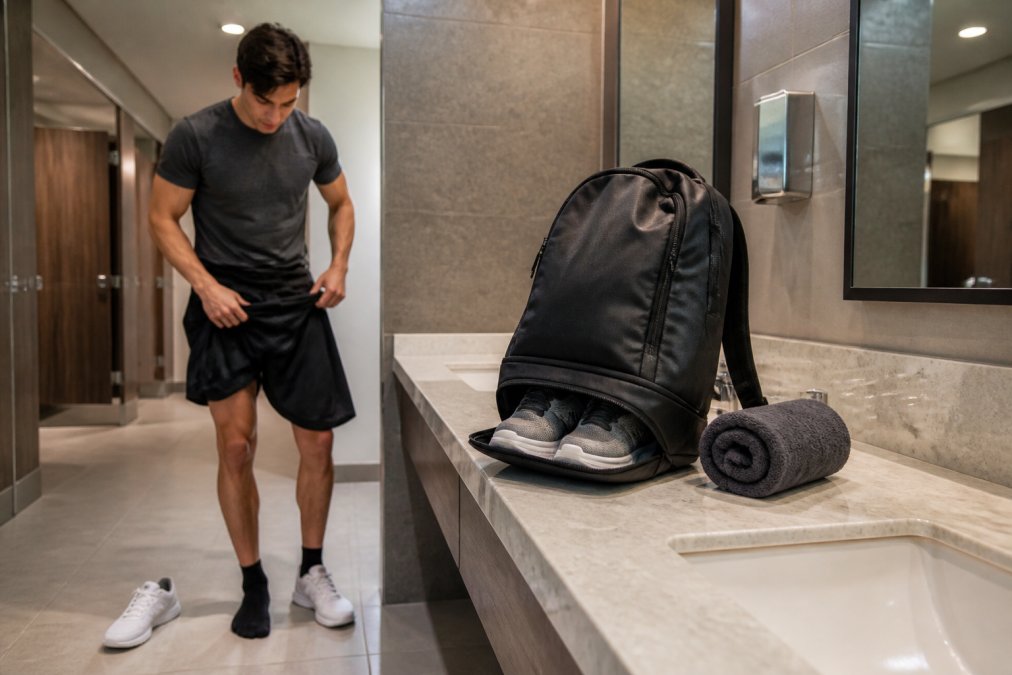
Here's the sequence that works:
- Roll, don't fold. Rolling compresses clothes and reduces creasing. A rolled shirt takes half the space of a folded one.
- Pack clean clothes first. They go in the main compartment, at the bottom, so they stay flat.
- Bag your shoes separately. A dedicated shoe compartment keeps soles away from fabric. If your bag doesn't have one, use a drawstring shoe bag.
- Use a wet/dry divider for anything damp. Post-workout kit goes in the wet side, never against your clean clothes.
- Keep toiletries in a sealed pouch. A small leak ruins everything around it.
- Put your laptop or tablet in its own padded pocket. Never let it sit against a wet towel.
Using Wet/Dry Separation and Shoe Compartments
Wet/dry separation is a divider inside the bag that keeps damp items physically apart from dry ones. A shoe compartment does the same job for footwear, usually with ventilation so shoes can air out instead of stewing.
Top GearrUp Bags for Commuters
GearrUp bags for commuters are built around separation and weather resistance, and the range covers everything from a light tote for swim days to a 28-liter duffel for full work-and-train commutes. Here's how they compare.
| Bag | Price | Capacity | Standout Feature | Best For |
|---|---|---|---|---|
| Waterproof Gym Backpack | $24.99 | 55 x 30 x 22cm | 7 pockets, laptop pocket, shoe compartment | Full commutes with a laptop |
| Waterproof Gym Duffel - 24L | $29.99 | 24L | Reflective accents, ripstop nylon | Early morning and evening commutes |
| Waterproof Gym Bag - 25L | $35.99 | 25L | Ventilated shoe compartment, 6 external pockets | Heavier training days |
| Lightweight Tote | $24.99 | 50 x 20 x 30cm | PVC wet/dry divider, wipe-clean | Swimming and hot yoga |
| Lightweight Portable Sports Bag | $47.99 | 28L | 0.85 kg, six external pockets | Commuters who hate heavy bags |
Waterproof Gym Backpack with Shoe Compartment
This is the pick for anyone carrying a laptop alongside gym kit. At $24.99, it undercuts most technical backpacks by a wide margin, and the seven-pocket layout is genuinely useful rather than decorative.

Waterproof Gym Duffel - 24L with Shoulder Strap
The 24L duffel is the better choice if you train in the evening and carry less tech. Ripstop nylon construction, a waterproof wet/dry compartment measuring roughly 8 by 10 inches, and reflective accents that matter more than they sound when you're walking home in the dark.
Layering for Transit: Weather-Resistant Outer Layers
Layering for transit means building an outfit that can lose or gain a layer without leaving you overheated on the train or freezing on the platform.
A three-part system handles almost every commute:
- Base layer: moisture-wicking synthetic or merino blend, worn against the skin
- Mid layer: lightweight fleece or technical hoodie that packs into your bag
- Outer layer: a water-resistant shell that blocks wind and rain without trapping heat
Odor Control and Post-Workout Transition
- Change out of training clothes immediately and put them straight into the wet compartment.
- Wipe down with a quick-dry towel rather than a heavy cotton one.
- Let shoes air in the ventilated compartment rather than sealing them in a plastic bag.
- Empty the bag completely when you get home and leave it open overnight.
- Wash training kit after every session, not every other session.
GearrUp's Waterproof Gym Bag - 25L leans hardest into this problem, with a ventilated shoe pocket that fits up to a US Size 13, six external pockets, and reinforced stitching for daily use. At $35.99, it's the pick if odor management is your main concern.

Frequently Asked Questions
What are the most comfortable gym clothes for long commutes?
Look for moisture-wicking fabrics like polyester and nylon blends with four-way stretch. These materials manage sweat and allow full mobility. A supportive waistband that stays put and a chafe-resistant inseam are key. For the commute itself, choose lightweight, breathable pieces you can layer under street clothes. GearrUp's bags with wet/dry separation help keep fresh clothes separate from sweaty ones.
Are moisture-wicking clothes appropriate for office commutes?
Yes, if you choose the right styles. Moisture-wicking office wear often looks like standard business casual, but the fabric pulls sweat away from your skin. Look for solid colors, clean lines, and wrinkle-resistant finishes. Pair a moisture-wicking polo or blouse with dark trousers or a skirt. This way you stay dry on a crowded train or bike ride, then walk into a meeting without changing.
How do I pack workout clothes for work without them getting wrinkled?
Roll each item tightly instead of folding it flat. Rolling minimizes creases and saves space. Pack your clean clothes at the bottom of your bag and keep dirty items in a separate wet/dry compartment. Use a dedicated shoe compartment to avoid transferring dirt. If you commute by bike, choose a water-repellent bag like the GearrUp Waterproof Gym Backpack to protect your clothes from rain.
What features should commuters look for in workout apparel?
Prioritize moisture-wicking fabric, breathability, and four-way stretch. A supportive waistband that does not roll down during squats is essential. Look for flatlock seams to prevent chafing and antimicrobial finishes to control odor. For layering, a lightweight, packable outer layer helps with temperature changes. Inseam length matters too: shorter for cycling, longer for coverage. These details make the gym-to-street transition seamless.

