

Table of Contents
- Why Most Gym Clothes Fail the Commute Test
- Moisture-Wicking Commuter Apparel: What Actually Works
- How to Style Gym Clothes for Work Without Looking Sloppy
- Best Gym Clothes for Office Transition: A Comparison
- Weather-Specific Gear for Year-Round Commuting
- Storage and Bag Integration for Transit-Ready Kit
- Durability: How to Tell if Gym Clothes Will Last
- Frequently Asked Questions
Last Updated: September 13, 2026
Why Most Gym Clothes Fail the Commute Test
Comfortable gym clothes for daily commuting solve a problem most activewear brands ignore: the hours between your front door and your first rep. Standard workout gear is engineered for a climate-controlled gym floor, not a crowded train car, a windy platform, or a walk through steady rain.
That gap matters more than most people realize. The average commuter in the United States spends roughly an hour each day in transit, and that time is spent sitting, standing, and sweating in fabric that was never designed for it (census.gov). At GearrUp, we build gear for exactly this window, from the first mile to the last set.
Here is the core tension: the same moisture-wicking fabric that keeps you dry during a workout can leave you clammy and cold once you stop moving. A base layer that breathes beautifully in a gym can trap heat on a packed bus. The fix is not better fabric alone. It is picking the right fabric weight, layer, and cut for the specific conditions of your route.
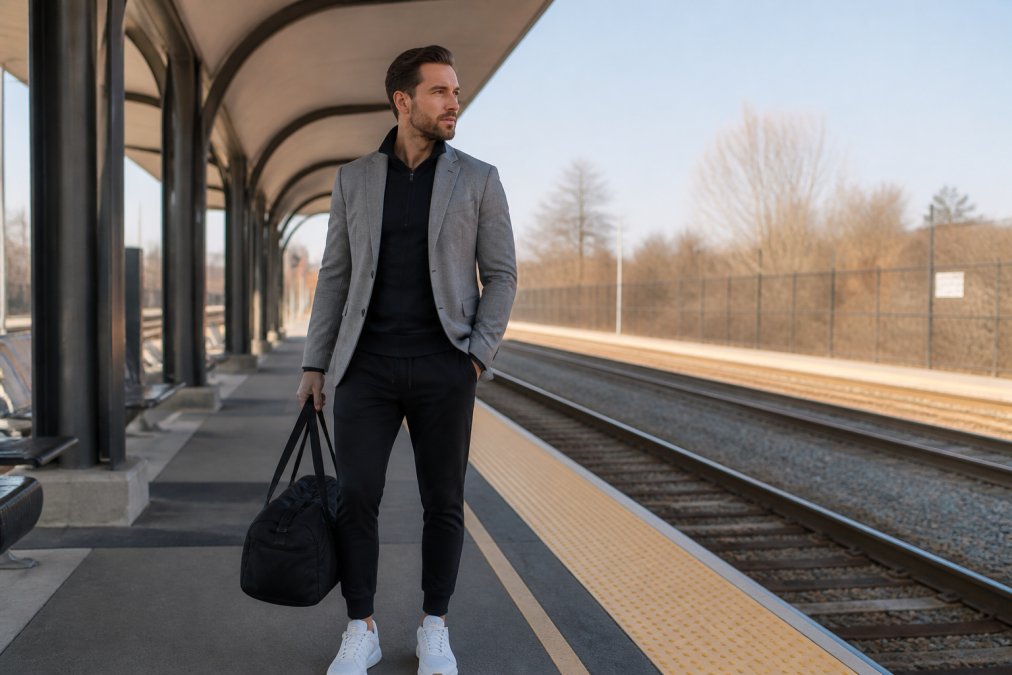
The Three Problems Standard Workout Gear Creates
Most workout gear fails on the commute for three predictable reasons. First, it wicks sweat away from your skin but holds it in the fabric, so you arrive damp and stay damp. Second, it is cut for movement, not for sitting on a seat or standing in a crowd, which means it rides up, bunches, or gaps. Third, it signals "gym" loudly enough that walking into a meeting afterward feels awkward.
None of these problems is about quality. They are about design intent. A pair of shorts built for a squat rack has no obligation to look presentable on a bus.
Moisture-Wicking Commuter Apparel: What Actually Works
Moisture-wicking commuter apparel is clothing engineered to move sweat away from your skin and dry quickly enough that you are not sitting in wet fabric hours later. The key difference from standard activewear is drying speed and airflow, not just wicking ability.
The term you will see most is moisture-wicking, which describes fabric that pulls perspiration from your skin to the outer surface where it can evaporate. Polyester blends and spandex mixes dominate this category because they dry fast and hold their shape. Look for quick-dry and anti-microbial finishes if you plan to wear the same piece from morning commute through evening workout.
Breathability matters just as much as wicking. A fabric that pulls sweat off your skin but does not let air through will leave you overheated on a crowded train. Four-way stretch helps here too, because it lets the garment move with you instead of against you.
Fabric Weights That Handle Transit and Training
Fabric weight is measured in grams per square meter, and it decides almost everything about how a piece performs in transit.
| Fabric Weight | Best For | Transit Behavior | Training Use |
|---|---|---|---|
| Lightweight (under 150 gsm) | Summer commuting, cycling | Breathes well, dries fast | Low-impact, mobility work |
| Midweight (150-220 gsm) | Year-round base layers | Balances airflow and coverage | Most strength training |
| Heavyweight (220+ gsm) | Cold-weather outerwear | Retains warmth, blocks wind | Warm-up and recovery |
| Compression knit | High-impact training | Snug, low bulk under layers | Lifting, sprint work |
A common mistake is buying one weight for everything. In practice, most commuters need two: a lightweight base layer for warm months and a midweight option for the rest of the year.
How to Style Gym Clothes for Work Without Looking Sloppy
Styling gym clothes for work comes down to one principle: keep the athletic pieces close to your body and add structure on top. A fitted base layer reads as intentional. A loose, logo-heavy tee reads as gym.
Start with neutral colors. Black, charcoal, navy, and olive hide sweat marks and pair with almost anything. Then add one structured layer: a blazer, a quarter-zip, or a clean overshirt. The layer does the work of making the outfit read as business casual.
Transition Layers That Read as Business Casual
The right transition layer is the single highest-use purchase a commuting athlete can make. It needs to be packable enough to fold into a bag, structured enough to look deliberate, and breathable enough that you do not overheat on the way in.
Look for these three qualities:
- Wrinkle resistance: Anti-wrinkle and travel-friendly fabrics survive being folded in a duffel all day.
- Modest coverage: A layer that covers the shoulders and upper back lets you wear a tank or fitted tee underneath without looking underdressed.
- Neutral palette: One layer in charcoal or navy works with every base layer you own.
Best Gym Clothes for Office Transition: A Comparison
The best gym clothes for office transition balance three things: how fast they dry, how they look under a layer, and how well they survive repeated washing. No single piece wins on all three, so most commuters build a small rotation rather than buying one hero item.
Here is how the main categories compare.
| Piece | Drying Speed | Office Readiness | Best For | Watch Out For |
|---|---|---|---|---|
| Fitted base layer | Fast | High under a layer | Year-round commuting | Shows sweat if too thin |
| Quarter-zip midlayer | Medium | High | Cooler months | Can overheat indoors |
| Jogger with tapered cut | Medium | Medium | Casual offices | Loose cuffs look gym-only |
| Compression top | Fast | Low on its own | High-impact training | Needs a layer to look professional |
| Performance polo | Fast | High | Warmer months | Fewer stretch options |
What to Look For in Each Piece
For a base layer, prioritize seamless construction and a chafe-free finish. Seams that sit under a backpack strap will rub for an hour straight, and no amount of wicking fabric fixes that.
For a midlayer, check the zipper and the collar. A quarter-zip with a structured collar holds its shape through a commute. A soft, floppy collar collapses and looks like a gym hoodie.
For bottoms, tapered joggers work in casual offices. If your workplace is stricter, pack a pair of chinos and change in the restroom. Storage and bag integration makes this easy, which we cover next.
Weather-Specific Gear for Year-Round Commuting
Year-round commuting gear has to handle four distinct conditions: heat, rain, cold, and wind. Most commuters own gear for one and improvise for the other three.
For heat, choose lightweight fabric and light colors. For rain, a water-resistant outer shell matters more than a waterproof one, because fully waterproof fabric traps heat and turns a short walk into a sauna. For cold, layer a midweight base under a wind-blocking shell. For wind, the shell does the work; the base layer just needs to stay dry.
Storage and Bag Integration for Transit-Ready Kit
Bag integration is the most overlooked part of a commuting setup. A bag with a dedicated shoe compartment and a wet-and-dry divider keeps damp gear away from your laptop and your clean clothes, which is the difference between a functional commute and a soggy one.

Look for three features:
- A separate shoe compartment, so dirty soles never touch clean fabric
- A wet-and-dry pocket, so a damp towel or swimsuit stays isolated
- A water-resistant exterior, so rain does not soak through to your change of clothes
The GearrUp Apex Gym Duffel - 25L at $59.99 is built around exactly this problem, with a lightweight polyester shell that resists wear and a multifunctional layout that works for the gym, the office, and a weekend trip. If you prefer to carry your kit on your back, the Waterproof Gym Backpack with Shoe Compartment at $24.99 uses high-density Oxford fabric and seven separate storage areas, including a zipped shoe compartment and a wet-and-dry pocket.

For commuters who want the lightest possible carry, the Lightweight Tote Gym Bag at $24.99 weighs almost nothing empty and uses a PVC surface that wipes clean in seconds, with a built-in wet-and-dry divider. And if you want a single bag that handles both the gym and a short trip, the Oxford Cloth Gym Bag at $59.99 uses premium Oxford cloth with reinforced stitching and a water-resistant finish.

Durability: How to Tell if Gym Clothes Will Last
Durability in performance apparel comes down to three things: fabric composition, seam construction, and how the piece handles repeated washing. High-quality polyester blends and spandex mixes hold their shape far longer than cheap cotton blends, which stretch out and pill after a few months.
Check these markers before you buy:
- Flatlock or bonded seams instead of standard overlock stitching
- Reinforced stress points at the shoulders, crotch, and waistband
- Fabric weight consistency across the garment, with no thin spots
- Colorfastness, tested by checking whether the fabric bleeds in cold water
The honest limitation is that no fabric lasts forever. Even premium performance apparel breaks down with heavy use, and the waistband is usually the first thing to go. Buying two mid-priced pieces and rotating them typically outlasts buying one expensive piece and wearing it daily.
Frequently Asked Questions
What fabrics are best for gym clothes worn during a commute?
Look for polyester blends with spandex for four-way stretch and moisture-wicking properties. These fabrics dry quickly, resist odor, and hold their shape through a full day. Avoid 100% cotton, which absorbs sweat and stays damp, creating chafing and discomfort during transit. Technical fabrics with anti-microbial treatments keep you fresh from morning train to evening workout.
Is it acceptable to wear athletic gear for daily commuting?
Yes, if you choose pieces that read as intentional rather than sloppy. Dark joggers with a clean silhouette, a fitted moisture-wicking top, and a structured layer like a lightweight jacket or blazer work in most casual and business-casual offices. The key is avoiding torn or faded items and choosing neutral colors that coordinate easily.
How do you transition from a commute to a workout without changing?
Wear compression shorts or moisture-wicking base layers under your commute clothes, then remove outer layers at the gym. Choose quick-dry fabrics that handle sweat without showing marks. A gym duffel with wet and dry separation keeps damp items away from your clean work clothes. This approach saves time and reduces the gear you need to carry.
How to choose gym clothes that look professional enough for the office?
Prioritize dark colors, minimal branding, and tailored fits. A moisture-wicking polo or henley reads more professional than a graphic tee. Pair joggers with a structured jacket or cardigan. Avoid loud patterns and logos. The GearrUp Oxford Cloth Gym Bag ($59.99) keeps your transition polished with water-resistant fabric and reinforced stitching that holds up to daily use.

