

Table of Contents
- Anthem Sports vs Play It Again Sports: Head-to-Head Comparison
- New vs. Pre-Owned: Quality and Condition Standards
- Pricing Breakdown: Retail Price vs. Trade-In Value
- How to Inspect Used Sports Gear Before You Buy
- Pros and Cons of Buying Used Fitness Equipment
- Best Places to Buy Affordable Sports Equipment: Local vs. Online
- Which Retailer Should You Choose? A Decision Guide
- Conclusion: Making the Smart Choice for Your Game
- Frequently Asked Questions
Last Updated: September 9, 2026
Anthem Sports vs Play It Again Sports: Head-to-Head Comparison
When your child outgrows last season's cleats or you're eyeing a squat rack without the retail price tag, the choice between Anthem Sports and Play It Again Sports shapes both your budget and your gear's lifespan. Anthem Sports focuses on new, brand-name equipment, while Play It Again Sports operates on a buy-sell-trade model built around pre-owned inventory.
The core difference comes down to inventory philosophy. Anthem Sports curates new products from major sporting goods brands, ensuring consistent availability and the latest models. Play It Again Sports thrives on the resale market, offering used equipment at lower price points. Neither approach is universally better; the right pick depends on whether you prioritize depreciation savings or warranty protection.
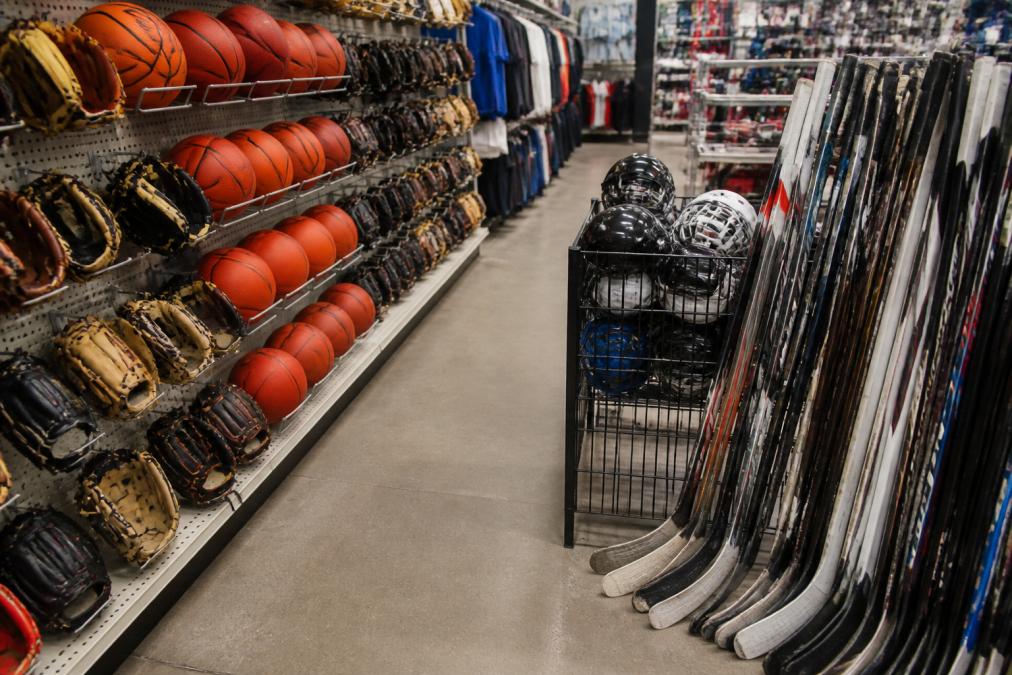
Winner: It depends on your goal. Choose Play It Again Sports when you want maximum savings on youth gear or equipment you'll outgrow quickly. Choose Anthem Sports when you need current models, specific sizes, or the peace of mind of factory-new condition.
New vs. Pre-Owned: Quality and Condition Standards
Play It Again Sports wins on price, but Anthem Sports wins on predictability. New equipment carries no history, no hidden wear, and no questions about how the previous owner treated it.
Most Play It Again Sports locations apply a condition grading system before items hit the floor, but standards vary by franchise location. Anthem Sports eliminates that variable because everything on the shelf is factory fresh.
For safety-critical equipment like helmets, car seats for youth sports, or climbing gear, buying new is the responsible default. The Consumer Product Safety Commission guidelines on sporting goods emphasize that protective equipment must be in sound condition to perform as intended. For non-safety items like dumbbells, yoga mats, or basic apparel, pre-owned condition matters far less.
Pricing Breakdown: Retail Price vs. Trade-In Value
When buying, Play It Again Sports typically prices used gear at 40-60 percent below what Anthem Sports charges for the same item new. When selling, Play It Again Sports offers either cash payout or store credit, with trade-in value usually exceeding the cash offer.
How Play It Again Sports Sets Its Prices
Play It Again Sports is a franchise network, so individual store owners set their own pricing within corporate guidelines. The typical pricing engine works like this:
- Retail benchmark: The store identifies the current retail price for the item new, either from a major chain or the manufacturer's suggested retail price.
- Condition grade: The item is assigned a grade, typically A (like new), B (good, visible wear), or C (functional but heavily used), which adjusts the price downward.
- Age and demand multiplier: Seasonal demand matters. Hockey gear commands higher prices in October than in April; baseball gloves peak in March. Slow-moving items get marked down weekly until they sell.
A pair of youth hockey skates that retails for $120 new at Anthem Sports will typically land at $65-$75 at Play It Again Sports if graded B, or $45 if graded C. Haggling is common at franchise locations, especially on bundles.
How Anthem Sports Prices New Gear
Anthem Sports operates on standard retail pricing: manufacturer's suggested retail price, with periodic sales (typically 10-20 percent off seasonal items). Anthem's price is fixed and predictable, you will not find a $120 pair of skates for $65, but you also will not wonder whether the $65 pair has a cracked blade holder.
The hidden cost of new gear is depreciation. Youth sports equipment loses 50-70 percent of its value within one season of use. A $120 pair of skates for a child who will outgrow them in 8 months costs roughly $15 per month; a $65 used pair costs about $8 per month, and you can often resell it for $30, dropping your net cost to $4 per month.
The Trade-In Valuation Formula
When you sell to Play It Again Sports, the store uses a simple formula:
Trade-in value = (Current resale price of the item) × (Condition multiplier) × (Store credit bonus)
The condition multiplier typically ranges from 0.3 (heavily worn) to 0.6 (like new). The store credit bonus is usually 1.2 to 1.5, meaning you get 20-50 percent more value if you accept store credit instead of cash.
A real-world example: You bring in a gently used baseball glove that retails for $80 new. The store determines it can resell it for $45. Your cash offer might be $18-$22. Your store credit offer might be $27-$30. That store credit is only worthwhile if you actually shop there again.
Maximizing Your Payout: What Actually Moves the Number
Sellers make three common mistakes that depress their trade-in offers:
- Selling at the wrong time of year. Bring in winter gear in September, not March. Stores pay more for inventory they can sell immediately.
- Skipping the cleaning step. A wiped-down, deodorized, lint-rolled item grades a full letter higher than the same item dirty. That is often a 15-20 percent difference in payout.
- Accepting the first offer without asking about the credit bonus. Many locations have discretion to bump the credit percentage for bundles or repeat customers.
Depreciation hits hardest on youth athletics equipment. Kids outgrow skates, bats, and pads within a season or two, long before the gear wears out. That makes the second-hand market particularly attractive for parents funding rapidly changing sports interests. The Aspen Institute's Project Play research on youth sports costs highlights how equipment expenses create barriers to participation, making affordable pre-owned options a practical solution for many families.
A common mistake is ignoring the buyback promise when you purchase new. If you buy a high-ticket item from Anthem Sports, check whether the retailer offers a trade-in program later.
| Purchase Scenario | Anthem Sports | Play It Again Sports |
|---|---|---|
| Youth hockey skates | Full retail, current model | 40-60% below retail, used |
| Squat rack for home gym | New, full warranty | Used, condition varies |
| Selling old gear | Typically no buyback | Cash or store credit |
| Safety equipment (helmets) | Factory fresh, certified | Inspected, but used |
| Best for | Latest models, guarantees | Budget, growing kids |
How to Inspect Used Sports Gear Before You Buy
Before you hand over payment at Play It Again Sports or any second-hand store, run through this checklist.
Check for structural cracks on anything load-bearing. Examine helmet shells for hairline fractures by flexing the shell gently and looking for stress marks. Inspect composite bats for rattles or dents, which indicate internal damage that ruins performance. For weight equipment, verify that dumbbell heads are securely attached and that barbell sleeves rotate smoothly without grinding.
Inspect fabric and straps on protective pads. Look for frayed stitching, torn webbing, and rusted buckles on shoulder pads or life jackets. Check the soles of cleats and boots for separation from the upper, a common failure in athletic footwear. For exercise machines, test every adjustment point and listen for unusual noises from pulleys or cables.
Pros and Cons of Buying Used Fitness Equipment
For home gym builders, the savings on used fitness equipment are substantial, but the trade-offs involve warranty, hygiene, and longevity.
Used dumbbells, barbells, and weight plates function identically to new ones because they have no electronics or moving parts to fail. A used treadmill or stationary bike costs far less than retail, freeing budget for other training tools.
Used cardio machines carry unknown maintenance histories, and replacement parts for older models become harder to source. Upholstery on benches and pads may harbor odors or wear. Warranties rarely transfer to second-hand buyers, meaning you absorb the full cost of any mechanical failure.
For most home lifters, the sweet spot is mixing both strategies. Buy used for iron, racks, and benches where condition matters less. Buy new for anything motorized, electronic, or safety-critical. This hybrid approach maximizes savings without exposing you to the highest-risk failure points.
Best Places to Buy Affordable Sports Equipment: Local vs. Online
Local stores like Play It Again Sports let you handle the gear before paying. Online marketplaces and retailers offer vastly more inventory and often lower prices, but you forfeit the ability to verify quality before purchase.
Local brick-and-mortar advantages include instant gratification, no shipping costs, and the ability to try on or test equipment. The trade-off is limited inventory availability.
Online shopping expands your options to nationwide inventory, but the risk is receiving items that differ from photos or descriptions.
Which Retailer Should You Choose? A Decision Guide
If you are outfitting a child in a rapidly growing sport, Play It Again Sports delivers the best value because the gear will be obsolete in a year regardless of condition. If you are buying protective equipment or anything with a motor, Anthem Sports is the safer choice for warranty coverage and guaranteed performance.
For sellers, if you want maximum value and shop at the store regularly, accept store credit, which typically yields a better rate than cash. If you need money now, cash payout from Play It Again Sports is straightforward, though lower.
Some shoppers prefer the consistency of a national chain's online presence and uniform pricing, while others enjoy the hunt of visiting a local resale shop where inventory changes weekly.
The Seller's Playbook: Step-by-Step to Maximize Trade-In Value
Step 1: Time your sale to the season (2-4 weeks before the season starts).
Play It Again Sports locations pay the highest prices for gear they can sell immediately. Hockey equipment peaks in September and January. Baseball and softball gear peaks in February and March. Football equipment peaks in July. Soccer gear has two peaks: March and August. Selling a month before the season starts gets you the best condition multiplier.
Step 2: Clean everything like you are selling it to a picky relative.
Stores grade on first impression. A baseball glove with dirt caked in the pocket grades C. The same glove wiped down, conditioned, and with the laces tightened grades B or A. Hockey equipment should be washed with a disinfectant spray and aired out for 24 hours. Cleats need their soles scrubbed and laces replaced if frayed. This 30-minute investment routinely moves the condition multiplier from 0.3 to 0.5.
Step 3: Bundle your items.
Walk in with one item and you get the standard offer. Walk in with a full set, say, a complete hockey bag with skates, pads, helmet, and stick, and the manager has a stronger incentive to negotiate. Ask for a 10-15 percent bump on the bundle offer.
Step 4: Decide between cash and store credit before you walk in.
Store credit typically runs 20-50 percent higher than cash. If you know you will buy gear again within the next year, which is almost certain if you have growing kids, take the credit. If you are done with the sport entirely, take the cash.
Step 5: Know your walk-away number.
Before you visit, check what similar items are selling for on online marketplaces. If Play It Again Sports offers you $20 for a glove you can sell for $40 online, the trade-off is speed versus effort. Online selling requires photos, listings, shipping, and dealing with buyers who may not show up.
The Buyer's Decision Matrix
The purchase decision comes down to three questions:
-
Is this item safety-critical? Helmets, climbing gear, car seats for youth sports, and any protective equipment for contact sports should be bought new. The Consumer Product Safety Commission guidelines on sporting goods are clear that protective equipment must be in sound condition to perform as intended, and you cannot verify a used helmet's impact history.
-
Will the user outgrow it before it wears out? If yes, youth sports, growing teens, anyone between sizes, buy used. The depreciation curve guarantees you will lose money on new gear you only use for one season.
-
Does the item have moving parts or electronics? Treadmills, ellipticals, and smart fitness equipment carry hidden maintenance risks when bought used. Buy those new. Dumbbells, barbells, weight plates, yoga mats, and basic apparel are safe used purchases because they have no components to fail.
The Hybrid Strategy Most Families Miss
The optimal approach for most households is not choosing one retailer over the other, it is using both in sequence. Buy the safety-critical and current-season items new from Anthem Sports. Buy the growth items and non-mechanical gear used from Play It Again Sports. Then sell everything back to Play It Again Sports when your child outgrows it, using the store credit to offset the next round of new purchases.
This cycle keeps your out-of-pocket costs roughly 30-50 percent lower than buying everything new, while ensuring that helmets, car seats, and other safety gear are always factory fresh.
Conclusion: Making the Smart Choice for Your Game
The right retailer depends entirely on what you are buying and why. For growing athletes and budget-conscious shoppers, the pre-owned model offers undeniable advantages. For safety-critical gear and current-season equipment, new retail justifies its higher price. Whichever path you choose, remember that carrying your gear properly extends its life. A quality gym bag from GearrUp, like the Waterproof Gym Backpack with Shoe Compartment at $24.99, keeps your equipment organized and protected between sessions.


Frequently Asked Questions
Can I trust Play It Again Sports for used equipment?
Yes, but only after you inspect the items yourself. Play It Again Sports follows a quality inspection process, yet individual store standards vary by franchise. Check for signs of wear like frayed cables on rackets, cracks in helmet shells, or excessive rust on dumbbells. Ask about their return policy before purchasing. This hands-on check matters most for safety-critical gear like helmets and climbing equipment, where hidden damage could pose a risk.
Can you haggle or trade in gear at Play It Again Sports?
Yes, Play It Again Sports is known for its trade-in program, offering store credit or cash for your used gear. The trade-in value depends on the item's condition, brand, and current demand. While sticker prices are generally firm, you can sometimes negotiate, especially on higher-priced items or when you are trading in equipment. Building a rapport with the staff can also lead to better offers on future visits.
Is it better to buy new from Anthem Sports or used from Play It Again Sports?
It depends on the item and your priorities. Buy new from Anthem Sports for the latest technology, full warranties, and predictable performance, which is crucial for safety gear like helmets. Choose used from Play It Again Sports for significant savings on items that don't require a perfect fit, such as dumbbells, yoga mats, or beginner gear for kids who will outgrow it quickly. Consider the pros and cons of buying used fitness equipment before you decide.
Does Play It Again Sports offer warranties on used items?
Play It Again Sports does not offer a standardized, manufacturer-backed warranty on used items. However, many individual franchise locations provide a limited store-level guarantee, often allowing returns within a short window (like 7 days) if the item fails. Always ask the specific store about their policy before you pay. This store-specific approach is a key difference from buying new at Anthem Sports, where a manufacturer's warranty is standard.

