

Table of Contents
- Why Synthetic Fabrics Irritate Sensitive Skin
- Natural Alternatives to Synthetic Fabrics for Sensitive Skin Activewear
- Benefits of Bamboo Fabric for Exercise
- Top GearrUp Picks for Sensitive Skin Workouts
- How to Wash Athletic Wear to Prevent Irritation
- Conclusion
- Frequently Asked Questions
Last Updated: September 21, 2026
Why Synthetic Fabrics Irritate Sensitive Skin
Polyester and nylon are the default fabrics in most activewear, and for sensitive skin they are often the wrong choice. This guide from GearrUp covers why synthetics trigger irritation and which alternatives to synthetic fabrics for sensitive skin activewear actually hold up in the gym.
The problem is structural. Polyester and nylon are petroleum-based fibers woven into a tight, smooth surface. That surface traps sweat against your skin instead of letting it escape, and it holds heat while it does so. For someone with eczema, rosacea, or simply reactive skin, a warm, damp, occlusive layer is close to the worst environment you can create. Friction makes it worse: the fabric slides and rubs against damp skin, and irritation follows.
There is a second issue most guides skip. Synthetic fibers are often finished with dyes and chemical treatments that remain in the fabric, and those residues sit directly against your skin for the length of a workout. If you have ever finished a session with a red, itchy patch under a strap line, the fabric is a reasonable suspect.
The Problem With Polyester and Nylon
Both fibers are built for performance, not for skin. They wick moisture, dry fast, and hold their shape, which is why almost every major brand uses them. But wicking moves sweat away from the fabric surface, not necessarily away from your body, and in humid conditions or under a heavy load, the fabric saturates and stays wet.
A common mistake is assuming "moisture-wicking" means "skin-friendly." It does not. A synthetic tee can move sweat efficiently and still leave your skin irritated, because the issue is the fiber itself and how it behaves against reactive skin, not just how fast it dries.
What to Look for on Clothing Labels
The label tells you more than the marketing copy. Look for natural fiber content listed first, ideally at 90% or higher. Cotton, merino wool, and bamboo are the three most common alternatives, and each behaves differently.
- Fiber content: Cotton, merino, or bamboo listed first, not as a minor blend component
- Stretch content: A small amount of elastane is fine and often necessary for fit
- Fit: Loose cuts reduce friction against reactive skin
- Finish: Fewer chemical treatments and dyes means fewer potential irritants
One practical note on fit: a pure cotton slim-fit shirt pulls across the back on overhead movements, which is exactly the friction you are trying to avoid. A little stretch in the fabric solves this without giving up the cotton feel.
Natural Alternatives to Synthetic Fabrics for Sensitive Skin Activewear
The best natural alternatives to synthetic fabrics for sensitive skin activewear are organic cotton, merino wool, and bamboo. Each one breathes, resists odor, and sits softly against reactive skin, and each has a clear trade-off you should know before you buy.
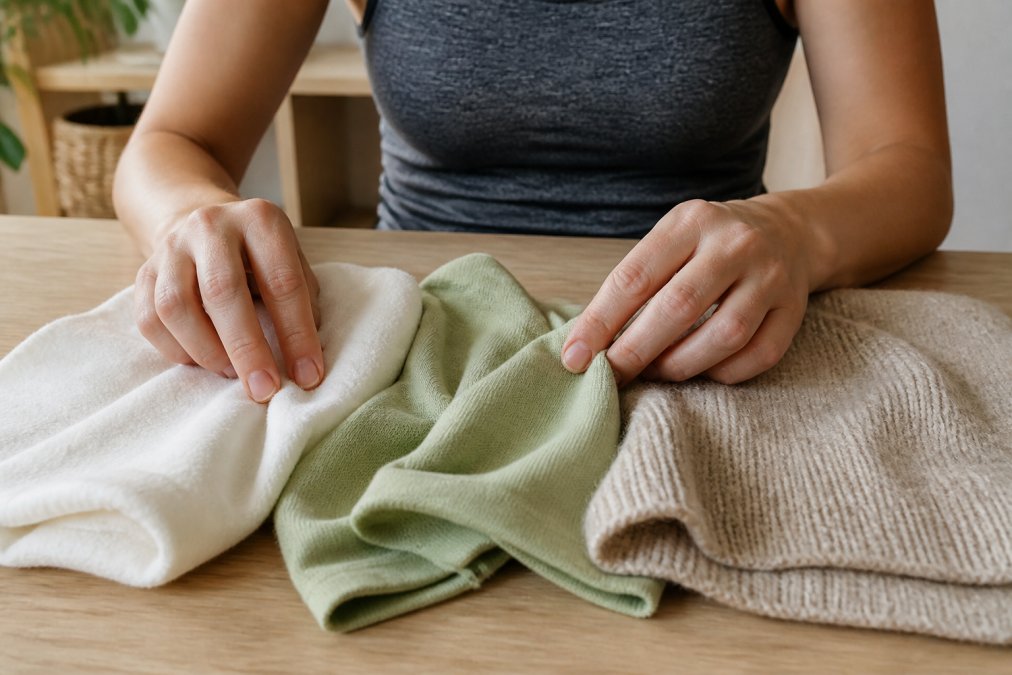
Cotton is the easiest switch because it is everywhere and cheap. Merino costs more but handles temperature swings better. Bamboo sits between the two on price and feels exceptionally soft. Here is how they compare:
| Fabric | Feel | Best For | Main Trade-Off |
|---|---|---|---|
| Organic cotton | Soft, breathable | Lifting, warm-ups, daily wear | Holds sweat on long runs |
| Merino wool | Fine, temperature-regulating | Variable weather, travel | Higher cost, needs care |
| Bamboo | Very soft, cool | Yoga, low-sweat sessions | Slower to dry |
Organic Cotton: Soft, Breathable, and Widely Available
Organic cotton is the most accessible alternative for reactive skin. It is grown without the synthetic pesticides used in conventional cotton, and it breathes well, which keeps skin cooler than polyester during moderate activity.
The honest limitation: cotton holds moisture rather than wicking it away. On a long run or in a hot studio, a cotton tee gets heavy and stays damp. For lifting, warm-ups, and everyday wear it is the better pick, and it feels noticeably softer against skin than any synthetic.
GearrUp's Men's Slim-Fit Round-Neck Training T-Shirt is a straightforward 100% cotton option at $15.99, cut slim through the chest with a ribbed round neck that holds its shape.

Merino Wool: Temperature Regulation and Natural Odor Resistance
Merino wool is the strongest performer in variable conditions. Its fine fibers regulate temperature, so you stay warm when it is cold and cool when it is warm, and it resists odor naturally, which means you can wear it more than once between washes.
Men's Cotton Stretch Slim-Fit Workout →
Benefits of Bamboo Fabric for Exercise
Bamboo fabric is soft, breathable, and naturally temperature-regulating, which makes it a strong fit for yoga, Pilates, and lower-sweat training. It feels closer to silk than cotton against the skin, and that smooth surface means less friction for reactive skin.
- Softness: The fiber is naturally smooth, so it glides rather than catches on skin
- Breathability: Air moves through the fabric well, keeping you cooler during moderate activity
- Moisture handling: Bamboo absorbs moisture, though it dries more slowly than synthetics
Top GearrUp Picks for Sensitive Skin Workouts
GearrUp's cotton range covers the main training scenarios, from heavy lifting to pregnancy workouts, all at prices that make switching from synthetics low-risk. Every piece here is a natural-fiber option built for comfort and durability, with free shipping and easy returns if the fit is not right.
Men's Cotton Stretch Slim-Fit Workout T-Shirt
The Men's Cotton Stretch Slim-Fit Workout T-Shirt is the best pick for anyone who wants a close fit without the friction. It is 95% cotton with a small amount of elastane, and that stretch is the point: a pure cotton slim fit binds across the back on overhead presses, while this one gives instead.


Men's Loose-Fit 100% Cotton Gym Tank
For warm-weather training, the Men's Loose-Fit 100% Cotton Gym Tank is the simplest choice. It is 100% breathable cotton with a loose silhouette that keeps fabric off your skin and allows unrestricted movement. At $13.99, it is the lowest-cost way to test how your skin responds to cotton in the gym.
Maternity Support Leggings - 95% Cotton
The Maternity Support Leggings - 95% Cotton are built for expecting mothers who want to keep training. The fabric is 95% breathable cotton, and the high-waist design supports a growing belly without digging in. They come in classic black and soft grey at $28.99, with durable stitching meant to hold up through regular wear.
How to Wash Athletic Wear to Prevent Irritation
Washing matters as much as the fabric. Residue from detergent, fabric softener, and sweat left in the fibers is a common trigger for skin irritation, even in natural fabrics. Getting the wash routine right protects both the garment and your skin.
- Wash cold: Heat breaks down elastane and shrinks cotton, so keep the temperature down
- Skip fabric softener: It coats fibers and leaves residue against your skin
- Use a gentle detergent: Fragrance-free formulas reduce the chance of a reaction
- Turn garments inside out: Protects prints and reduces surface abrasion
- Dry low or air dry: High heat shortens the life of stretch fibers and cotton alike
- Wash after every session: Sweat left in natural fibers is the main cause of odor and irritation
Conclusion
Sensitive skin and synthetic activewear are a difficult pairing, and the fix is usually a fabric change rather than a new skincare routine. Cotton, merino, and bamboo each solve part of the problem, and the right pick depends on whether you are lifting, running, or training through pregnancy.
Frequently Asked Questions
Why do synthetic fabrics cause skin irritation during workouts?
Synthetic fabrics like polyester and nylon trap sweat and heat against the skin, creating a warm, moist environment. This can lead to chafing, redness, and breakouts, especially for people with sensitive skin. Unlike natural fibers, many synthetics do not breathe well and may contain chemical finishes that trigger reactions. Switching to alternatives to synthetic fabrics for sensitive skin activewear can reduce these issues by allowing better airflow and moisture management.
Are bamboo fabrics better for sensitive skin than polyester?
Yes, bamboo fabric is often gentler on sensitive skin. It is naturally breathable and helps regulate temperature. Unlike polyester, bamboo does not trap heat or sweat, reducing the risk of irritation. The benefits of bamboo fabric for exercise include odor resistance and temperature regulation. However, check labels for chemical processing, as some bamboo rayon may still cause reactions.
How should I wash athletic wear to prevent irritation?
Wash athletic wear in cold water with a gentle, fragrance-free detergent. Avoid fabric softeners and dryer sheets, which leave residue that can irritate skin. Turn garments inside out and use a low heat setting or air dry. This helps maintain fabric integrity and reduces the buildup of allergens. Proper how to wash athletic wear practices also extend the life of your gear.
Can organic cotton be used for high-intensity training?
Organic cotton is soft and breathable, making it great for low to moderate intensity workouts. For high-intensity training, it may hold sweat and feel heavy. However, blends with a small amount of elastane, like GearrUp's Men's Cotton Stretch Slim-Fit Workout T-Shirt, offer stretch and comfort. For intense sessions, consider natural alternatives like merino wool.
What should I look for on clothing labels if I have sensitive skin?
Look for natural fibers like cotton, bamboo, or merino wool. Avoid polyester, nylon, and acrylic. GearrUp's cotton tops, such as the Men's Loose-Fit 100% Cotton Gym Tank, are good options for sensitive skin.

